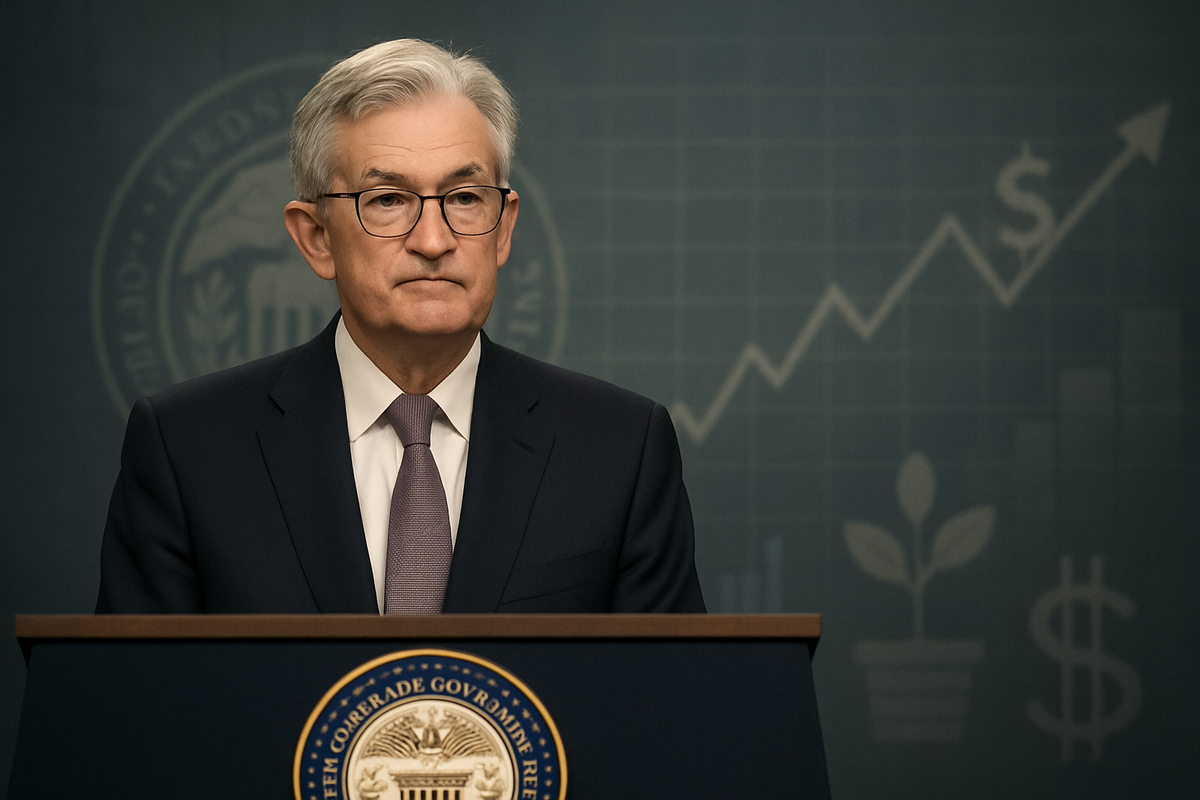
In a move that reverberated across global financial markets, Federal Reserve Chair Jerome Powell, on December 10, 2025, confirmed a significant dovish shift in the central bank's monetary policy. The Federal Open Market Committee (FOMC) enacted a 25-basis-point reduction in the benchmark interest rate, bringing the target range down to 3.50%-3.75%. This third consecutive rate cut of the year marks a decisive turn towards easing, signaling the Fed's heightened concerns over a weakening labor market and a readiness to support economic growth. The immediate implication is a surge in market optimism, as investors anticipate lower borrowing costs and a more accommodative financial environment, though the path ahead remains nuanced with internal FOMC divisions and lingering inflationary pressures.
This pivot by the Federal Reserve is a critical development for investors, businesses, and consumers alike. Lower interest rates typically stimulate economic activity by making borrowing cheaper for businesses to invest and expand, and for consumers to finance purchases like homes and cars. However, this shift also comes against a backdrop of persistent inflation and a softening job market, raising questions about the Fed's delicate balancing act and the long-term health of the economy.
Federal Reserve Embraces Easing Amidst Economic Headwinds
The December 10, 2025, decision to cut the benchmark interest rate by 25 basis points was the culmination of a year-long trajectory towards a more accommodative monetary policy. This reduction, setting the new target range at 3.50%-3.75%, marked the third consecutive rate cut implemented by the Federal Reserve in 2025, bringing interest rates to their lowest level in nearly three years. Chair Jerome Powell justified these aggressive cuts by emphasizing the urgent need to support a weakening labor market, where job gains have visibly decelerated and the unemployment rate had risen to 4.4% by September 2025. While acknowledging that inflation remained "somewhat elevated" at around 3% in September, Powell indicated that the overall balance of risks now warranted a policy adjustment in favor of employment.
Following the December rate cut, Powell adopted a distinct "wait and see" stance, stating that the Fed was now "within a range of plausible estimates of neutral." He underscored that further rate hikes were not anticipated, signaling that "a rate hike is anybody's base case at this point." This marked a significant departure from his more cautious tone in October 2025, when he had expressed reservations about a December cut, citing delays in economic data due to a government shutdown and advising the Fed to "slow down" like driving in fog. The shift in his rhetoric by December clearly indicated that the economic data, despite previous delays, had convinced the committee of the necessity for easing.
Earlier in the year, Powell's comments at the Jackson Hole Economic Symposium on August 22, 2025, had already hinted at a leaning towards a more accommodative stance, suggesting that the evolving economic outlook and shifting balance of risks might necessitate adjustments. Economists had widely predicted a dovish turn from Powell as early as June 2025, anticipating multiple rate cuts due to decelerating core inflation, an increase in jobless claims, and persistent weakness in the housing market. The market's initial reaction to the December cut was overwhelmingly positive, with U.S. equity markets—the Dow Jones Industrial Average (NYSE: ^DJI), S&P 500 (NYSE: ^SPX), and Nasdaq Composite (NASDAQ: ^IXIC)—all registering solid gains, reflecting investor relief and optimism that the tightening cycle was firmly in the rearview mirror.
Conversely, the U.S. Dollar Index (ICE: DXY) weakened following the announcement, while gold prices advanced, reflecting expectations of a less hawkish Federal Reserve. The expectation for a December rate cut had already driven market sentiment in the weeks leading up to the meeting, influenced by dovish remarks from other FOMC members and undeniable signs of a softening labor market.
Companies Poised to Win and Lose in a Dovish Environment
The Federal Reserve's pivot to a dovish monetary policy, characterized by lower interest rates, creates a distinct landscape of winners and losers across various sectors of the economy. Companies with significant debt burdens or those reliant on consumer financing are generally poised to benefit, while others may face margin compression.
Potential Winners:
- Real Estate and Housing Sector: Lower interest rates directly translate to cheaper mortgage rates, stimulating demand for housing. Homebuilders like D.R. Horton (NYSE: DHI) and Lennar Corporation (NYSE: LEN) could see increased sales volumes and improved profitability. Real estate investment trusts (REITs) that rely on debt financing for acquisitions and developments, such as Prologis (NYSE: PLD) or Simon Property Group (NYSE: SPG), may also see reduced borrowing costs and enhanced returns.
- Growth Stocks and Technology Companies: Technology companies, particularly those with high growth potential but often not yet profitable, tend to thrive in a low-interest-rate environment. Lower discount rates make their future earnings streams more valuable today, boosting stock valuations. Companies like Nvidia (NASDAQ: NVDA), Amazon (NASDAQ: AMZN), and Microsoft (NASDAQ: MSFT), which often reinvest heavily, could find it cheaper to fund expansion and innovation.
- Consumer Discretionary: Cheaper borrowing costs for consumers can free up disposable income, potentially boosting spending on non-essential goods and services. Retailers (e.g., Target (NYSE: TGT), Walmart (NYSE: WMT)) and automotive companies (e.g., Ford (NYSE: F), General Motors (NYSE: GM)) could see increased demand for their products, particularly for big-ticket items often financed with loans.
- Companies with High Debt: Businesses that have accumulated substantial debt will see their interest expenses decrease as rates fall or when they refinance existing debt at more favorable terms. This can significantly improve their net income and cash flow, making them more attractive to investors.
Potential Losers:
- Banks and Financial Institutions: While lower rates can stimulate lending volume, they often compress net interest margins (NIMs) for banks, which is the difference between what they earn on loans and pay on deposits. Major banks like JPMorgan Chase (NYSE: JPM), Bank of America (NYSE: BAC), and Wells Fargo (NYSE: WFC) may experience reduced profitability from their core lending operations.
- Companies with Strong Cash Positions: Companies holding large amounts of cash or short-term investments will earn less interest income in a lower-rate environment. While not a direct loss, it represents a reduction in potential earnings compared to a period of higher rates.
- Insurance Companies: Insurers, particularly those in life insurance, rely on investing premiums in fixed-income securities. Lower interest rates reduce the returns on these investments, potentially impacting their profitability and ability to meet long-term liabilities. Companies like MetLife (NYSE: MET) and Prudential Financial (NYSE: PRU) could face headwinds.
The overall impact will depend on each company's specific financial structure, debt levels, and sensitivity to consumer spending and borrowing costs. However, the general trend suggests a reallocation of capital towards growth-oriented sectors and away from those reliant on higher interest income.
Wider Significance: A Response to Broader Trends and Historical Echoes
The Federal Reserve's dovish pivot on December 10, 2025, is not an isolated event but rather a significant response to a confluence of broader industry trends and economic pressures. This move fits squarely into a global narrative of slowing economic growth and the ongoing challenge of managing inflation while averting a deeper recession. The Fed's actions signal a proactive stance to support the economy, even as it navigates the complexities of elevated inflation and a softening labor market.
One key trend influencing this decision is the evident slowdown in global economic activity. Many major economies have been grappling with subdued growth, supply chain disruptions, and geopolitical uncertainties, which inevitably ripple back to the U.S. economy. The Fed's rate cuts are an attempt to inject liquidity and stimulate domestic demand, counteracting these external headwinds. Furthermore, the persistent, albeit moderating, inflation at around 3% (as of September 2025) presents a unique challenge. Unlike previous easing cycles where inflation was largely benign, the current environment forces the Fed to balance its dual mandate of maximum employment and stable prices with greater precision.
Regulatory and policy implications are also at play. The recent delays in key government economic data due to a government shutdown, as highlighted by Powell in October, underscore the vulnerability of data-dependent policymaking. Such disruptions can obscure the real-time economic picture, making the Fed's decisions more challenging and potentially leading to more reactive policy shifts. The political pressure from entities like President Donald Trump, who has consistently called for more aggressive rate cuts, adds another layer of complexity, potentially influencing market sentiment and expectations, even if the Fed maintains its independence.
Historically, the Fed has resorted to easing cycles during periods of economic deceleration or recessionary threats. Comparisons can be drawn to previous periods where the central bank cut rates to stimulate growth, such as in the early 2000s after the dot-com bubble burst or in response to the 2008 financial crisis. However, the current context differs due to the elevated inflation levels and the unusual internal division within the Federal Open Market Committee (FOMC). The December vote of 9-3 in favor of the 25-basis-point cut was unusually split, with some members advocating for a larger reduction and others preferring to maintain current rates. This internal disagreement is a significant factor, potentially creating uncertainty around future policy decisions and highlighting the diverse economic outlooks among policymakers. This internal debate reflects the delicate balance the Fed is attempting to strike between supporting employment and containing inflation, a challenge that will likely persist.
The Road Ahead: Navigating Uncertainty and Opportunity
Looking ahead, the Federal Reserve's dovish pivot sets the stage for a period of both short-term relief and long-term uncertainty in financial markets. In the immediate future, consumers can anticipate lower borrowing costs for various loans, including mortgages, auto loans, and credit cards, which should provide a modest boost to household budgets and potentially stimulate consumer spending. Businesses, particularly those with variable-rate debt or plans for capital expenditure, will also benefit from reduced financing costs, which could encourage investment and expansion.
However, the "wait and see" stance adopted by Chair Powell, coupled with the Federal Reserve's "dot plot" from the December meeting, suggests a measured approach to further easing. The dot plot indicated expectations for only one additional quarter-point rate cut in 2026 and another in 2027. This signals that while the tightening cycle is over, the Fed is not anticipating a rapid succession of deep cuts. This measured pace could temper market expectations for aggressive easing, potentially leading to some volatility if future economic data diverges significantly from the Fed's projections.
Potential strategic pivots or adaptations will be required across industries. Companies in interest-rate-sensitive sectors, such as real estate and technology, may need to adjust their growth strategies to capitalize on the lower cost of capital, potentially accelerating expansion plans or M&A activities. Conversely, financial institutions will need to adapt to potentially narrower net interest margins, perhaps by focusing on fee-based services or optimizing their balance sheets.
Market opportunities may emerge in sectors that are typically favored by lower interest rates, such as growth stocks and dividend-paying equities that become more attractive compared to lower-yielding bonds. Challenges will include navigating the persistent inflationary pressures and the potential for a slower-than-expected economic recovery. Potential scenarios range from a "soft landing," where inflation gradually recedes and economic growth stabilizes, to a more challenging environment if inflation proves stickier or the labor market deteriorates further than anticipated, forcing the Fed to reconsider its stance.
Wrap-Up: A Cautiously Optimistic Outlook
The Federal Reserve's decision on December 10, 2025, to implement its third consecutive rate cut of the year, bringing the benchmark interest rate to 3.50%-3.75%, represents a significant shift towards a dovish monetary policy. The key takeaway is that the Fed, under Chair Jerome Powell's leadership, is now prioritizing support for a weakening labor market amidst elevated, though moderating, inflation. This pivot has injected a wave of optimism into financial markets, with equity indices rallying and expectations of lower borrowing costs permeating the economy.
Moving forward, the market will be closely watching for further economic data, particularly labor market indicators and inflation reports, to gauge the efficacy of the Fed's current policy and to anticipate future moves. While the immediate outlook suggests a more accommodative financial environment, the path ahead is not without its complexities, including the internal divisions within the FOMC and the ongoing challenge of balancing inflation control with economic growth.
Investors should remain vigilant, paying close attention to the Fed's communications, particularly any shifts in Powell's rhetoric or changes in the "dot plot" projections. Monitoring corporate earnings, especially from interest-rate-sensitive sectors, will be crucial for identifying companies that are successfully adapting to the new monetary policy landscape. The coming months will reveal whether this dovish pivot can successfully engineer a soft landing for the U.S. economy, or if further challenges lie ahead in the delicate dance between inflation and employment.
This content is intended for informational purposes only and is not financial advice