As we look back from the vantage point of January 2026, the financial landscape of 2024 stands as a watershed moment in economic history. It was the year that corporate America finally broke the traditional bond between profit growth and payroll expansion, ushering in what economists now call the "Jobless Profit Boom." Despite a cooling labor market and high interest rates, U.S. companies achieved record-shattering earnings and historic profit margins by leveraging a potent cocktail of generative AI, aggressive automation, and a "leaner-for-longer" operational philosophy.
The immediate implications of this shift were felt across Wall Street, as the S&P 500 surged past the 6,000-point milestone in late 2024. However, for the average American worker, the boom felt remarkably quiet. While corporate coffers swelled to over $3.1 trillion in annualized profits, the "Great Freeze" in white-collar hiring began to take hold. This divergence created a historic "K-shaped" trajectory: a bull market for shareholders and a structural stagnation for the traditional labor force, fundamentally altering the social contract of the modern workplace.
Efficiency Over Expansion
The seeds of the 2024 boom were sown in the "Year of Efficiency" efforts of late 2023. As the post-pandemic hiring frenzy cooled, major corporations faced a choice: continue expanding headcounts to chase growth or optimize their existing infrastructure. Most chose the latter. Throughout 2024, S&P 500 firms delivered an average earnings growth of 9.7%, significantly outpacing the historical 10-year average of 8%. This was achieved not through massive sales volume increases, but through unprecedented margin expansion. Non-financial net margins hit a record peak of 13.0% in late 2024, surpassing even the stimulus-fueled highs of 2021.
The timeline of this transformation was punctuated by quarterly earnings reports that consistently beat analyst expectations, even as those same companies announced strategic downsizing. In early 2024, tech giants and industrial leaders began integrating generative AI agents into their core workflows. By mid-year, the results were undeniable: Total Factor Productivity (TFP) rose by 1.3%, while labor inputs grew by a meager 0.7%. This "productivity frontier" allowed firms to generate billions in incremental revenue with a fraction of the traditional workforce. The market reacted with euphoria, rewarding "efficiency giants" with massive valuation premiums while punishing companies that maintained bloated overhead.
Key stakeholders in this transition included a new breed of Chief Technology Officers who pivoted from experimental AI pilots to full-scale enterprise deployment. Simultaneously, the Federal Reserve’s "soft landing" provided the stable macroeconomic backdrop necessary for this capital-intensive shift. By the time the S&P 500 hit its historic 6,001.35 close in November 2024, the narrative had shifted entirely from "recession fears" to "productivity miracles."
The Winners and Losers of the Efficiency Era
The clear victors of the 2024 boom were the "Hyperscalers" and the semiconductor titans who provided the digital picks and shovels. NVIDIA (NASDAQ: NVDA) emerged as the undisputed heavyweight, contributing to a staggering 13% of all S&P 500 earnings growth in 2024. As their chips powered the automation revolution, their own lean operational model became the blueprint for the rest of the market. Similarly, Meta Platforms (NASDAQ: META) proved that downsizing could be a catalyst for growth, seeing its valuation skyrocket as it cut specialized units while its AI-driven ad platforms reached new heights of profitability.
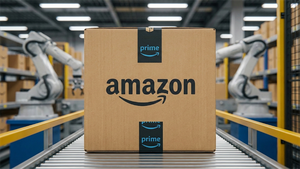
In the retail and industrial sectors, Walmart (NYSE: WMT) and Amazon (NASDAQ: AMZN) utilized warehouse robotics and AI logistics to grow revenues by hundreds of billions while keeping their total headcount static or even shrinking it through attrition. Amazon’s aggressive automation roadmap, which aimed to mechanize 75% of its fulfillment operations, served as a warning shot to the labor market. Meanwhile, industrial stalwarts like Cummins (NYSE: CMI) and Honeywell (NASDAQ: HON) successfully decoupled their revenue from their workforce size, achieving record sales in 2024 even as their total employee counts began a slow, structural decline.
On the losing side of this transition were the traditional white-collar sectors and companies that failed to adapt. Firms like Intel (NASDAQ: INTC), Tesla (NASDAQ: TSLA), and Cisco Systems (NASDAQ: CSCO) faced the dual challenge of high capital requirements and the need for massive workforce restructuring, resulting in tens of thousands of layoffs during the very peak of the 2024 market rally. For the workers themselves, particularly those in entry-level administrative, legal, and junior coding roles, the "Jobless Boom" meant fewer opportunities and stagnant wages as AI agents began to outperform human counterparts in routine cognitive tasks.
A Structural Shift in the Economic Fabric
The wider significance of 2024 lies in its departure from historical precedents. After the 2008 financial crisis, it took years for corporate profits to recover, and job growth followed a similarly slow but linked path. In 2024, that link was severed. This wasn't a cyclical downturn; it was a structural transformation. The "Great Decoupling" of 2024 showed that corporate America no longer needs a growing middle class of employees to generate record wealth for its shareholders. This fits into a broader trend of "capital deepening," where investment in technology permanently replaces human labor as the primary driver of GDP.
This shift has created significant ripple effects on competitors. Small and medium-sized enterprises (SMEs) that could not afford the multi-billion dollar AI investments seen at Microsoft (NASDAQ: MSFT) or Alphabet (NASDAQ: GOOGL) found themselves at a severe competitive disadvantage. This has led to an era of consolidation, where "Efficiency Monopolies" dominate their respective niches. Regulatory implications have also begun to emerge as we enter 2026, with policymakers debating "automation taxes" and universal basic income (UBI) frameworks to address the 4.6% unemployment rate—a number that continues to climb despite the robust stock market.
Historically, only the Industrial Revolution offers a comparable parallel. Much like the transition from agrarian to industrial labor, the shift to "Autonomous Corporations" has created a period of profound social friction. The 2024 boom proved that the "productivity frontier" is moving faster than the education system can reskill the workforce, creating a widening gap between those who own the automation and those who are displaced by it.
The Road to 2026: What Comes Next?
As we move through 2026, the short-term focus has shifted from "AI hype" to "AI scaling." The market is no longer impressed by a company simply mentioning AI; investors now demand to see the "margin of efficiency"—specifically, how much revenue a company can generate per employee. This metric has become the new North Star for valuation. We are likely to see a continuation of the "Great Freeze" in hiring as companies pivot toward "Autonomous Departments" where single human managers oversee fleets of AI agents.
Strategic adaptations are already underway in the education and service sectors. Market opportunities are emerging in "AI Orchestration"—the tools that help human workers manage these new automated systems. However, the challenge remains the potential for a consumer spending crisis. If the "K-shaped" economy continues to concentrate wealth in the top 10%, the very corporations that automated their workforces may eventually find themselves without a robust consumer base to buy their products.
The potential scenarios for the remainder of 2026 and 2027 range from a "Golden Age of Productivity," where the gains are eventually shared through lower prices and shorter work weeks, to a "Stagnation of the Masses," characterized by permanent underemployment and civil unrest. The market will be watching closely for signs of how the "Great Decoupling" will be managed by both corporate leaders and government regulators.
Wrap-Up and Investor Outlook
The "Jobless Profit Boom" of 2024 was not a fluke; it was the arrival of a new economic paradigm. U.S. corporations have successfully demonstrated that they can grow richer while growing smaller. The key takeaways for investors are clear: profitability is now driven by technology-enabled efficiency rather than traditional labor-based scaling. The S&P 500's record highs are a reflection of this newfound lean power, but they also mask a fragile underlying social reality.
Moving forward, the market will likely remain bifurcated. Investors should prioritize companies with high "Revenue per Employee" and those that lead in "Physical AI" and robotics. Watching the labor participation rate and the "Great Freeze" in hiring will be critical; any sign of a consumer pullback due to job insecurity could be the first crack in this high-margin armor.
As we look toward the second half of 2026, the lasting impact of the 2024 boom will be the permanent shift in how we value a company. In the old world, a growing headcount was a sign of health; in the new world, it is often seen as a liability. Investors must watch for the "Autonomous Corporation" evolution, as this will determine the next generation of market leaders in an era where profits no longer require a payroll.
This content is intended for informational purposes only and is not financial advice.