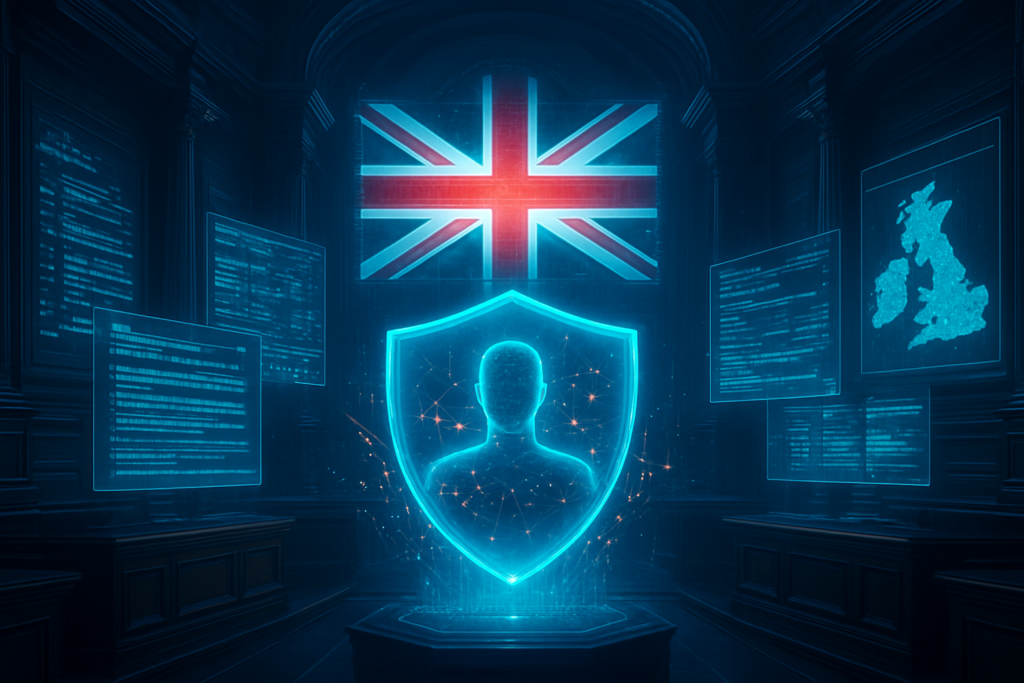
In a decisive strike against the rise of "image-based abuse," the United Kingdom has officially activated a sweeping new legal framework that criminalizes the creation of non-consensual AI-generated intimate imagery. As of January 15, 2026, the activation of the final provisions of the Data (Use and Access) Act 2025 marks a global first: a major economy treating the mere act of generating a deepfake—even if it is never shared—as a criminal offense. This shift moves the legal burden from the point of distribution to the moment of creation, aiming to dismantle the burgeoning industry of "nudification" tools before they can inflict harm.
The new measures come in response to a 400% surge in deepfake-related reports over the last two years, driven by the democratization of high-fidelity generative AI. Technology Secretary Liz Kendall announced the implementation this week, describing it as a "digital fortress" designed to protect victims, predominantly women and girls, from the "weaponization of their likeness." By making the solicitation and creation of these images a priority offense, the UK has set a high-stakes precedent that forces Silicon Valley giants to choose between rigorous automated enforcement or catastrophic financial penalties.
Closing the Creation Loophole: Technical and Legal Specifics
The legislative package is anchored by two primary pillars: the Online Safety Act 2023, which was updated in early 2024 to criminalize the sharing of deepfakes, and the newly active Data (Use and Access) Act 2025, which targets the source. Under the 2025 Act, the "Creation Offense" makes it a crime to use AI to generate an intimate image of another adult without their consent. Crucially, the law also criminalizes "soliciting," meaning that individuals who pay for or request a deepfake through third-party services are now equally liable. Penalties for creation and solicitation include up to six months in prison and unlimited fines, while those who share such content face up to two years and a permanent spot on the Sex Offenders Register.
Technically, the UK is mandating a "proactive" rather than "reactive" removal duty. This distinguishes the British approach from previous "Notice and Takedown" systems. Platforms are now legally required to use "upstream" technology—such as large language model (LLM) prompt classifiers and real-time image-to-image safety filters—to block the generation of abusive content. Furthermore, the Crime and Policing Bill, finalized in late 2025, bans the supply and possession of dedicated "nudification" software, effectively outlawing apps whose primary function is to digitally undress subjects.
The reaction from the AI research community has been a mixture of praise for the protections and concern over "over-enforcement." While ethics researchers at the Alan Turing Institute lauded the move as a necessary deterrent, some industry experts worry about the technical feasibility of universal detection. "We are in an arms race between generation and detection," noted one senior researcher. "While hash matching works for known images, detecting a brand-new, 'zero-day' AI generation in real-time requires a level of compute and scanning that could infringe on user privacy if not handled with extreme care."
The Corporate Reckoning: Tech Giants Under the Microscope
The new laws have sent shockwaves through the executive suites of major tech companies. Alphabet Inc. (NASDAQ: GOOGL) and Microsoft (NASDAQ: MSFT) have already moved to integrate the Coalition for Content Provenance and Authenticity (C2PA) standards across their generative suites. Microsoft, in particular, has deployed "invisible watermarking" through its Designer and Bing Image Creator tools, ensuring that any content generated on their platforms carries a cryptographic signature that identifies it as AI-made. This metadata allows platforms like Meta Platforms, Inc. (NASDAQ: META) to automatically label or block the content when an upload is attempted on Instagram or Facebook.
For companies like X (formerly Twitter), the implications have been more confrontational. Following a formal investigation by the UK regulator Ofcom in early 2026, X was forced to implement geoblocking and restricted access for its Grok AI tool after users found ways to bypass safety filters. Under the Online Safety Act’s "Priority Offense" designation, platforms that fail to prevent the upload of non-consensual deepfakes face fines of up to 10% of their global annual turnover. For a company like Meta or Alphabet, this could represent billions of dollars in potential liabilities, effectively making content safety a core financial risk factor.
Adobe Inc. (NASDAQ: ADBE) has emerged as a strategic beneficiary of this regulatory shift. As a leader in the Content Authenticity Initiative, Adobe’s "commercially safe" Firefly model has become the gold standard for enterprise AI, as it avoids training on non-consensual or unlicensed data. Startups specializing in "Deepfake Detection as a Service" are also seeing a massive influx of venture capital, as smaller platforms scramble to purchase the automated scanning tools necessary to comply with the UK's stringent take-down windows, which can be as short as two hours for high-profile incidents.
A Global Pivot: Privacy, Free Speech, and the "Liar’s Dividend"
The UK’s move fits into a broader global trend of "algorithmic accountability" but represents a much more aggressive stance than its neighbors. While the European Union’s AI Act focuses on transparency and mandatory labeling, and the United States' DEFIANCE Act focuses on civil lawsuits and "right to sue," the UK has opted for the blunt instrument of criminal law. This creates a fragmented regulatory landscape where a prompt that is legal to enter in Texas could lead to a prison sentence in London.
One of the most significant sociological impacts of these laws is the attempt to combat the "liar’s dividend"—a phenomenon where public figures can claim that real, incriminating evidence is merely a "deepfake" to escape accountability. By criminalizing the creation of fake imagery, the UK government hopes to restore a "baseline of digital truth." However, civil liberties groups have raised concerns about the potential for mission creep. If the tools used to scan for deepfake pornography are expanded to scan for political dissent or "misinformation," the same technology that protects victims could potentially be used for state surveillance.
Previous AI milestones, such as the release of GPT-4 or the emergence of stable diffusion, focused on the power of the technology. The UK’s 2026 legal activation represents a different kind of milestone: the moment the state successfully asserted its authority over the digital pixel. It signals the end of the "Wild West" era of generative AI, where the ability to create anything was limited only by one's imagination, not by the law.
The Horizon: Predictive Enforcement and the Future of AI
Looking ahead, experts predict that the next frontier will be "predictive enforcement." Using AI to catch AI, regulators are expected to deploy automated "crawlers" that scan the dark web and encrypted messaging services for the sale and distribution of UK-targeted deepfakes. We are also likely to see the emergence of "Personal Digital Rights" (PDR) lockers—secure vaults where individuals can store their biometric data, allowing AI models to cross-reference any new generation against their "biometric signature" to verify consent before the image is even rendered.
The long-term challenge remains the "open-source" problem. While centralized giants like Google and Meta can be regulated, decentralized, open-source models can be run on local hardware without any safety filters. UK authorities have indicated that they may target the distribution of these open-source models if they are found to be "primarily designed" for the creation of illegal content, though enforcing this against anonymous developers on platforms like GitHub remains a daunting legal hurdle.
A New Era for Digital Safety
The UK’s criminalization of non-consensual AI imagery marks a watershed moment in the history of technology law. It is the first time a government has successfully legislated against the thought-to-image pipeline, acknowledging that the harm of a deepfake begins the moment it is rendered on a screen, not just when it is shared. The key takeaway for the industry is clear: the era of "move fast and break things" is over for generative AI. Compliance, safety by design, and proactive filtering are no longer optional features—they are the price of admission for doing business in the UK.
In the coming months, the world will be watching Ofcom's first major enforcement actions. If the regulator successfully levies a multi-billion dollar fine against a major platform for failing to block deepfakes, it will likely trigger a domino effect of similar legislation across the G7. For now, the UK has drawn a line in the digital sand, betting that criminal penalties are the only way to ensure that the AI revolution does not come at the cost of human dignity.
This content is intended for informational purposes only and represents analysis of current AI developments.
TokenRing AI delivers enterprise-grade solutions for multi-agent AI workflow orchestration, AI-powered development tools, and seamless remote collaboration platforms.
For more information, visit https://www.tokenring.ai/.