In a landmark move that reshapes the competitive landscape of the semiconductor industry, Broadcom (NASDAQ: AVGO) and Alphabet Inc. (NASDAQ: GOOGL) have officially extended their strategic AI infrastructure partnership through 2031. This long-term accord ensures that Broadcom will remain the primary design and implementation partner for Google’s custom Tensor Processing Units (TPUs) for the next several product generations. The deal also includes a massive supply assurance agreement for high-performance networking components, positioning Broadcom as the indispensable backbone of Google’s global AI data center expansion.
The immediate implications of this extension are profound, signaling a definitive shift away from general-purpose hardware toward bespoke, application-specific integrated circuits (ASICs) for large-scale AI training and inference. By locking in a partner through 2031, Google secures a reliable roadmap for its silicon independence, while Broadcom cements its status as the "toll collector" of the AI revolution. Market analysts suggest this stability is a direct challenge to the market dominance of Nvidia (NASDAQ: NVDA), providing a high-performance, cost-effective alternative for the world’s largest AI developers.
The Road to $46 Billion: A New Era of Custom Silicon
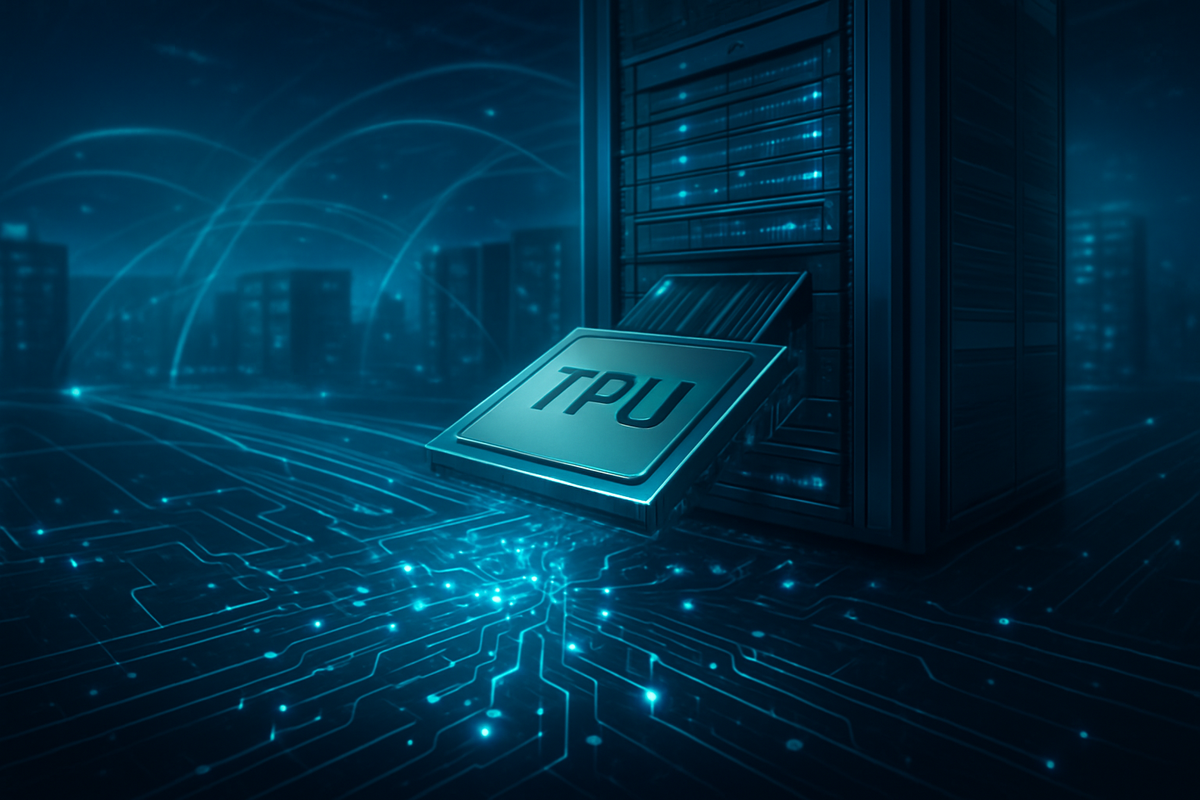
The partnership extension, announced this week, marks a significant escalation of a collaboration that began over a decade ago with the first-generation TPU. Under the new terms, Broadcom will lead the development of the TPU v7, codenamed "Ironwood," and has already begun preliminary work on the TPU v8 roadmap utilizing 3nm and 2nm process technologies. The Ironwood chip, released earlier this year, represents a quantum leap in performance, featuring 192 GB of HBM3e memory and delivering 4.6 PFLOPS of FP8 compute power. This hardware is specifically optimized for "agentic AI"—systems capable of autonomous reasoning and complex task execution.
The financial scale of this partnership is staggering. Broadcom has projected its AI-related semiconductor revenue will reach a record $46 billion in 2026, a more than 100% increase from the previous year. This growth is largely underpinned by the volume ramp-up of custom accelerators for its "Big Three" partners: Google, Meta Platforms (NASDAQ: META), and OpenAI. Furthermore, the deal includes a massive "tri-party" compute agreement involving the AI safety firm Anthropic. Starting in 2027, Anthropic will gain access to 3.5 gigawatts of next-generation TPU-based compute capacity, facilitated by Broadcom’s networking fabric, to support its rapidly scaling frontier models.
Industry Winners and Strategic Realignments
Broadcom (NASDAQ: AVGO) is the undisputed winner in this arrangement. By securing a decade of predictable, high-margin revenue, the company has insulated itself from the cyclical volatility typical of the semiconductor sector. Its dominance in the high-end Ethernet switching market—controlling over 80% of the segment with its Tomahawk and Jericho platforms—makes it a mandatory partner for any hyper-scaler looking to build non-Nvidia AI clusters. For Alphabet Inc. (NASDAQ: GOOGL), the deal is a strategic masterstroke in vertical integration, allowing the company to lower its total cost of ownership (TCO) for AI infrastructure while maintaining a performance edge over cloud rivals.
Conversely, the deal poses a strategic threat to Nvidia (NASDAQ: NVDA). While Nvidia remains the market leader in general-purpose GPUs, the Broadcom-Google alliance proves that the world’s most sophisticated AI models can be trained and deployed on custom silicon that is arguably more efficient for specific workloads. Marvell Technology (NASDAQ: MRVL) also faces increased pressure; as Broadcom deepens its "moat" around the top-tier hyper-scalers, Marvell must fight harder to secure second-tier custom silicon contracts. Meanwhile, the Anthropic deal bolsters the startup's position as a heavyweight contender, giving it a guaranteed path to massive-scale compute that is independent of the supply constraints often associated with the H100 and B200 GPU cycles.
Scaling the Future: The Shift to Bespoke Infrastructure
This event fits into a broader industry trend toward "architectural sovereignty." The most significant players in the AI space are no longer content to buy off-the-shelf components; they are designing the silicon themselves to fit their specific software stacks. This vertical integration allows for better thermal management, lower power consumption, and optimized data throughput—critical factors as AI clusters scale toward the gigawatt level. Broadcom’s role as the "implementation layer" allows software companies like Google to become hardware powerhouses without needing to build their own semiconductor fabrication expertise.
The ripple effects will likely be felt in the regulatory and policy spheres as well. As a handful of companies consolidate control over the most advanced AI hardware through long-term exclusive deals, concerns regarding market concentration may intensify. However, from a historical perspective, this mirrors the evolution of the mainframe and early cloud eras, where hardware and software were tightly coupled to extract maximum performance. The precedent set here suggests that the future of AI will not be won by the company with the most chips, but by the company with the most efficient integrated system.
What Lies Ahead: TPU v8 and the 2nm Frontier
Looking toward the late 2020s, the focus will shift to the transition to 2nm process technology and the integration of HBM4 memory. Broadcom and Google are already mapping out the TPU v8, which aims to further reduce the latency of inter-chip interconnects (ICI). As AI models grow to trillions of parameters, the bottleneck is no longer just the compute speed of a single chip, but the speed at which thousands of chips can communicate. Broadcom’s specialized networking IP will be the primary battleground where this efficiency is won or lost.
Strategic pivots may be required for competitors like Amazon (NASDAQ: AMZN), which is also investing heavily in its own custom Trainium and Inferentia chips. To remain competitive, Amazon may need to seek similar long-term architectural partnerships or accelerate its own internal silicon roadmap. For Broadcom, the challenge will be managing the immense complexity of 2nm manufacturing and ensuring that the global supply chain for high-bandwidth memory can keep pace with Google’s insatiable demand for capacity.
Summary: A Decade of Silicon Certainty
The extension of the Broadcom-Google partnership through 2031 is more than a simple supply agreement; it is a foundational pillar of the next decade's digital economy. By combining Google’s architectural vision with Broadcom’s execution and networking prowess, the duo has created a formidable alternative to the GPU-centric status quo. With Broadcom projecting $46 billion in AI revenue for 2026 and a clear path to $100 billion by 2027, the financial markets are recognizing the immense value of specialized AI infrastructure.
Investors should closely monitor the quarterly progress of the TPU v7 "Ironwood" rollout and the specifics of the Anthropic compute delivery in 2027. The ability of Broadcom to maintain its 80% market share in AI networking will be a key indicator of its long-term health. Moving forward, the "Silicon Synergy" between these two giants ensures that while the AI race is far from over, the infrastructure upon which it is run is increasingly becoming a two-horse race between general-purpose giants and the custom-silicon alliance.
This content is intended for informational purposes only and is not financial advice