THE WOODLANDS, TX — April 6, 2026 — As the global race for artificial intelligence supremacy intensifies, the bottleneck has shifted from silicon to the physical landscape. Target Hospitality (NASDAQ: TH) announced last week that it has secured a landmark $550 million contract with a "top-five hyperscaler" to support the construction of a massive "AI Factory" in North Texas. The deal, the largest in the company’s history, highlights a critical new reality in the tech sector: the ability to build massive data centers depends entirely on the ability to house and retain the thousands of specialized workers required to build them.
The five-year agreement is expected to generate significant immediate revenue, with Target Hospitality raising its 2026 revenue guidance to a range of $360 million to $370 million. For investors, the contract represents more than just a windfall; it is a definitive strategic pivot for Target Hospitality, moving the company away from its historical roots in the volatile oil and gas "man camp" business toward a stable, high-margin future as an essential partner in the global AI infrastructure build-out.
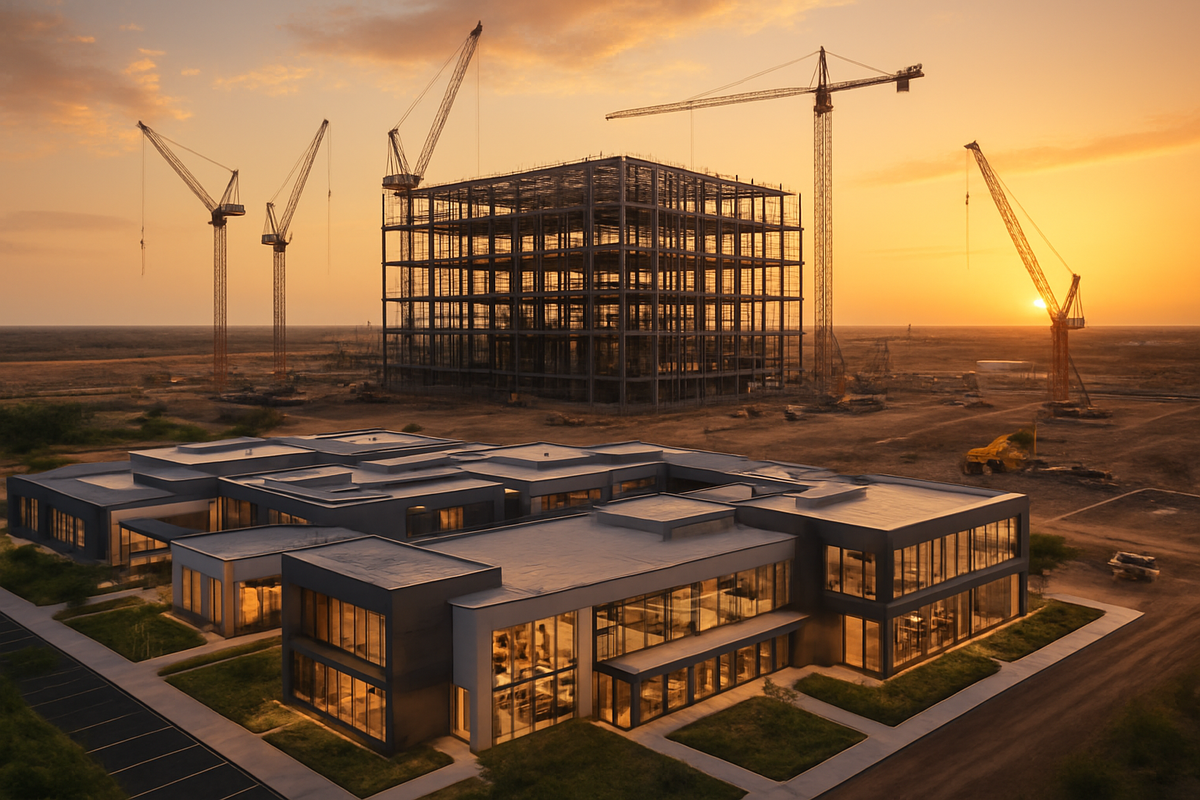
The specifics of the deal, announced on April 1, 2026, involve the construction and operation of a flagship, purpose-built "closed-loop" workforce community in North Texas. This facility is designed to house approximately 4,000 specialized workers—including electrical engineers, HVAC specialists, and mechanical technicians—who are tasked with the rapid-scale construction of a next-generation AI campus. While Target Hospitality has not officially named the client, industry insiders point toward Google (NASDAQ: GOOGL) or Microsoft (NASDAQ: MSFT), both of which have recently committed tens of billions of dollars to data center developments in the Red Oak and Midlothian areas of Texas.
The timeline for the project is aggressive. Target Hospitality expects to invest between $115 million and $125 million in net capital to build the site, with approximately 80% of that expenditure occurring this year. Construction is slated to begin immediately, with the first occupancy scheduled for the third quarter of 2026. The initial term of the contract runs through early 2031, though it includes extension options that could keep the partnership active through 2035. Market reaction was swift and overwhelmingly positive; following the announcement, Target's stock surged by more than 30%, as analysts validated the "Hyper/Scale" brand strategy the company launched in late 2024 to capture this specific market.
The spillover effects of this $550 million deal are rippling through the industrial and infrastructure sectors. Major beneficiaries include Caterpillar (NYSE: CAT), which has seen a "runaway boom" in its power generation segment as these AI Factories require massive amounts of backup power and fast-response natural gas generators. Similarly, Quanta Services (NYSE: PWR) remains a primary winner, holding a record $44 billion backlog as it integrates the complex electrical systems and grid interconnections required for high-density GPU computing.
However, the "closed-loop" nature of Target Hospitality's solution—providing gourmet dining, 24/7 catering, and fitness facilities on-site—presents a challenge to local hospitality markets. Midscale and extended-stay hotel chains in the North Texas region are likely to lose out on the lucrative long-term business of housing construction crews, as tech giants prefer the controlled, high-productivity environment of a dedicated workforce hub. Meanwhile, direct competitors like Civeo (NYSE: CVEO) and WillScot (NASDAQ: WSC) are feeling the pressure. While WillScot remains the leader in modular office storage, Target’s "hospitality-as-a-service" model has carved out a high-end niche that pure hardware providers struggle to match.
This event underscores a broader industry shift: the transition from traditional data centers, which were largely for storage, to "AI Factories" designed for intelligence manufacturing. These facilities are GPU-centric and require three to five times more power and advanced liquid cooling systems compared to traditional centers. The complexity of these builds has triggered a severe labor shortage across the United States. Projections for 2026 indicate a shortfall of nearly 500,000 skilled tradespeople, with electricians in "Digital Corridors" now commanding salaries well over $120,000.
In this environment, "execution capacity" has become the primary metric for tech success. A mere one-month delay in a 60-megawatt data center can cost a hyperscaler upwards of $14 million in lost revenue. By securing dedicated, high-quality housing, hyperscalers are essentially buying insurance against labor flight. This marks a significant evolution in industrial policy; rather than just competing for land or power, companies are now forced to build entire micro-cities to ensure their projects remain on schedule. This trend echoes the historical "Company Towns" of the 20th century, though updated with the luxury amenities required to attract 21st-century talent.
Looking forward, the success of this contract will likely trigger a wave of similar "hospitality-logistics" deals across the country. We can expect Target Hospitality to aggressively market its "Hyper/Scale" services in other emerging tech hubs, such as the Ohio "Silicon Heartland" and the battery-belt corridors of the Southeast. The short-term challenge for the company will be managing the capital-intensive build-out phase, but the long-term potential for recurring, high-margin revenue from tech giants provides a stability that the energy sector never could.
Other players in the space may be forced to adapt. We may see mergers and acquisitions as modular rental companies attempt to acquire hospitality or catering firms to offer a "turnkey" solution similar to Target's. Furthermore, as the scale of these projects grows—some now reaching the multi-gigawatt level—the demand for integrated workforce solutions will likely expand beyond housing to include healthcare and transportation, further deepening the partnership between tech firms and specialized logistics providers.
The $550 million contract is a watershed moment that confirms the AI boom is no longer just a software story; it is a massive, physical reconstruction of the industrial landscape. Target Hospitality has successfully positioned itself as the "landlord to the AI revolution," proving that the logistical support for these mega-projects is just as valuable as the chips powering them.
As we move into the middle of 2026, investors should keep a close eye on Target’s occupancy rates and any further contract wins under the "Hyper/Scale" banner. The primary risk remains execution—the ability to build these massive hubs on time and within budget. However, if North Texas serves as a successful proof of concept, Target Hospitality may have just unlocked a multi-billion dollar growth engine that will power the company for the next decade.
This content is intended for informational purposes only and is not financial advice