Getting hurt because of a dangerous condition can raise plenty of questions no matter where it happens. But when the location is a government building or other public property, there's another layer to think about. The usual assumptions about making a claim may not always apply.
Government entities can be subject to special legal rules that don't work exactly like claims involving a store, apartment complex, or privately owned property. There may be different procedures, shorter deadlines, and specific requirements that need attention before a claim can move forward.
Those differences can become important after an injury at the Utah State Capitol, especially when someone believes a dangerous property condition played a role. Before assuming the process works like an ordinary injury case, it helps to find out which government rules actually apply.
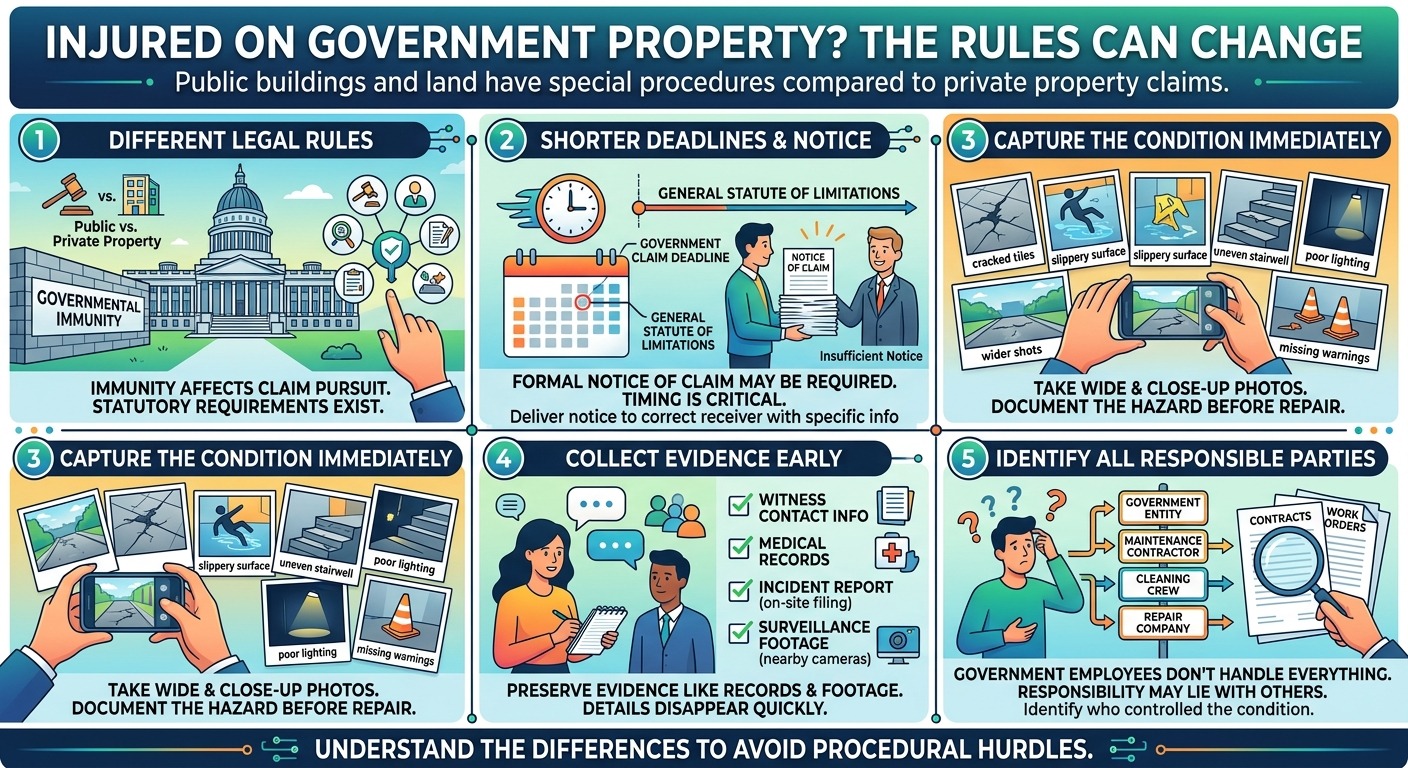
Government Property Brings Different Rules Into Play
When someone is injured at a privately owned business, the legal questions often focus on the property owner's responsibilities and what caused the injury. When government property is involved, another concept enters the conversation: governmental immunity. That can affect whether and how certain claims may be pursued.
Utah law provides procedures for claims involving governmental entities, but that doesn't mean every accident on public property automatically creates a valid case. The specific facts still matter. What caused the injury, who controlled the area, and what legal duties applied can all influence the analysis.
The important distinction is that a government-related claim may have procedural hurdles that don't exist in the same form in an ordinary private-property case. Before evaluating the underlying injury, it may be necessary to determine whether a claim is permitted and which statutory requirements need to be followed.
The Deadline May Arrive Earlier Than Expected
One of the easiest mistakes to make is assuming that the ordinary deadline for an injury lawsuit tells the whole story. Claims involving a government entity can come with separate notice requirements that may need to be satisfied before a lawsuit is ever filed.
That notice isn't necessarily the same thing as casually telling an employee that an accident happened. Utah law can require a formal notice of claim containing particular information and delivered through the proper process. Who receives it, what it says, and when it's submitted can all matter.
This makes timing especially important. Someone may believe there's plenty of time because the general statute of limitations hasn't expired, while a separate government claim deadline is already approaching. Checking the current requirements early can help prevent a procedural issue from becoming more important than the facts of the injury itself.
Capture the Condition Before It Changes
If a property condition caused an injury, seeing what that condition looked like at the time can be extremely useful. When it's safe to do so, photographs can capture uneven flooring, slippery surfaces, broken stairs, poor lighting, missing warnings, or whatever else may have contributed to the incident.
The wider surroundings matter too. A close-up can show the hazard, while a wider photograph may show whether it was easy to notice, where someone was walking, or whether warning signs were nearby. Witness contact information can help preserve another perspective on what happened.
Medical records can document the injuries and treatment that followed. An incident report may preserve information reported at the location, while surveillance footage could potentially show the event itself. These details can disappear quickly, so preserving available evidence early can be much easier than trying to recreate the scene later.
The Government May Not Be the Only Party Involved
A government building may be public property, but that doesn't necessarily mean government employees handle every part of its operation. Outside contractors may perform maintenance, cleaning, construction, security, repairs, or other work that affects the condition of the property.
That can make responsibility less obvious than it initially appears. If someone slips on a wet floor, for example, questions might arise about who created the condition, who was supposed to inspect the area, and who had responsibility for cleaning it. Different entities may have played different roles.
Contracts, maintenance records, work orders, and other documents can sometimes help clarify those relationships. Identifying the correct parties matters because the rules and procedures may differ depending on who was actually responsible. The location tells you where the injury happened, but it doesn't always tell you who controlled the condition that cause
Conclusion
An injury on government property can look like any other premises accident at first. Someone encounters a dangerous condition, gets hurt, and wants to know what happened. The difference is that government involvement can introduce procedural requirements that aren't usually part of a straightforward claim against a private property owner.
Notice rules, deadlines, and governmental immunity can all affect what happens next. At the same time, the usual practical details still matter. Photographs, witnesses, medical records, incident documentation, and information about the property condition can help preserve a clearer picture of the event.
The key is recognizing early that the location may change the legal process. Finding out which entity controlled the area, which rules apply, and what deadlines must be followed can prevent important procedural questions from getting overlooked while the facts surrounding the injury are still being investigated.