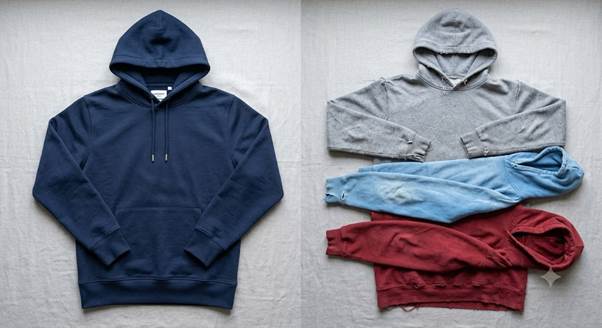
The price tag lies to you, and it does it in a very specific way. A thirty-dollar hoodie feels like a smart, thrifty choice at the register, while a hundred-dollar one feels like an indulgence you should probably talk yourself out of. Then a year passes. The cheap one has pilled, sagged, and been replaced twice, while the expensive one still looks new. Suddenly the arithmetic flips entirely. Understanding this changes how you spend, and it's not about buying expensive things, it's about buying correctly. A well-made cole buxton piece and a cheap lookalike tell completely different stories over time. Let's do the actual maths.
The Number the Price Tag Hides
The price on the tag answers the wrong question. It tells you what a garment costs to acquire, not what it costs to own, and those are different numbers entirely. The figure that actually matters is cost per wear, which is the price divided by how many times you'll realistically wear the piece before it's finished. That single calculation reframes everything. A thirty-dollar hoodie worn twenty times before it pills and sags costs about a dollar fifty per wear. A hundred-dollar hoodie worn three hundred times over five years costs about thirty-three cents per wear. So the "expensive" option is roughly a fifth the price of the "cheap" one in the only terms that count. That's not a small difference, it's a complete reversal. The tag encourages you to optimise for the wrong variable, minimising the upfront number instead of the lifetime one. My honest opinion? Cost per wear is the single most useful concept in clothing spending, and internalising it quietly fixes most bad purchasing. Once you start estimating wears before buying, cheap trend pieces you'd wear twice start looking as expensive as they actually are, and solid basics you'll wear weekly start looking like the bargains they genuinely are. The maths doesn't require a spreadsheet, just the habit of asking how many times before you buy.
Where Cheap Clothes Actually Fail
Understanding why cheap garments die early explains why the cost-per-wear gap is so wide. It starts with fibre, since cheap clothing uses short-staple cotton or high synthetic content, and short fibres work loose under friction to form pills within weeks. That pilling alone makes a piece look finished long before it's structurally worn out. Fabric weight is the second failure, because thin, low-GSM fabric has no structure, clings in odd places, and wears through at stress points fast. Construction is the third, where single-row stitching at the shoulders and cuffs gives way under normal movement, and trimmed seam allowances split because there's no material to hold them. Finishing shortcuts compound all of it, since skipping fabric relaxing means the piece twists after a few washes, and skipping pre-shrinking means it shrinks unpredictably. Each of these is a cost saving at the factory that becomes your problem within months. Here's the thing that makes it worse: these failures are largely invisible at purchase, since a cheap hoodie and a good one can look identical in a photo and even on a hanger. The differences only reveal themselves through wear and washing, which is exactly when it's too late to return the thing. So the savings you felt at checkout get quietly clawed back through replacement.
Calculating It for Yourself
You can estimate cost per wear before buying anything, and here's a simple way to do it:
- Estimate how many times a month you'd realistically wear the piece, being honest rather than optimistic
- Estimate how many months it will survive based on fabric weight and construction quality
- Multiply those together for a rough total number of wears across its whole life
- Divide the price by that total to get your actual cost per wear
- Compare that figure against alternatives rather than comparing the tag prices directly
Step one is where honesty matters most, since people wildly overestimate how often they'll wear exciting pieces and underestimate how often they'll wear boring ones. A statement jacket you love the idea of might get worn monthly, while a plain hoodie gets worn twice a week without you thinking about it. Step two rewards everything covered above, since heavy fabric and solid construction directly extend the months figure. Run this on a cheap trend piece and an expensive basic, and the basic usually wins decisively despite the scarier tag. The calculation takes thirty seconds and it consistently points toward fewer, better, more-worn pieces, which happens to be the cheapest way to dress well over any real timeframe.
Why Good Clothes Feel Cheaper Over Time
Quality pieces don't just last longer, they actively improve the ownership experience in ways cheap ones can't. Heavy cotton softens with washing while holding its shape, so a good hoodie at year two often feels better than it did new. Cheap fabric only degrades. That divergence means your enjoyment of a quality piece rises while your cheap pieces steadily disappoint you more. There's a decision cost too, since owning fewer better pieces that you actually reach for removes the daily friction of a closet full of things you don't wear. A small wardrobe of pieces that all work is easier to live with than a large one of compromises. Maintenance gets cheaper as well, because quality construction survives washing without special handling, while delicate cheap pieces need careful treatment to limp along. Here's the hands-on detail worth knowing: the underarm and cuff areas are where cheap pieces betray their age first, and a good piece checked at those exact points after a year of wear will look markedly fresher, which is the visible proof of everything the price difference bought. So the quality piece isn't just lasting, it's looking better throughout its longer life. One honest limitation: this only holds when the higher price actually reflects better materials and construction, since plenty of expensive pieces are just marked-up hype with the same cheap fabric underneath. Price alone doesn't guarantee quality, which is why checking the signals matters.
What Actually Justifies a Higher Price
Certain features genuinely earn a premium, and knowing them separates worthwhile spending from marketing:
● Heavyweight fabric above 350 GSM for fleece, since density is the foundation of durability and drape
● High cotton content, because natural fibres soften over time while resisting the pilling synthetics suffer
● Reinforced stitching at shoulders, cuffs, and stress points, where cheap construction fails first
● Finishing steps like garment washing and pre-shrinking, which prevent shrinking and twisting later
● Generous seam allowances, giving the garment strength and room for future alterations
The first two do most of the work, and they're the features cheap clothing cuts to hit a low price, precisely because they're invisible in a photo. So a brand that publishes its GSM and fibre content is showing you where your extra money went, while one hiding behind adjectives probably didn't spend it there. That transparency is itself a signal worth trusting. A Hellstar piece or any other that leans into heavyweight construction is competing on exactly the traits that justify a price rather than on hype alone. My preference is paying more only when I can verify the fabric weight and construction, since a high price with no specs behind it is just a gamble with extra steps.
Spending Your Budget Well
None of this means spending more overall, it means spending the same money more effectively. The core shift is buying fewer pieces at higher quality rather than many at low quality, which usually costs less per year despite the scarier individual price tags. Concentrate your budget where wear is highest, so pieces you wear constantly like a daily hoodie or everyday shoes deserve real money, while occasional pieces can be modest. That allocation matters more than the total. Resist buying cheaply because something feels temporary or trend-driven too, since "it's only for now" produces a drawer of poorly-fitting cheap clothes that cost more collectively than one good piece would have. Buy deliberately, putting a day between wanting and purchasing, which kills the impulse buys that generate most low-cost-per-wear regret. Also, factor in that a smaller, better wardrobe saves money beyond the clothes themselves, through less storage stress and fewer replacement trips. Build slowly around foundations you'll wear for years, add character pieces once the base works, and check the fabric signals before every purchase. Do that and you'll spend less over any real timeframe while looking better throughout, which is the outcome the price tag actively steered you away from.
Final Words
The price tag measures acquisition, not ownership, and those are different numbers. Cost per wear is the figure that matters, and by that measure a good piece worn for years is usually cheaper than a cheap one replaced repeatedly. Cheap clothes fail through short fibres, thin fabric, and weak construction, all invisible at checkout and obvious after a few washes. So estimate your wears before buying, spend where wear is highest, and check GSM, fibre content, and stitching before trusting any price. Buy fewer, better, and more-worn. Your wardrobe gets smaller, your outfits get sharper, and your yearly spend drops. The expensive-feeling choice was usually the cheap one all along.
FAQ BLOCK
Q: What is cost per wear?
A: The price of a garment divided by how many times you'll realistically wear it before it's finished. A hundred-dollar hoodie worn three hundred times costs far less per wear than a thirty-dollar one worn twenty.
Q: Why do cheap clothes wear out so fast?
A: Short-staple cotton or high synthetic content pills within weeks, thin fabric wears through at stress points, and single-row stitching gives way. These are factory cost savings that become your problem after a few washes.
Q: Does a higher price always mean better quality?
A: No. Plenty of expensive pieces are marked-up hype with the same cheap fabric underneath. Check the fabric weight, fibre content, and stitching rather than trusting the price, since only those verify where the money went.
Q: Where should I spend the most on clothing?
A: Where wear is highest. A daily hoodie and everyday shoes deserve real money since they're worn constantly and take the most abuse. Occasional pieces can be modest without much downside.
Q: How do I stop wasting money on cheap clothes?
A: Estimate how many times you'll actually wear something before buying, and put a day between wanting and purchasing. That habit kills impulse buys and steadily points you toward fewer, better, more-worn pieces.