As of March 18, 2026, General Mills (NYSE: GIS) finds itself at a critical crossroads. Once considered the ultimate "defensive" play for conservative portfolios, the Minneapolis-based consumer packaged goods (CPG) giant is currently grappling with a fundamental shift in consumer behavior and macroeconomic volatility. Following a disappointing Q3 fiscal 2026 earnings report and a significant downward revision to its full-year outlook, investor focus has shifted from the company's reliable dividends to its ability to generate organic volume growth in a "post-inflationary" world. With the rise of GLP-1 weight-loss medications, the resurgence of private-label competition, and the lingering "stranded costs" from its recent multi-billion dollar yogurt divestiture, General Mills is testing the limits of its "Accelerate" strategy.
Historical Background
The story of General Mills is essentially the story of the American pantry. Founded in 1866 by Cadwallader Washburn as a flour mill on the banks of the Mississippi River, the company evolved through a series of tactical mergers, most notably the 1928 consolidation of several regional milling firms that gave birth to the modern General Mills entity.
For over a century, the company defined the "middle of the grocery store." Key milestones include the introduction of the first ready-to-eat cereal, Wheaties, in 1924, and the acquisition of the Pillsbury Company in 2001 for $10.5 billion—a deal that brought iconic brands like Betty Crocker and Totino’s under one roof. In 2018, General Mills executed another seismic shift, acquiring Blue Buffalo for $8 billion to enter the high-growth pet food sector, effectively signaling its transition from a pure-play human food company to a broader consumer health and wellness conglomerate.
Business Model
General Mills operates through four primary segments, though recent portfolio reshaping has significantly altered the revenue mix:
- North America Retail: The largest segment, encompassing cereals (Cheerios, Lucky Charms), refrigerated dough (Pillsbury), and snacks (Nature Valley).
- Pet: Anchored by Blue Buffalo, this segment focuses on the "humanization of pets" trend. In early 2025, GIS doubled down here by acquiring Whitebridge Pet Brands to bolster its premium wet food and treat offerings.
- North America Foodservice: Providing products to schools, hospitals, and restaurants—a segment that has shown resilience even as retail volumes fluctuated.
- International: A streamlined segment focusing on high-growth regions, particularly after the 2025 sale of its North American yogurt business (Yoplait, Liberté) to Lactalis and Sodiaal for $2.1 billion.
The business model relies on "Brand Power," utilizing massive marketing spend (nearly $1 billion annually) to maintain premium shelf positioning and pricing power.
Stock Performance Overview
Over the past decade, GIS has been a tale of two halves. From 2016 to 2021, the stock largely underperformed the broader S&P 500, weighed down by high debt from the Blue Buffalo acquisition and sluggish cereal sales. However, the 2022-2023 inflationary period allowed GIS to outperform as it successfully pushed through double-digit price increases.
As of today, March 18, 2026, the performance metrics are as follows:
- 1-Year Performance: Down approximately 14%. The stock took a sharp hit in February 2026 after the company slashed its full-year guidance, erasing much of the gains made in late 2024.
- 5-Year Performance: Up a modest 18% (excluding dividends), significantly trailing the S&P 500’s growth.
- 10-Year Performance: GIS has provided a total return of roughly 75%, with the vast majority of that return coming from its consistent dividend yield, which currently sits near 4.1% following the recent price dip.
Financial Performance
The Q3 fiscal 2026 results released earlier this month confirmed the market's worst fears. General Mills reported adjusted diluted EPS of $0.64, missing analyst estimates of $0.73.
Key financial highlights include:
- Organic Net Sales: Declined 1.8% in Q3, driven by a 3% drop in volume that was only partially offset by a 1.2% increase in price/mix.
- Margin Compression: Adjusted operating profit margins contracted by 120 basis points to 16.5%. This was primarily attributed to "stranded costs" from the yogurt divestiture—overhead expenses that the company has yet to cut following the sale of the business unit.
- Full-Year FY2026 Outlook: Management now expects organic net sales to decline 1.5% to 2.0% for the full year, with adjusted EPS expected to fall between 16% and 20% in constant currency. This is a massive departure from the flat-to-1% growth projected just six months ago.
Leadership and Management
CEO Jeff Harmening, who took the helm in 2017, has been the primary architect of the "Accelerate" strategy. His tenure has been defined by "portfolio reshaping"—selling off slow-growth assets like Helper and suddenly, the North American yogurt business, while buying into Pet and high-growth snacks.
While Harmening is respected for his disciplined capital allocation and the successful integration of Blue Buffalo, he currently faces pressure from activist-leaning institutional investors. The core criticism is that General Mills has "priced itself out" of the market, allowing private labels to steal market share while failing to innovate quickly enough to counter the dietary shifts caused by the "Ozempic era."
Products, Services, and Innovations
Innovation at General Mills is currently pivoting toward two poles: Pet Fresh and Nutritional Density.
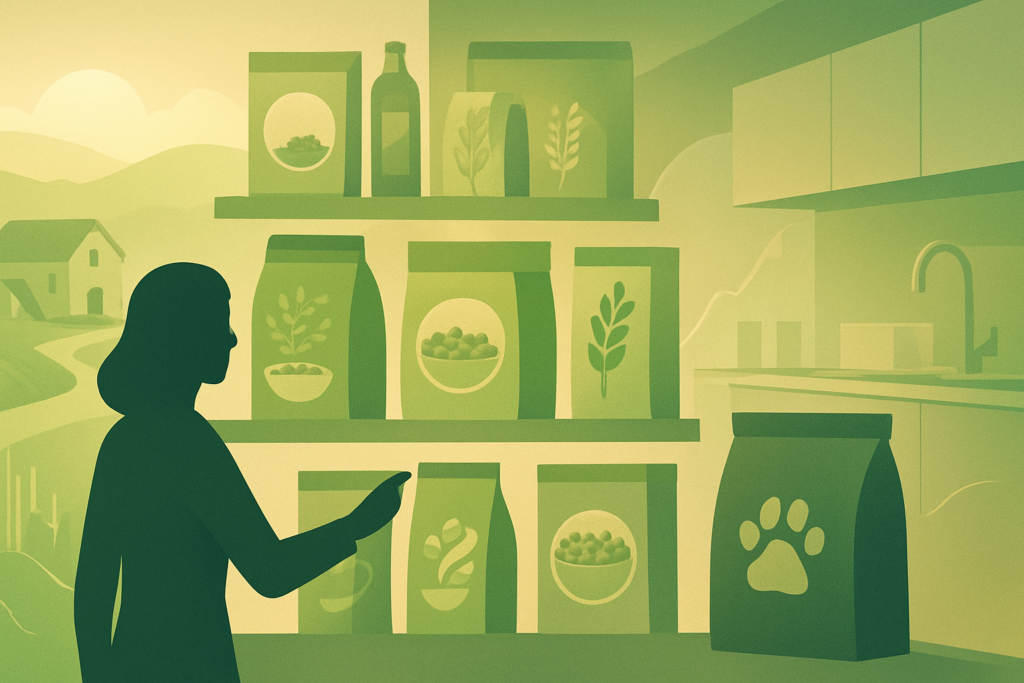
In 2025, the company launched "Blue Buffalo Love Made Fresh," its entry into the $3 billion fresh pet food category. This move aims to compete with direct-to-consumer rivals like The Farmer’s Dog. On the human side, GIS has introduced "GLP-1 companion" products. Recognizing that users of weight-loss drugs eat smaller portions but require higher nutrients, GIS launched high-protein, fiber-fortified versions of Cheerios and Nature Valley protein bars in late 2024. These products are designed to maintain revenue per calorie as total caloric intake among the population begins to tick downward.
Competitive Landscape
General Mills faces a two-front war. On one side are its traditional rivals: Kellanova (NYSE: K) in snacks and The Kraft Heinz Company (NASDAQ: KHC) in meal staples. On the other side is the growing threat of Private Label (store brands from Walmart, Costco, and Aldi).
As of 2026, private label brands have reached a record 18% of unit sales in the cereal and snack categories. General Mills’ pricing power, which was its shield during 2022-2023, has become a liability. Analysts note that the price gap between a box of Cheerios and a store-brand equivalent has widened to over 35% in some markets, a threshold that historically triggers mass consumer switching.
Industry and Market Trends
The CPG industry is currently defined by "Volume Recovery over Pricing." After years of raising prices to combat inflation, companies like General Mills are finding that consumers are tapped out.
- The GLP-1 Factor: Data from early 2026 suggests that households with GLP-1 users show a 6% decline in overall grocery spending. This is particularly damaging for "processed carbohydrate" categories—a core GIS strength.
- Pet Humanization: Despite the macro headwinds, the pet segment remains a bright spot. "Pet parents" are less likely to trade down on quality than they are for their own food, though the shift from dry kibble to wet/fresh food is requiring significant R&D investment.
Risks and Challenges
The primary risk for GIS is Operational Deleveraging. When volumes decline, the cost to produce each box of cereal rises, squeezing margins.
- Tariff Exposure: Recent trade policies in early 2026 have led to increased tariffs on ingredients imported from Canada and packaging materials from China, adding an estimated $200 million in unforeseen input costs for FY2026.
- Stranded Costs: The $2.1 billion yogurt sale left the company with a massive corporate infrastructure that was previously supported by $1.5 billion in yogurt revenue. Until GIS can "right-size" its corporate headcount and logistics, these costs will continue to drag on earnings.
Opportunities and Catalysts
Despite the gloom, several catalysts could spark a reversal:
- Pet Segment Turnaround: The integration of Whitebridge Pet Brands is expected to be fully realized by late 2026, potentially turning the Pet segment into a high-single-digit growth engine again.
- M&A Potential: With a clean balance sheet following the yogurt sale, General Mills is well-positioned for a mid-sized acquisition in the "wellness" or "fresh" space.
- Valuation: Trading at approximately 13x forward earnings, GIS is at its lowest valuation multiple in five years, potentially attracting "value hunters" or becoming a target for private equity.
Investor Sentiment and Analyst Coverage
Wall Street is currently "Neutral" to "Underweight" on GIS. Of the 22 major analysts covering the stock, only 4 maintain a "Buy" rating. The consensus view is that the earnings "trough" has not yet been reached, with many waiting for evidence that volume growth can return without further heavy discounting.
Retail sentiment is mixed. While dividend-seeking investors appreciate the yield, there is growing "chatter" on platforms like FinTwit regarding the company's lack of a clear "AI or high-tech" catalyst, making it appear as a "legacy" business in a high-growth market.
Regulatory, Policy, and Geopolitical Factors
General Mills is heavily impacted by the current U.S. administration’s stance on Food Labeling and Nutrition. New FDA guidelines expected in late 2026 regarding "Healthy" labeling could force a redesign or reformulation of several core cereal brands. Furthermore, the geopolitical tension in Eastern Europe and trade friction with Canada continues to impact the global wheat and oat supply chains, leading to price volatility for the company's primary raw materials.
Conclusion
General Mills is a company in the middle of a painful but necessary evolution. The March 2026 Q3 earnings miss and the subsequent guidance cut serve as a stark reminder that "Brand Power" is not an infinite shield against changing consumer health trends and economic reality.
For the long-term investor, GIS remains a premier dividend payer with a world-class portfolio of brands. However, the next 12 to 18 months will be defined by the management's ability to shed "stranded costs," revitalize the Blue Buffalo brand, and successfully market to a more health-conscious, GLP-1-using consumer. Until volume growth stabilizes, GIS is likely to remain a "show-me" story rather than a "buy-the-dip" opportunity.
This content is intended for informational purposes only and is not financial advice.