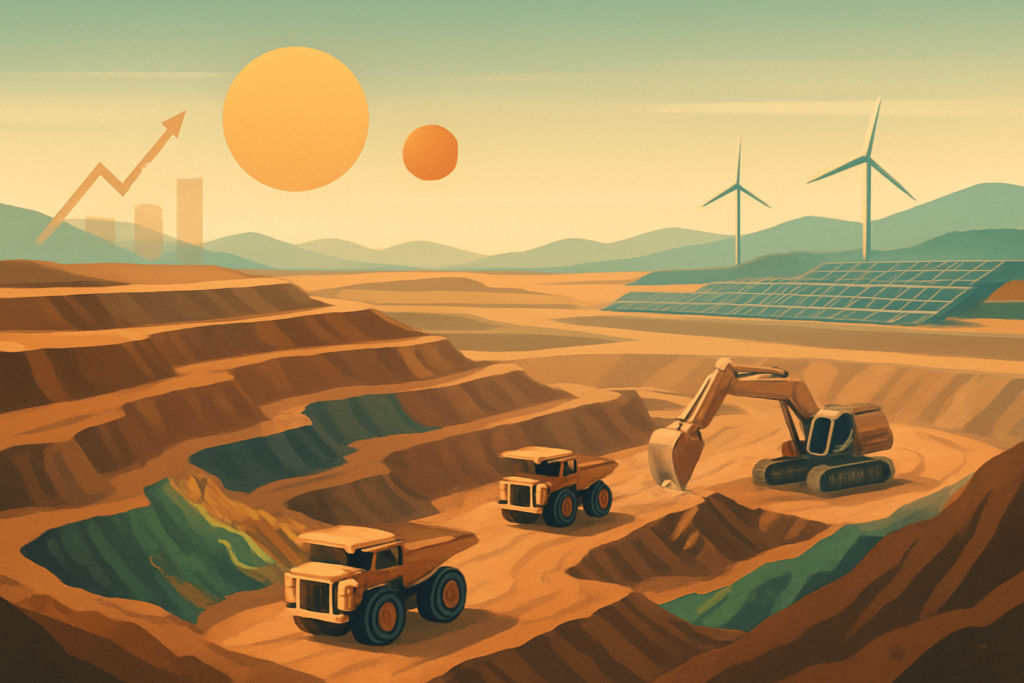
As of March 23, 2026, Barrick Gold Corporation (NYSE: GOLD; TSX: ABX)—recently rebranded in some markets as Barrick Mining Corporation—stands at a historic crossroads. The company is no longer just a "gold miner"; it has successfully evolved into a dual-commodity powerhouse, strategically balancing its massive gold reserves with a rapidly expanding copper portfolio.
With gold prices hitting unprecedented levels above $4,500 per ounce in early 2026 and copper demand surging due to the global energy transition, Barrick has become a focal point for institutional investors seeking a "safe-haven" asset with industrial growth upside. The company’s recent announcement of a minority IPO for its North American assets has further heightened market scrutiny, signaling a new era of value crystallization under a fresh leadership team.
Historical Background
Barrick’s journey began in 1983, founded by the late entrepreneur Peter Munk. Initially a small oil and gas company, it pivoted to gold and achieved legendary status in 1986 with the acquisition of the Goldstrike mine in Nevada. For decades, Barrick pursued growth through aggressive M&A, becoming the world’s largest gold producer but also accumulating a staggering $13 billion in debt by the mid-2010s.
A pivotal transformation occurred in 2019 when Barrick merged with Randgold Resources. This merger brought Mark Bristow into the CEO role, introducing a "Tier 1" asset strategy and a rigorous focus on operational efficiency and debt reduction. By 2024, the "New Barrick" had largely eliminated its net debt. In late 2025, the company entered its latest chapter: the "Barrick 2.0" era, marked by a rebranding to reflect its copper ambitions and the transition of leadership from Bristow to the current CEO, Mark Hill.
Business Model
Barrick operates on a "Tier 1" asset philosophy. A Tier 1 mine is defined as an operation that produces at least 500,000 ounces of gold annually, has a mine life of more than 10 years, and maintains costs in the lower half of the industry curve.
Revenue Streams:
- Gold (Approx. 70% of EBITDA): The core of the business, anchored by the Nevada Gold Mines (NGM) joint venture, Kibali in the DRC, and Loulo-Gounkoto in Mali.
- Copper (Approx. 30% of EBITDA): A rapidly growing segment centered on Lumwana in Zambia and the world-class Reko Diq project in Pakistan.
The company operates through a decentralized regional management structure, which allows for rapid decision-making at the mine site level. Barrick sells its refined gold bullion and copper concentrate to international refineries and smelters, maintaining a diversified global customer base.
Stock Performance Overview
Over the past year (March 2025 – March 2026), Barrick’s stock has outperformed the broader market, surging 92%. This rally was primarily fueled by the explosive rise in spot gold prices and the successful resolution of long-standing tax disputes in West Africa.
- 5-Year Horizon: The stock has seen a significant recovery since the 2021 lows. Investors who held through the post-merger integration period have been rewarded with a total return exceeding 120%, including dividends.
- 10-Year Horizon: The decade-long view shows a transformation from a debt-heavy laggard to a lean dividend-payer. While the stock faced volatility during the low-gold-price environment of 2015-2018, its CAGR over the last decade has significantly outperformed its primary rival, Newmont.
Financial Performance
Barrick enters 2026 in its strongest financial position in decades.
- 2025 Earnings: The company reported record revenue of $16.96 billion for the full year 2025, with adjusted net earnings of $4.14 billion ($2.42 per share).
- Margins and Costs: All-In Sustaining Costs (AISC) for gold averaged $1,637 per ounce in 2025. While inflationary pressures remain, the high price of gold has widened margins to record levels.
- Balance Sheet: Barrick maintains a "Net Cash" position of approximately $323 million as of early 2026, providing a massive buffer for capital expenditures and M&A.
- Dividends: Following a policy update in late 2025, Barrick now targets a payout of 50% of free cash flow. The current quarterly dividend stands at $0.175 per share, representing a 40% increase year-over-year.
Leadership and Management
In September 2025, the industry was surprised by the resignation of Mark Bristow. On February 5, 2026, Mark Hill was formally appointed as the permanent CEO. Hill, a 30-year mining veteran known for his technical expertise and pragmatic management style, is tasked with executing the "Barrick 2.0" strategy.
Supporting Hill is Helen Cai, who became CFO in early 2026, bringing a focus on capital allocation and shareholder returns. John Thornton continues to serve as Chairman, providing a vital bridge to Chinese investors and geopolitical partners. The leadership transition has been viewed by analysts as a "maturation" of the company, moving away from Bristow’s charismatic but sometimes abrasive style toward a more institutional, process-driven approach.
Products, Services, and Innovations
Barrick’s competitive edge lies in its technological integration and geological expertise.
- Automation: The Kibali mine in the DRC remains the global benchmark for underground mine automation, utilizing autonomous haulage and drilling systems to lower costs and improve safety.
- Innovation Pipeline: The Fourmile project in Nevada, 100% owned by Barrick, is currently one of the highest-grade gold discoveries in the world. Its development is central to the company’s organic growth strategy.
- Renewable Energy: Barrick has pioneered the use of large-scale solar and hydropower at remote mine sites, significantly reducing carbon footprints and lowering long-term energy costs.
Competitive Landscape
Barrick operates in a highly consolidated global market. Its primary rivals include:
- Newmont (NYSE: NEM): The world’s largest producer by volume. While Newmont has a larger total production profile, Barrick currently boasts higher margins and a cleaner balance sheet.
- Agnico Eagle (NYSE: AEM): Known for its "low-risk" profile, Agnico focuses almost exclusively on safe jurisdictions like Canada and Australia. Barrick, by contrast, is a higher-risk, higher-reward play with significant exposure to emerging markets.
- Freeport-McMoRan (NYSE: FCX): As Barrick expands its copper production, it increasingly competes with copper giants like Freeport for investor capital dedicated to the "electrification" trade.
Industry and Market Trends
The mining sector in 2026 is dominated by two themes: The Gold Bull Market and The Copper Deficit.
- Gold as a Hedge: Geopolitical tensions and persistent global inflation have cemented gold's role as the ultimate store of value. Central bank buying has reached record levels, providing a firm floor for prices.
- Copper Scarcity: The lack of new copper discoveries and the long lead times for mine development have created a structural deficit. Barrick’s pivot to copper is perfectly timed to capitalize on the demand from electric vehicles (EVs) and AI-driven data center expansion.
Risks and Challenges
Despite its strengths, Barrick faces significant headwinds:
- Geopolitical Risk: Operating in jurisdictions like Mali, Pakistan, and the DRC carries inherent risks. While the 10-year permit renewal at Loulo-Gounkoto in early 2026 was a victory, political instability in West Africa remains an ongoing concern.
- Operational Inflation: Rising costs for labor, fuel, and specialized equipment continue to challenge AISC targets.
- Reko Diq Security: The flagship Reko Diq project in Pakistan is currently under security review following regional unrest, potentially delaying first production beyond the 2028 target.
Opportunities and Catalysts
- The "NewCo" IPO: By late 2026, Barrick plans to IPO a 10-15% stake in its North American assets (including NGM and Fourmile). Analysts believe this could "surface" billions in value by allowing investors to price the North American assets at a premium multiple relative to the global portfolio.
- Copper Expansion: The $2 billion "Super Pit" expansion at Lumwana in Zambia is set to double copper production by 2028, potentially making Barrick a top-10 global copper producer.
- M&A Potential: With a massive cash pile, Barrick remains a potential acquirer of mid-tier gold producers that possess Tier 1-potential assets.
Investor Sentiment and Analyst Coverage
Wall Street sentiment on Barrick has shifted from "Neutral" to "Overweight" throughout late 2025. Institutional investors have praised the company’s capital discipline and its focus on copper.
- Analyst Ratings: As of March 2026, 18 out of 24 analysts covering the stock have a "Buy" or "Strong Buy" rating.
- Hedge Fund Interest: Notable increase in positions from macro funds seeking exposure to the gold-copper "super-cycle."
- Retail Sentiment: On platforms like Reddit and X, Barrick is often discussed as a "value play" compared to the high-multiple tech sector, with particular excitement surrounding the potential special dividend from the NewCo IPO.
Regulatory, Policy, and Geopolitical Factors
- Mali Permit Renewal: The February 2026 agreement with the Malian government secured the future of the Loulo-Gounkoto complex, resolving a multi-year tax dispute that had weighed on the stock.
- US Infrastructure Support: In early 2026, the US Export-Import Bank committed $1.3 billion in financing for the Reko Diq project, signaling the strategic importance of this copper-gold asset to Western supply chains.
- Environmental Regulations: Stricter ESG reporting requirements in the EU and North America have forced Barrick to accelerate its decarbonization efforts, which the company has framed as a long-term cost-saving measure.
Conclusion
Barrick Gold—now Barrick Mining—has successfully navigated the transition from a struggling, debt-laden gold miner to a disciplined, multi-commodity leader. Under the new leadership of Mark Hill and with a balance sheet that is the envy of the industry, the company is uniquely positioned to benefit from the simultaneous rallies in gold and copper.
Investors should closely watch the progress of the North American "NewCo" IPO in the second half of 2026, as well as any updates regarding the security situation at Reko Diq. While geopolitical risks remain a permanent feature of Barrick’s profile, its high-margin Tier 1 assets and commitment to shareholder returns make it a compelling cornerstone for any resource-focused portfolio.
This content is intended for informational purposes only and is not financial advice. Today's date is March 23, 2026.