Wrapping up Q2 earnings, we look at the numbers and key takeaways for the generic pharmaceuticals stocks, including Amneal (NASDAQ: AMRX) and its peers.
The generic pharmaceutical industry operates on a volume-driven, low-cost business model, producing bioequivalent versions of branded drugs once their patents expire. These companies benefit from consistent demand for affordable medications, as they are critical to reducing healthcare costs. Generics typically face lower R&D expenses and shorter regulatory approval timelines compared to branded drug makers, enabling cost efficiencies. However, the industry is highly competitive, with intense pricing pressures, thin margins, and frequent legal challenges from branded pharmaceutical companies over patent disputes. Looking ahead, the industry is supported by tailwinds such as the role of AI in streamlining drug development (reverse engineering complex formulations) and manufacturing efficiency (optimize processes and remove inefficiencies). Governments and insurers' focus on reducing drug costs can also boost generics' adoption. However, headwinds include escalating pricing pressure from large buyers like pharmacy chains and healthcare distributors as well as evolving regulatory hurdles.
The 4 generic pharmaceuticals stocks we track reported a very strong Q2. As a group, revenues beat analysts’ consensus estimates by 2.6%.
While some generic pharmaceuticals stocks have fared somewhat better than others, they have collectively declined. On average, share prices are down 3.9% since the latest earnings results.
Amneal (NASDAQ: AMRX)
Founded in 2002 and growing into one of America's largest generic drug producers, Amneal Pharmaceuticals (NASDAQ: AMRX) develops, manufactures, and distributes generic medicines, specialty branded drugs, biosimilars, and injectable products for the U.S. healthcare market.
Amneal reported revenues of $796.2 million, up 9.9% year on year. This print exceeded analysts’ expectations by 3.6%. Overall, it was a very strong quarter for the company with a beat of analysts’ EPS estimates and an impressive beat of analysts’ full-year EPS guidance estimates.
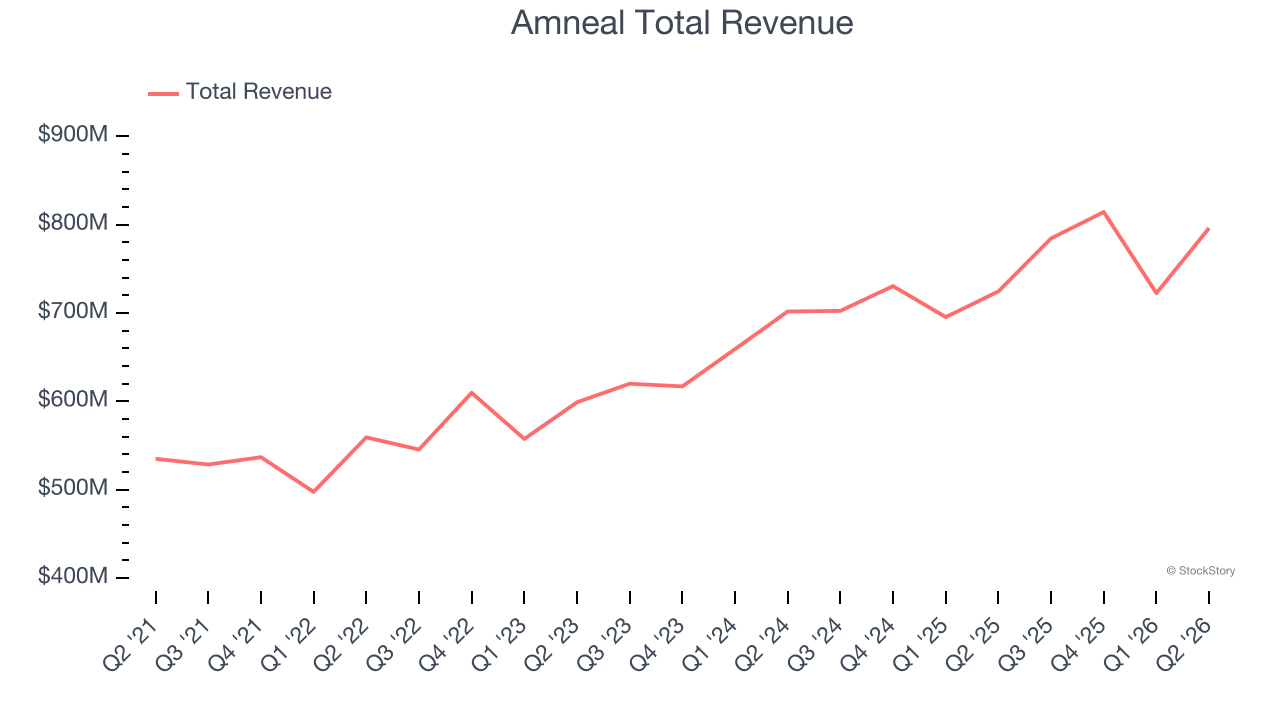
Amneal pulled off the biggest analyst estimate beat and highest full-year guidance raise in the group. Investor expectations, however, were likely higher than Wall Street’s published projections, leaving some wishing for even better results (analysts’ consensus estimates are those published by big banks and advisory firms, not the investors who make buy and sell decisions). The stock is down 6.4% since reporting and currently trades at $17.88.
Is now the time to buy Amneal? Access our full analysis of the earnings results here, it’s free.
Best Q2: Amphastar Pharmaceuticals (NASDAQ: AMPH)
Founded in 1996 and known for its expertise in complex drug formulations, Amphastar Pharmaceuticals (NASDAQ: AMPH) develops and manufactures technically challenging injectable and inhalation medications, including both generic and proprietary pharmaceutical products.
Amphastar Pharmaceuticals reported revenues of $183.9 million, up 5.4% year on year, outperforming analysts’ expectations by 2%. The business had an exceptional quarter with a beat of analysts’ EPS estimates.
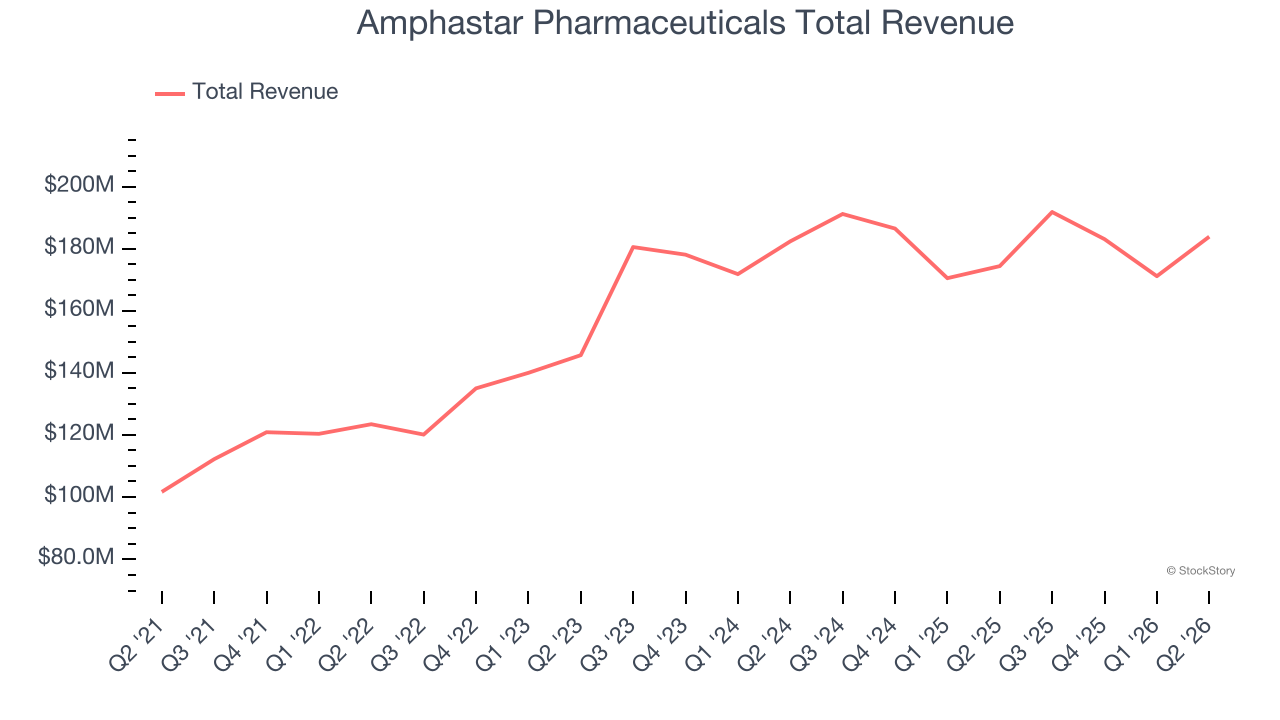
The market seems happy with the results as the stock is up 8.5% since reporting. It currently trades at $21.50.
Is now the time to buy Amphastar Pharmaceuticals? Access our full analysis of the earnings results here, it’s free.
Weakest Q2: ANI Pharmaceuticals (NASDAQ: ANIP)
With a diverse portfolio of 116 pharmaceutical products and a growing rare disease platform, ANI Pharmaceuticals (NASDAQ: ANIP) develops, manufactures, and markets branded and generic prescription pharmaceuticals, with a focus on rare disease treatments.
ANI Pharmaceuticals reported revenues of $266 million, up 25.9% year on year, exceeding analysts’ expectations by 2.4%. Still, it was a mixed quarter as it posted full-year revenue guidance slightly missing analysts’ expectations.
ANI Pharmaceuticals delivered the fastest revenue growth but had the weakest full-year guidance update in the group. As expected, the stock is down 11.8% since the results and currently trades at $72.85.
Read our full analysis of ANI Pharmaceuticals’s results here.
Viatris (NASDAQ: VTRS)
Created through the 2020 merger of Mylan and Pfizer's Upjohn division, Viatris (NASDAQ: VTRS) is a healthcare company that develops, manufactures, and distributes branded and generic medicines across more than 165 countries worldwide.
Viatris reported revenues of $3.76 billion, up 4.9% year on year. This result surpassed analysts’ expectations by 2.2%. Overall, it was a strong quarter as it also recorded a beat of analysts’ EPS estimates and a solid beat of analysts’ full-year EPS guidance estimates.
Viatris had the slowest revenue growth of the whole group. The stock is down 5.8% since reporting and currently trades at $16.63.
Read our full, actionable report on Viatris here, it’s free.
Market Update
Over the past year, investors have been forced to repeatedly answer the same question: what is the market’s biggest risk? The answer has changed several times, and each shift has reshaped market leadership.
Late in 2025 and early 2026, artificial intelligence became the market’s primary uncertainty. Investors questioned whether AI would erode software pricing power and weaken competitive moats as AI made it easier to replicate once-differentiated products.
By the spring, technology took a back seat to geopolitics. The U.S. conflict with Iran briefly became the market’s dominant narrative, raising concerns about oil prices, inflation, and global growth. But as energy markets remained orderly and fears of a prolonged supply disruption faded, investors quickly turned their focus back to fundamentals.
Want to invest in winners with rock-solid fundamentals? Check out our Hidden Gem Stocks and add them to your watchlist. These companies are poised for growth regardless of the political or macroeconomic climate.