Wrapping up Q2 earnings, we look at the numbers and key takeaways for the consumer discretionary - casino operator stocks, including Monarch (NASDAQ: MCRI) and its peers.
The Consumer Discretionary sector, by definition, is made up of companies selling non-essential goods and services. When economic conditions deteriorate or tastes shift, consumers can easily cut back or eliminate these purchases. For long-term investors with five-year holding periods, this creates a structural challenge: the sector is inherently hit-driven, with low switching costs and fickle customers. As a result, only a handful of companies can reliably grow demand and compound earnings over long periods, which is why our bar is high and High Quality ratings are rare. Casino operators run gaming resorts and facilities that generate revenue from gambling, hospitality, food and beverage, and entertainment offerings. Tailwinds include pent-up travel demand, expansion into new jurisdictions legalizing gaming, and growing interest in integrated resort developments in Asia and the Middle East. However, the industry faces notable headwinds: heavy regulatory and licensing requirements limit operational flexibility, capital expenditure for property development and renovation is substantial, and revenue is highly sensitive to macroeconomic conditions and consumer confidence. Rising competition from online gambling platforms, regional saturation in mature markets, and geopolitical risks in key international jurisdictions add further uncertainty.
The 8 consumer discretionary - casino operator stocks we track reported a mixed Q2. As a group, revenues beat analysts’ consensus estimates by 0.8%.
While some consumer discretionary - casino operator stocks have fared somewhat better than others, they have collectively declined. On average, share prices are down 1.8% since the latest earnings results.
Monarch (NASDAQ: MCRI)
Established in 1993, Monarch (NASDAQ: MCRI) operates luxury casinos and resorts, offering high-end gaming, dining, and hospitality experiences.
Monarch reported revenues of $142.6 million, up 4.2% year on year. This print was in line with analysts’ expectations, and overall, it was a satisfactory quarter for the company with a beat of analysts’ EPS estimates but a slight miss of analysts’ EBITDA estimates.
CEO CommentJohn Farahi, Co-Chairman and Chief Executive Officer of Monarch, commented: “Monarch delivered record second-quarter financial results. Second quarter net revenue increased 4.2% year-over-year reflecting growth in casino, F&B and hotel revenue. Adjusted EBITDA grew 3.3% compared to the same period last year. The second-quarter 2026 adjusted EBITDA margin remained near record levels at 37.2%, inclusive of a rise in employee benefit expenses, compared to 37.5% in Q2 2025. The second quarter revenue and adjusted EBITDA growth highlights our ability to drive sustained growth from our two properties.
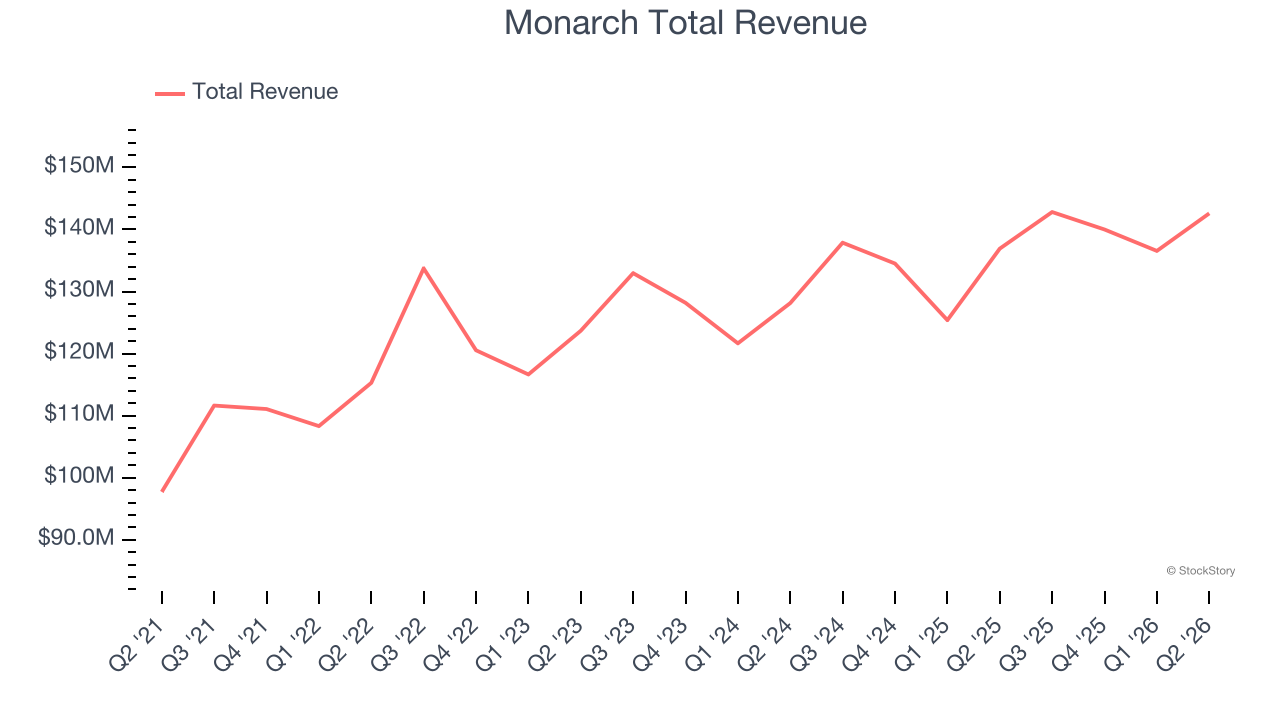
Even though it had a relatively good quarter, the market seems discontent with the results. The stock is down 1.7% since reporting and currently trades at $122.31.
Is now the time to buy Monarch? Access our full analysis of the earnings results here, it’s free.
Best Q2: Wynn Resorts (NASDAQ: WYNN)
Founded by the former Mirage Resorts CEO, Wynn Resorts (NASDAQ: WYNN) is a global developer and operator of high-end hotels and casinos, known for its luxurious properties and premium guest services.
Wynn Resorts reported revenues of $1.86 billion, up 6.9% year on year, outperforming analysts’ expectations by 1.4%. The business had a very strong quarter with a beat of analysts’ EPS estimates.
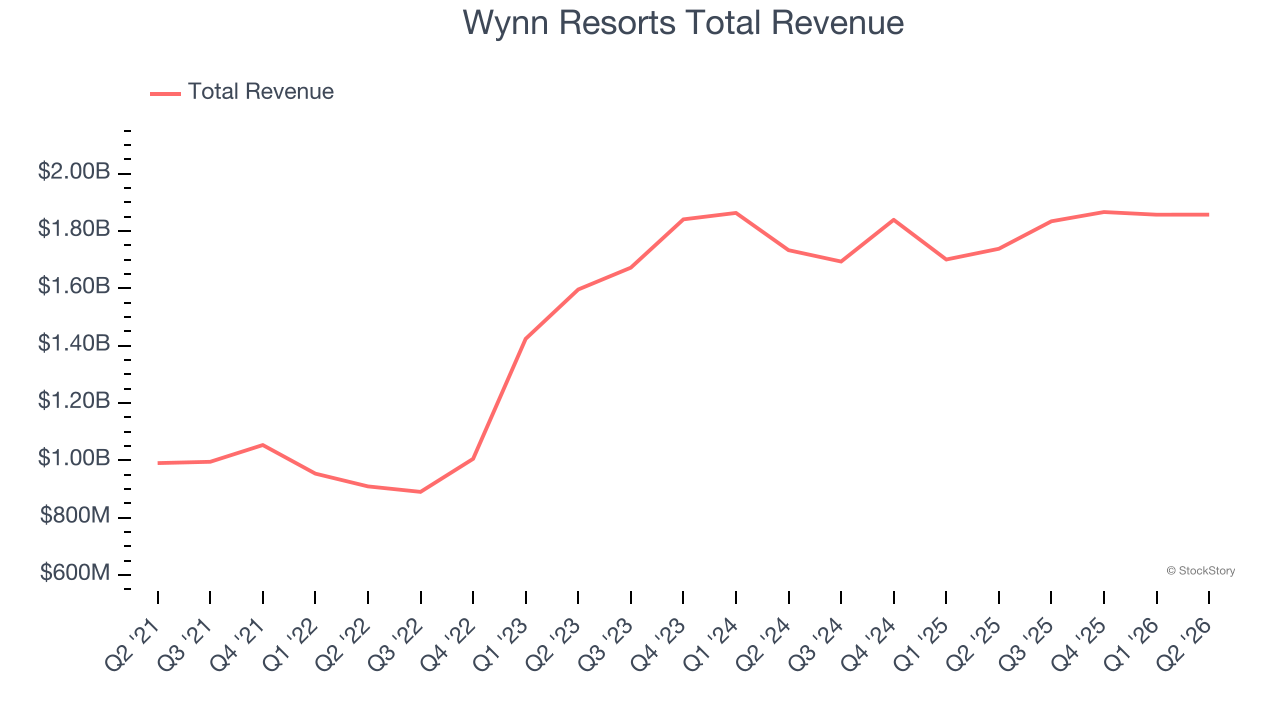
Wynn Resorts scored the fastest revenue growth in the group. The market seems happy with the results as the stock is up 6.3% since reporting. It currently trades at $103.80.
Is now the time to buy Wynn Resorts? Access our full analysis of the earnings results here, it’s free.
Weakest Q2: Caesars Entertainment (NASDAQ: CZR)
Formerly Eldorado Resorts, Caesars Entertainment (NASDAQ: CZR) is a global gaming and hospitality company operating numerous casinos, hotels, and resort properties.
Caesars Entertainment reported revenues of $2.99 billion, up 3% year on year, exceeding analysts’ expectations by 0.6%. Still, it was a softer quarter as it posted a significant miss of analysts’ EPS estimates and a miss of analysts’ EBITDA estimates.
The stock is flat since the results and currently trades at $29.75.
Read our full analysis of Caesars Entertainment’s results here.
PENN Entertainment (NASDAQ: PENN)
Established in 1982, PENN Entertainment (NASDAQ: PENN) is a diversified American operator of casinos, sports betting, and entertainment venues.
PENN Entertainment reported revenues of $1.86 billion, up 5.2% year on year. This print was in line with analysts’ expectations. Taking a step back, it was a mixed quarter as it also logged a beat of analysts’ EPS estimates but a significant miss of analysts’ EBITDA estimates.
The stock is down 2.5% since reporting and currently trades at $19.13.
Read our full, actionable report on PENN Entertainment here, it’s free.
Red Rock Resorts (NASDAQ: RRR)
Founded in 1976, Red Rock Resorts (NASDAQ: RRR) operates a range of casino resorts and entertainment properties, primarily in the Las Vegas metropolitan area.
Red Rock Resorts reported revenues of $510.3 million, down 3% year on year. This number beat analysts’ expectations by 2.2%. Zooming out, it was a slower quarter as it logged a significant miss of analysts’ EPS estimates.
Red Rock Resorts pulled off the biggest analyst estimate beat but had the slowest revenue growth among its peers. The stock is down 1.9% since reporting and currently trades at $63.04.
Read our full, actionable report on Red Rock Resorts here, it’s free.
Market Update
Over the past year, investors have been forced to repeatedly answer the same question: what is the market’s biggest risk? The answer has changed several times, and each shift has reshaped market leadership.
Late in 2025 and early 2026, artificial intelligence became the market’s primary uncertainty. Investors questioned whether AI would erode software pricing power and weaken competitive moats as AI made it easier to replicate once-differentiated products.
By the spring, technology took a back seat to geopolitics. The U.S. conflict with Iran briefly became the market’s dominant narrative, raising concerns about oil prices, inflation, and global growth. But as energy markets remained orderly and fears of a prolonged supply disruption faded, investors quickly turned their focus back to fundamentals.
Want to invest in winners with rock-solid fundamentals? Check out our 9 Best Market-Beating Stocks and add them to your watchlist. These companies are poised for growth regardless of the political or macroeconomic climate.