The end of the earnings season is always a good time to take a step back and see who shined (and who not so much). Let’s take a look at how media & entertainment stocks fared in Q1, starting with IMAX (NYSE: IMAX).
Simply put, traditional media like linear TV is losing eyeballs and as a result, ad dollars as well. On the other hand, digital media such as streaming and social media are taking share of audience and ad spend. AI-driven content creation and digital advertising are continuing to evolve, which benefits companies in the sector that invest behind these themes. On the other hand, headwinds include growing regulatory scrutiny on AI-generated content, with many publishers balking at anything that gets no human oversight. Additional areas to navigate for companies in the space include the phasing out of third-party cookies, which could make traditional ways of tracking the online behavior of consumers (a secret sauce in digital marketing) much less effective.
The 14 media & entertainment stocks we track reported a mixed Q1. As a group, revenues missed analysts’ consensus estimates by 1.1% while next quarter’s revenue guidance was 0.9% below.
Amidst this news, share prices of the companies have had a rough stretch. On average, they are down 6.9% since the latest earnings results.
IMAX (NYSE: IMAX)
Originally developed for World Expo '67 in Montreal as an innovative projection system, IMAX (NYSE: IMAX) provides proprietary large-format cinema technology and systems that deliver immersive movie experiences with enhanced image quality and sound.
IMAX reported revenues of $81.38 million, down 6.1% year on year. This print was in line with analysts’ expectations, and overall, it was a very strong quarter for the company with a beat of analysts’ EPS estimates and revenue in line with analysts’ estimates.
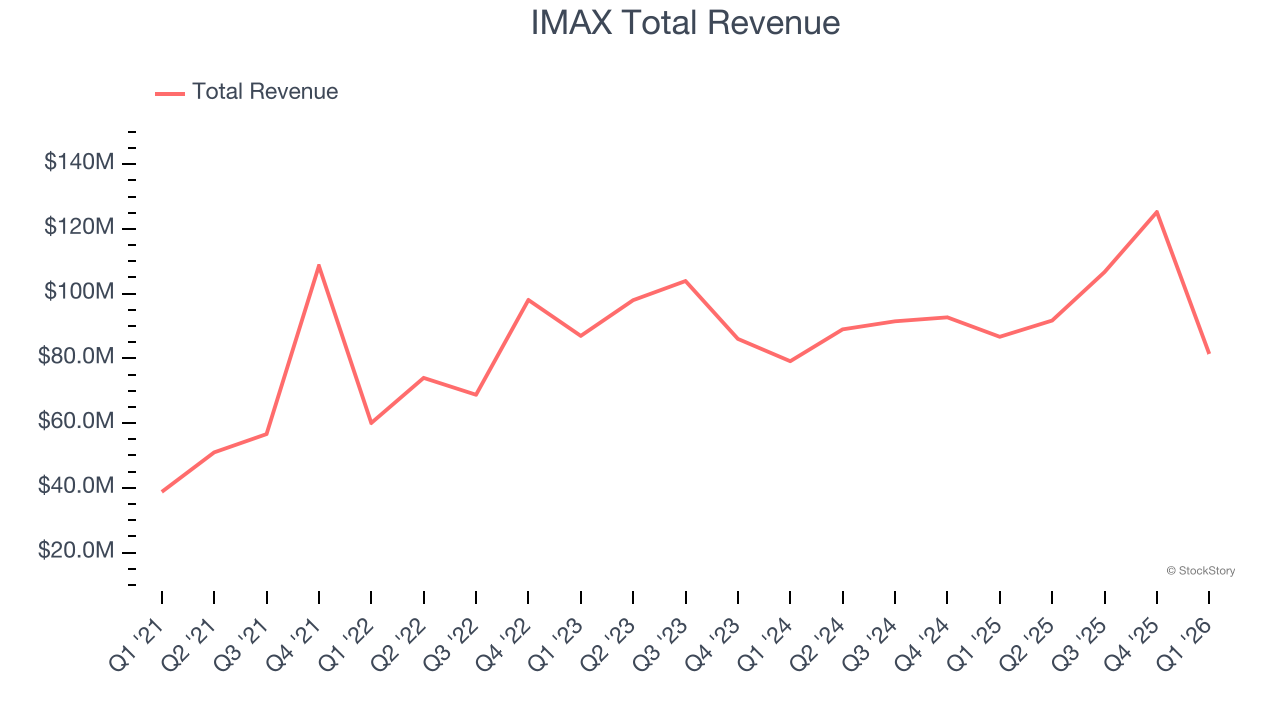
The stock is down 11.6% since reporting and currently trades at $33.60.
Best Q1: Sinclair (NASDAQ: SBGI)
With over 2,400 hours of local news produced weekly and 640 broadcast channels reaching millions of American homes, Sinclair (NASDAQ: SBGI) operates a network of 185 local television stations across 86 U.S. markets, producing news programming and distributing content from major networks.
Sinclair reported revenues of $807 million, up 4% year on year, outperforming analysts’ expectations by 2%. The business had an exceptional quarter with a beat of analysts’ EPS and revenue estimates.
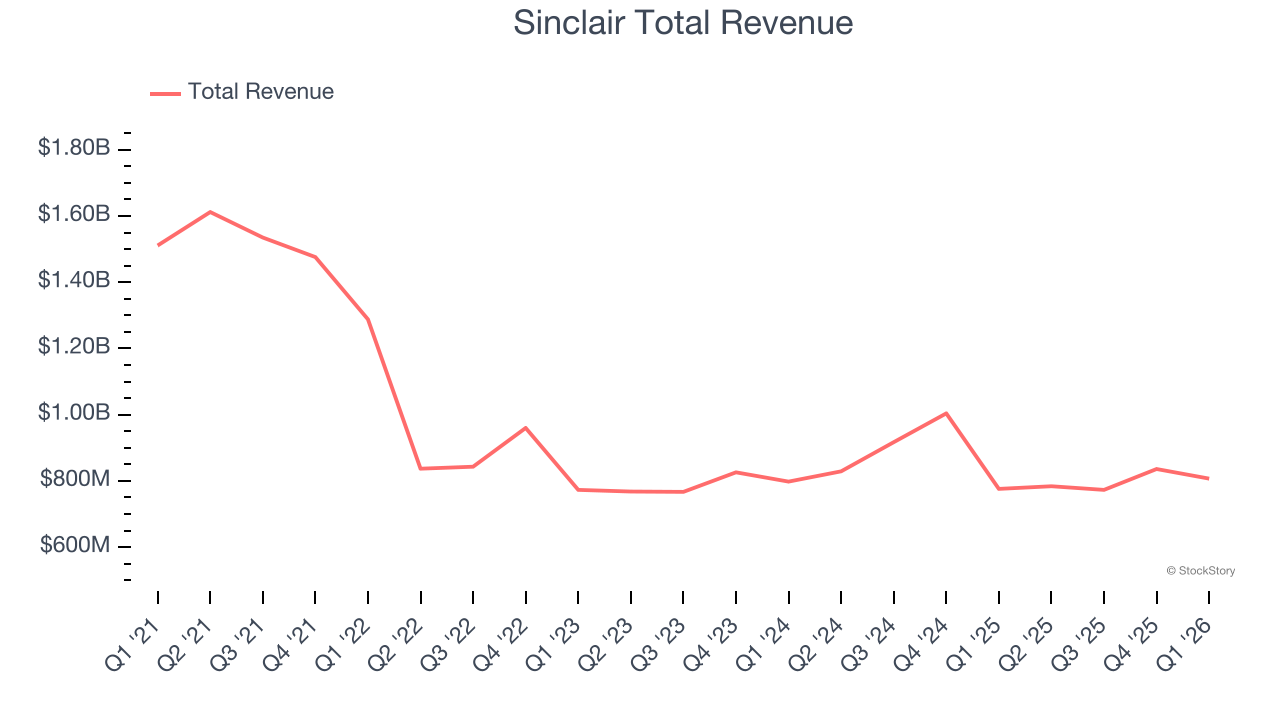
Although it had a fine quarter compared to its peers, the market seems unhappy with the results as the stock is down 9.8% since reporting. It currently trades at $14.02.
Is now the time to buy Sinclair? Access our full analysis of the earnings results here, it’s free.
Weakest Q1: IAC (NASDAQ: IAC)
Originally known as InterActiveCorp and built through Barry Diller's strategic acquisitions since the 1990s, IAC (NASDAQ: IAC) operates a portfolio of category-leading digital businesses including Dotdash Meredith, Angi, and Care.com, focusing on digital publishing, home services, and caregiving platforms.
IAC reported revenues of $422.9 million, down 12.2% year on year, falling short of analysts’ expectations by 17.1%. It was a disappointing quarter as it posted a significant miss of analysts’ revenue and EPS estimates.
IAC delivered the weakest performance against analyst estimates and slowest revenue growth in the group. As expected, the stock is down 11.7% since the results and currently trades at $39.89.
Read our full analysis of IAC’s results here.
Magnite (NASDAQ: MGNI)
Born from the 2020 merger of Rubicon Project and Telaria, Magnite (NASDAQ: MGNI) operates the world's largest independent sell-side advertising platform that automates the buying and selling of digital advertising inventory across all channels and formats.
Magnite reported revenues of $164.4 million, up 5.5% year on year. This print lagged analysts' expectations by 5.5%. Taking a step back, it was a satisfactory quarter as it also produced a beat of analysts’ EPS estimates but a significant miss of analysts’ revenue estimates.
The stock is down 4.7% since reporting and currently trades at $12.77.
Read our full, actionable report on Magnite here, it’s free.
Rumble (NASDAQ: RUM)
Founded in 2013 as a champion for content creator rights and free expression, Rumble (NASDAQ: RUM) is a video sharing platform that positions itself as a free speech alternative to mainstream platforms, offering creators more favorable revenue-sharing opportunities.
Rumble reported revenues of $25.46 million, up 7.4% year on year. This result missed analysts’ expectations by 2%. It was a disappointing quarter as it also recorded a significant miss of analysts’ revenue and EPS estimates.
The stock is down 13.4% since reporting and currently trades at $7.22.
Read our full, actionable report on Rumble here, it’s free.
Market Update
Late in 2025 into early 2026, there was hand wringing around artificial intelligence. For software companies, the fear was that AI would erode pricing power and compress margins as new tools made it easier to replicate what once required expensive enterprise platforms. Crypto investors had their own version of the same anxiety: if AI agents could trade, allocate capital, and manage wallets autonomously, what exactly was the long-term value of today’s crypto infrastructure?
These concerns triggered a noticeable rotation away from these sectors and into safer havens. But markets rarely dwell on one narrative for long. Spring 2026 came, and the focus shifted abruptly from technological disruption to geopolitical risk. The US’ conflict with Iran became the dominant driver of market psychology, and when geopolitics takes center stage, the script changes quickly. Investors stop debating growth rates and start worrying about oil supply, inflation, and global stability.
Want to invest in winners with rock-solid fundamentals? Check out our Strong Momentum Stocks and add them to your watchlist. These companies are poised for growth regardless of the political or macroeconomic climate.
StockStory’s analyst team — all seasoned professional investors — uses quantitative analysis and automation to deliver market-beating insights faster and with higher quality.