
Eyewear retailer Warby Parker (NYSE: WRBY) met Wall Street’s revenue expectations in Q4 CY2025, with sales up 11.2% year on year to $212 million. On the other hand, the company’s full-year revenue guidance of $967.5 million at the midpoint came in 2% below analysts’ estimates. Its GAAP loss of $0.05 per share was significantly below analysts’ consensus estimates.
Is now the time to buy Warby Parker? Find out by accessing our full research report, it’s free.
Warby Parker (WRBY) Q4 CY2025 Highlights:
- Revenue: $212 million vs analyst estimates of $213 million (11.2% year-on-year growth, in line)
- EPS (GAAP): -$0.05 vs analyst estimates of $0.02 (significant miss)
- Adjusted EBITDA: $15.25 million vs analyst estimates of $19.89 million (7.2% margin, 23.3% miss)
- EBITDA guidance for the upcoming financial year 2026 is $118 million at the midpoint, below analyst estimates of $128.1 million
- Operating Margin: -3.2%, up from -4.9% in the same quarter last year
- Free Cash Flow Margin: 3.8%, up from 1.1% in the same quarter last year
- Market Capitalization: $2.66 billion
Company Overview
Founded in 2010, Warby Parker (NYSE: WRBY) designs, manufactures, and sells eyewear, including prescription glasses, sunglasses, and contact lenses, through its e-commerce platform and physical retail locations.
Revenue Growth
Examining a company’s long-term performance can provide clues about its quality. Any business can put up a good quarter or two, but many enduring ones grow for years.
With $871.9 million in revenue over the past 12 months, Warby Parker is a small retailer, which sometimes brings disadvantages compared to larger competitors benefiting from economies of scale and negotiating leverage with suppliers. On the bright side, it can grow faster because it has more white space to build new stores.
As you can see below, Warby Parker’s 13.4% annualized revenue growth over the last three years was solid as it opened new stores and expanded its reach.
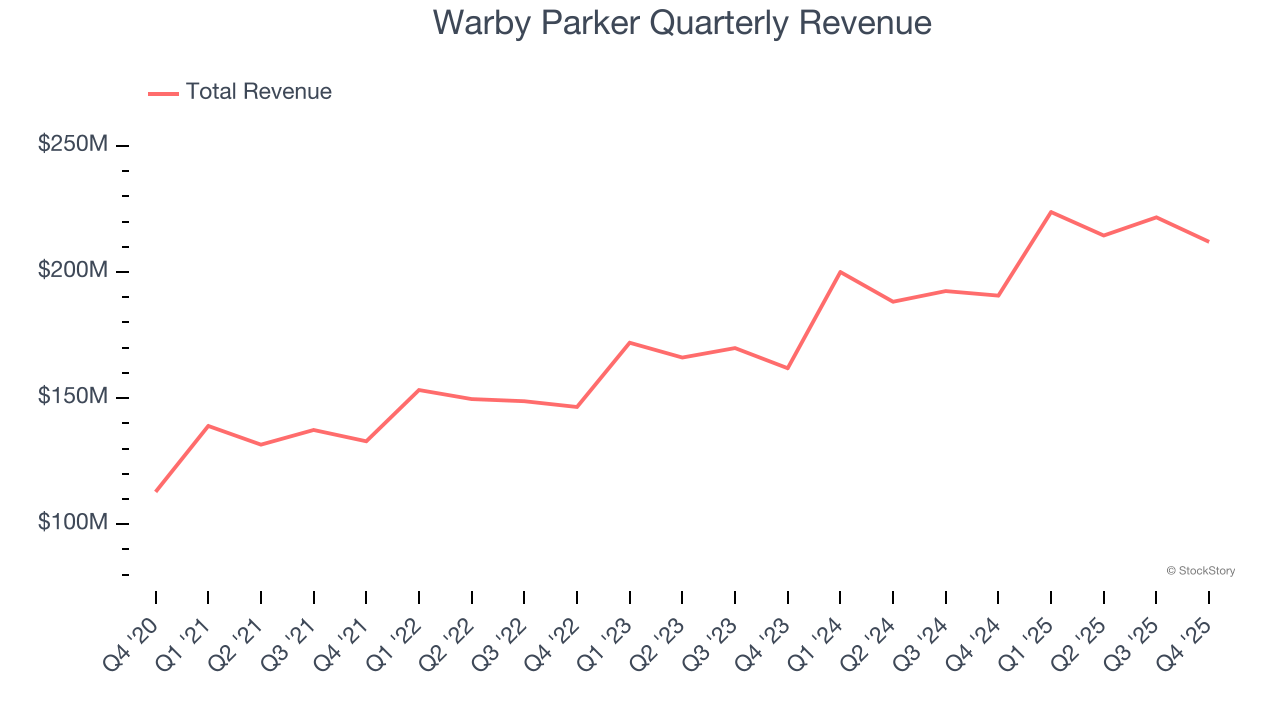
This quarter, Warby Parker’s year-on-year revenue growth was 11.2%, and its $212 million of revenue was in line with Wall Street’s estimates.
Looking ahead, sell-side analysts expect revenue to grow 13.8% over the next 12 months, similar to its three-year rate. This projection is eye-popping and indicates the market is baking in success for its products.
The 1999 book Gorilla Game predicted Microsoft and Apple would dominate tech before it happened. Its thesis? Identify the platform winners early. Today, enterprise software companies embedding generative AI are becoming the new gorillas. a profitable, fast-growing enterprise software stock that is already riding the automation wave and looking to catch the generative AI next.
Number of Stores
A retailer’s store count often determines how much revenue it can generate.
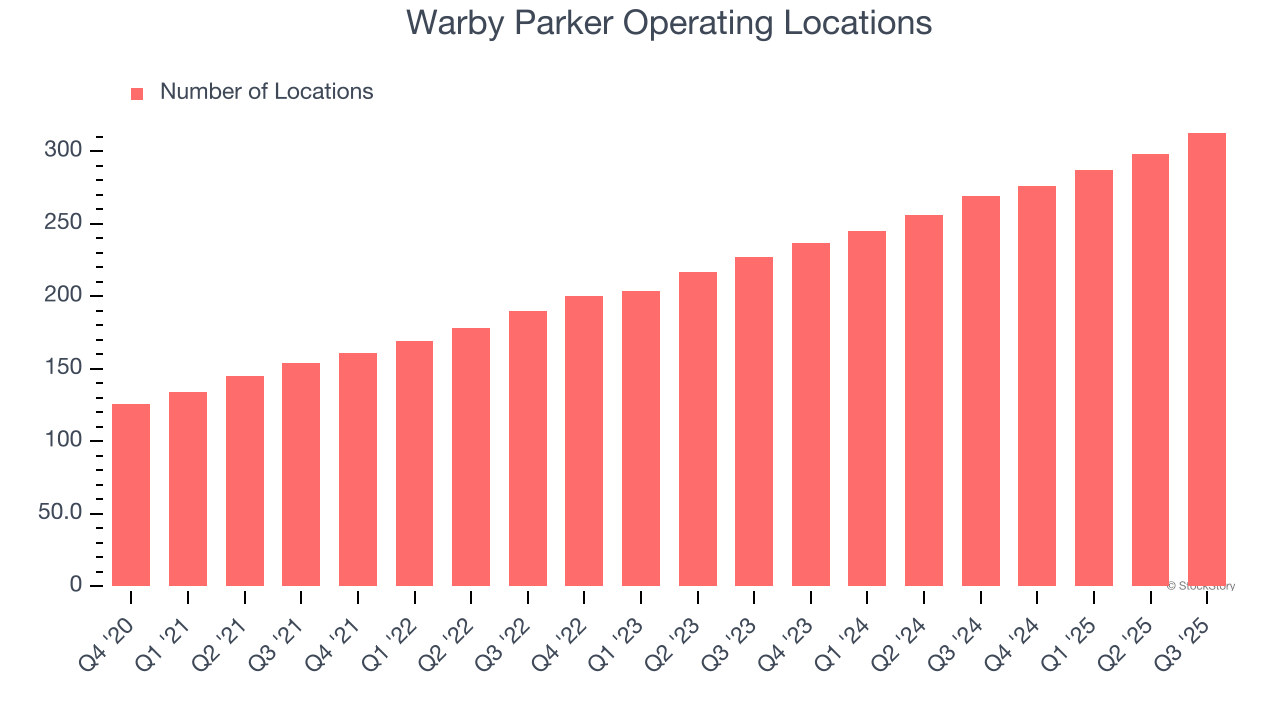
Over the last two years, Warby Parker opened new stores at a rapid clip by averaging 17.6% annual growth, among the fastest in the consumer retail sector. This gives it a chance to scale into a mid-sized business over time.
When a retailer opens new stores, it usually means it’s investing for growth because demand is greater than supply, especially in areas where consumers may not have a store within reasonable driving distance.
Note that Warby Parker reports its store count intermittently, so some data points are missing in the chart below.
Key Takeaways from Warby Parker’s Q4 Results
We struggled to find many positives in these results. Its full-year EBITDA guidance missed and its EBITDA fell short of Wall Street’s estimates. Overall, this was a softer quarter. The stock traded down 8.5% to $19.93 immediately after reporting.
Warby Parker didn’t show it’s best hand this quarter, but does that create an opportunity to buy the stock right now? We think that the latest quarter is only one piece of the longer-term business quality puzzle. Quality, when combined with valuation, can help determine if the stock is a buy. We cover that in our actionable full research report which you can read here (it’s free).