Healthcare tech company Privia Health Group (NASDAQ: PRVA) announced better-than-expected revenue in Q3 2026, with revenue up 13.2% year on year to $657 million. The company’s full-year revenue guidance of $2.53 billion at the midpoint came in 2.7% above analysts’ consensus estimates. Its non-GAAP profit of $0.21 per share was 11.8% below analysts’ consensus estimates.
For more on Privia Health, read our free full research report.
Privia Health (PRVA) Q3 2026 highlights:
- Revenue $657 million vs S&P analysts’ consensus estimates of $611.3 million (13.2% year-on-year growth, 7.5% beat)
- Adjusted EPS $0.21 vs S&P analysts’ consensus estimates of $0.24 (11.8% miss)
- Adjusted EBITDA $40.59 million vs analysts’ consensus estimates of $39.02 million (6.2% margin, 4% beat)
- EBITDA guidance $155.5 million at the midpoint for the full year, above analysts’ consensus estimates of $152.5 million
- Operating margin 3.1%, in line with the same quarter last year
- Sales volumes rose 12.2% year on year, in line with the same quarter last year
- Market capitalization $2.86 billion
Revenue growth
A company’s long-term revenue performance is one signal of its overall quality. Any business can experience short-term success, but top-performing ones sustain growth for years. Privia Health’s revenue grew at a strong 21.9% compounded annual growth rate over the last five years. Its growth beat the average healthcare company and shows its offerings resonate with customers.
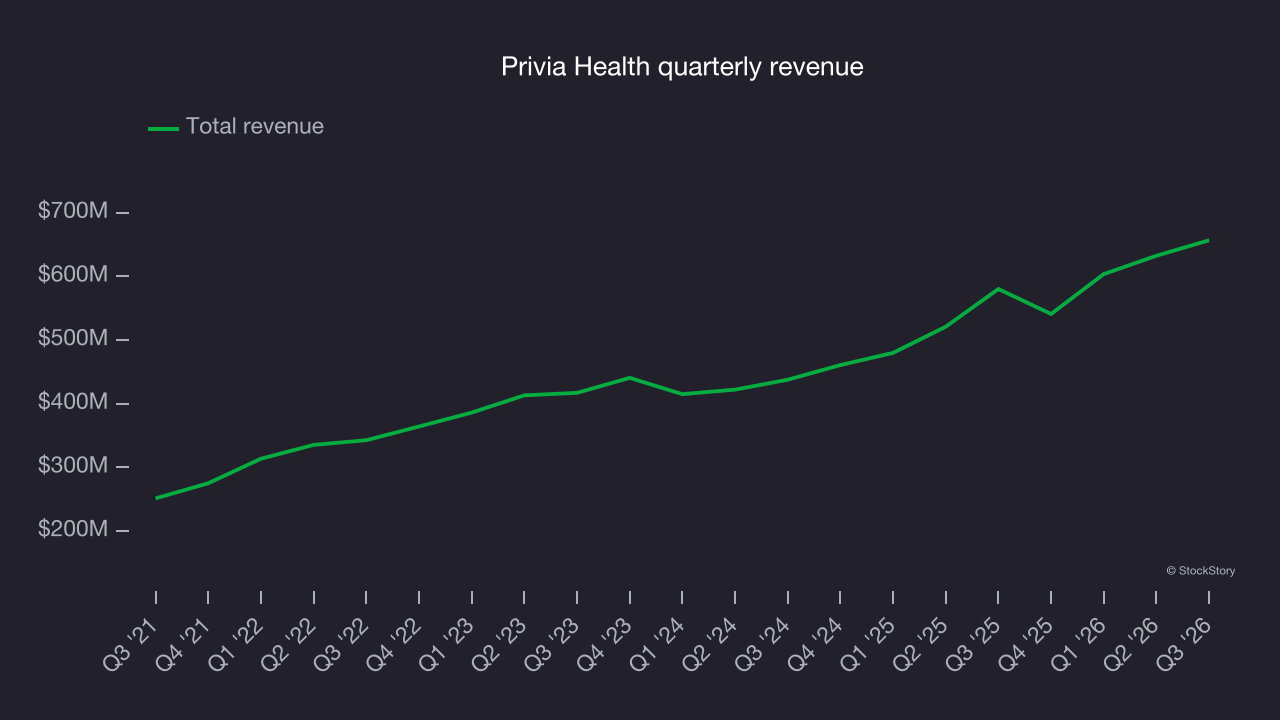
Long-term growth matters the most, but within healthcare, a half-decade historical view may miss recent innovations or disruptive industry trends. Privia Health’s annualized revenue growth of 19.1% over the last two years is below its five-year trend, but the results still suggest healthy demand. 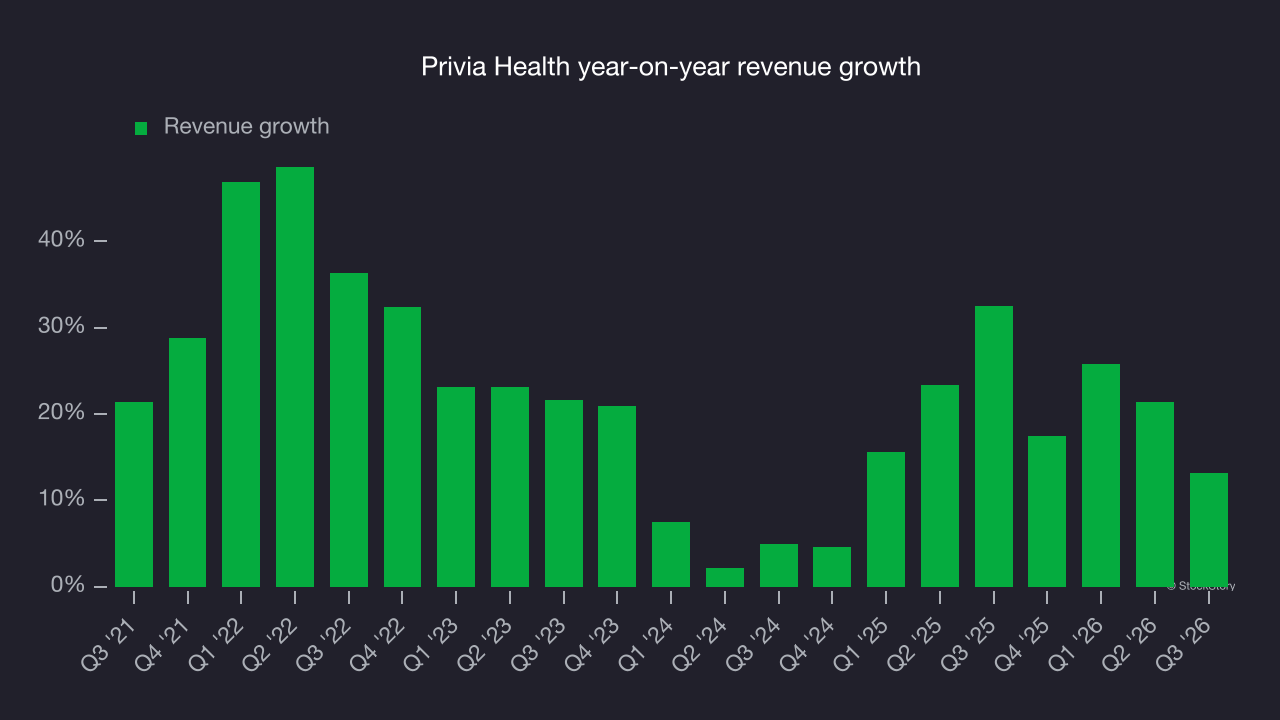
The company’s number of implemented providers, which reached 5,893 in the latest quarter, offers more insight into its revenue dynamics. Over the last two years, Privia Health’s implemented providers averaged 12.3% year-on-year growth. Revenue growth outpaced this metric, indicating that the company’s underlying demand increased. 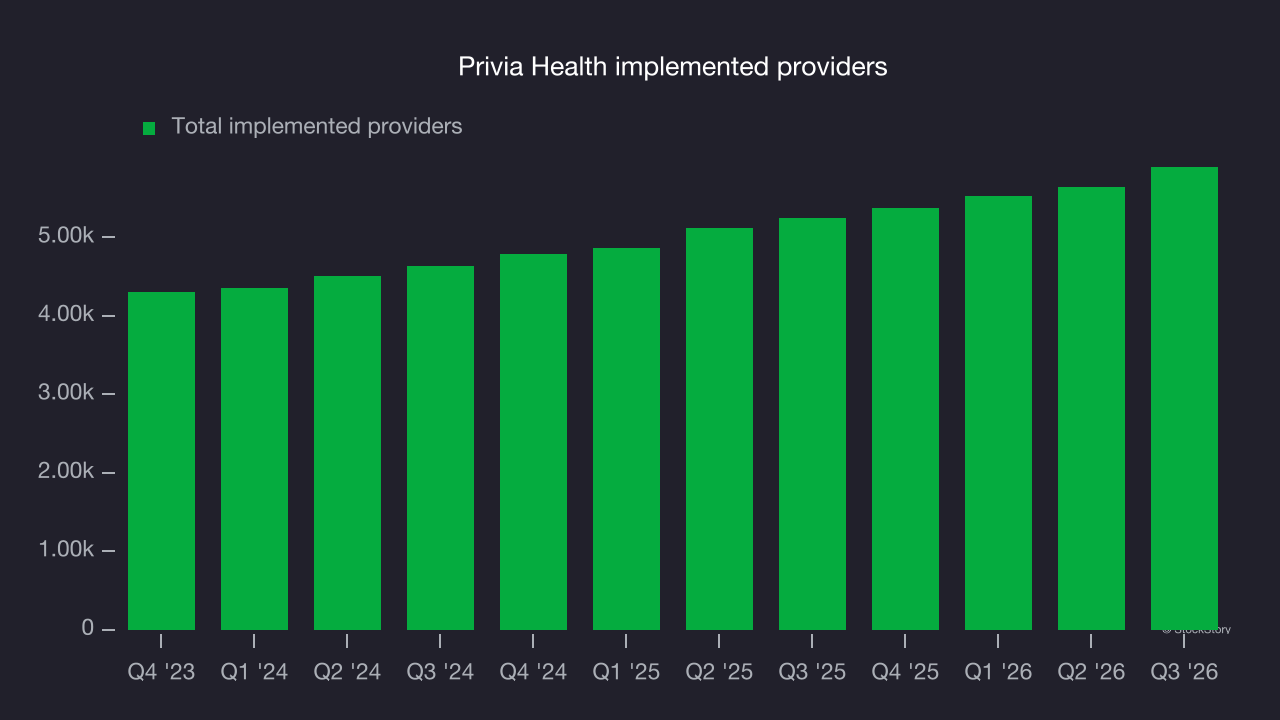
This quarter, Privia Health reported year-on-year revenue growth of 13.2%, and its $657 million of revenue exceeded Wall Street’s consensus estimates by 7.5%.
Looking ahead, sell-side analysts expect revenue to grow 7.3% over the next 12 months, according to S&P, a deceleration versus the last two years. Still, this projection is above the sector average and suggests the market sees some success for its newer products and services.
Adjusted operating margin
Adjusted operating margin is one of the best measures of profitability because it shows how much a company earns after subtracting all core expenses, like marketing and research and development. It also removes various one-time costs to give a clearer picture of normalized profits.
Privia Health was profitable over the last five years but held back by its large cost base. Its average adjusted operating margin of 4.8% was weak for a healthcare business.
On the positive side, Privia Health’s adjusted operating margin rose by 1.9 percentage points over the last five years, as its revenue growth provided operating leverage. The company’s two-year trajectory shows its performance was mostly driven by its recent improvements.
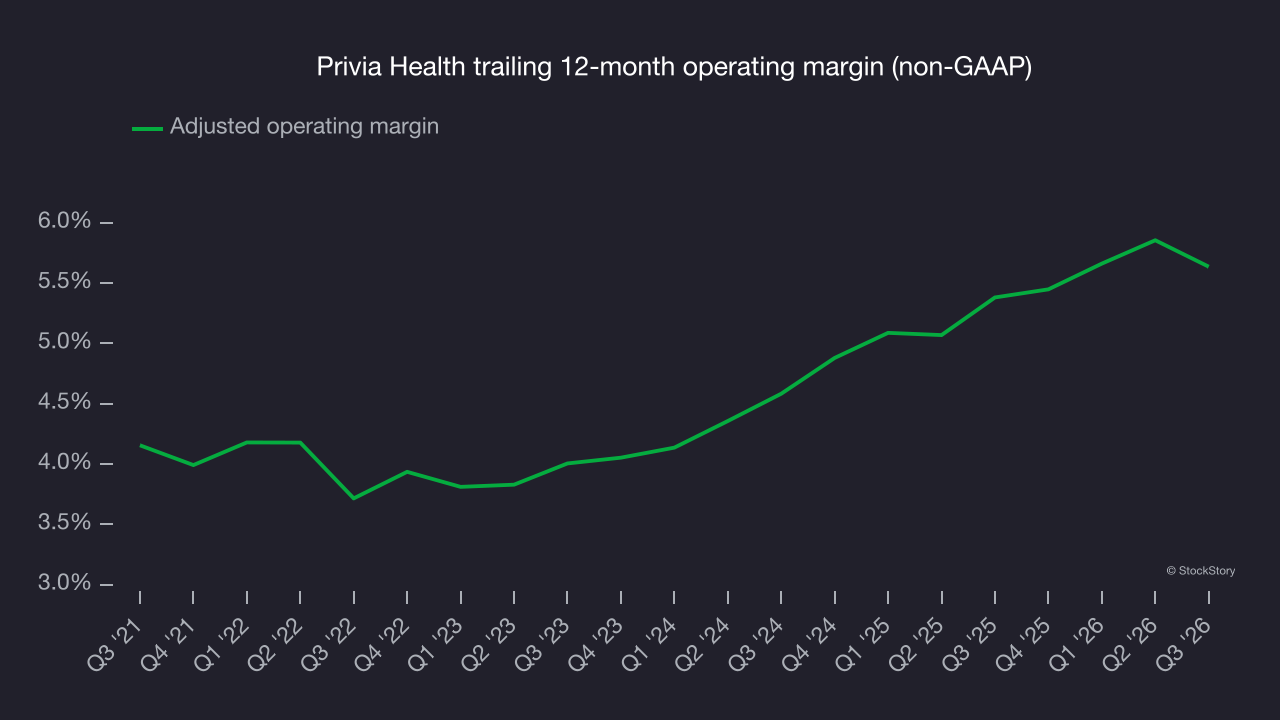
In Q3, Privia Health generated an adjusted operating margin of 5.3%, in line with the same quarter last year. This indicates the company’s overall cost structure has been relatively stable.
Earnings per share
Revenue trends explain a company’s historical growth, but the long-term change in earnings per share, or EPS, points to the profitability of that growth. For example, a company could inflate its revenue through excessive spending on advertising and promotions.
Privia Health’s full-year EPS turned positive over the last five years. This is a positive sign and marks a critical point for the company.
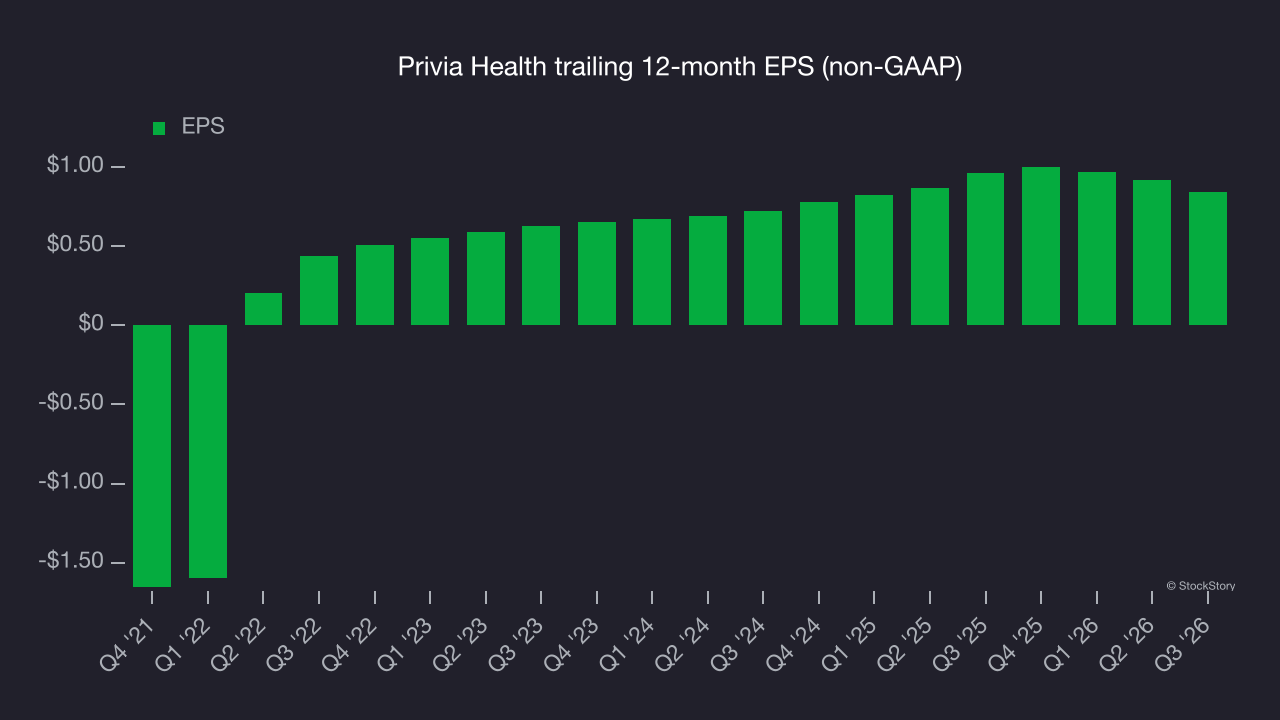
In Q3, Privia Health reported adjusted EPS of $0.21, down from $0.29 in the same quarter last year. This result missed analysts’ consensus estimates, but long-term adjusted EPS growth matters more than short-term movements. Over the next 12 months, Wall Street expects Privia Health’s full-year EPS to grow 41.8% from $0.84 to $1.19, according to S&P.
Key takeaways from Privia Health’s Q3 results
Privia Health’s sizable revenue beat and full-year revenue guidance above Wall Street’s consensus were the highlights of a decent quarter. EPS, however, missed estimates. The market seemed to be hoping for more, and shares fell 2% to $21.95 immediately after the release.
Considering an investment in Privia Health at the current price? The latest quarter matters, but not as much as longer-term fundamentals and valuation when deciding whether to buy the stock. Read the full research report here (it’s free).