Mortgage insurance provider NMI Holdings (NASDAQ: NMIH) missed Wall Street’s revenue expectations in Q3 2026 as revenue rose 5% year on year to $187.6 million. Its non-GAAP profit of $1.23 per share was 6.2% below analysts’ consensus estimates.
For more on NMI Holdings, read our full research report for free.
NMI Holdings (NMIH) Q3 2026 highlights:
- Net premiums earned $155.5 million (2.7% year-on-year growth)
- Revenue $187.6 million vs S&P analysts’ consensus estimates of $190.6 million (5% year-on-year growth, 1.6% miss)
- Combined ratio 38.5% (700 basis point year-on-year decrease)
- Adjusted EPS $1.23 vs S&P analysts’ consensus estimates of $1.31 (6.2% miss)
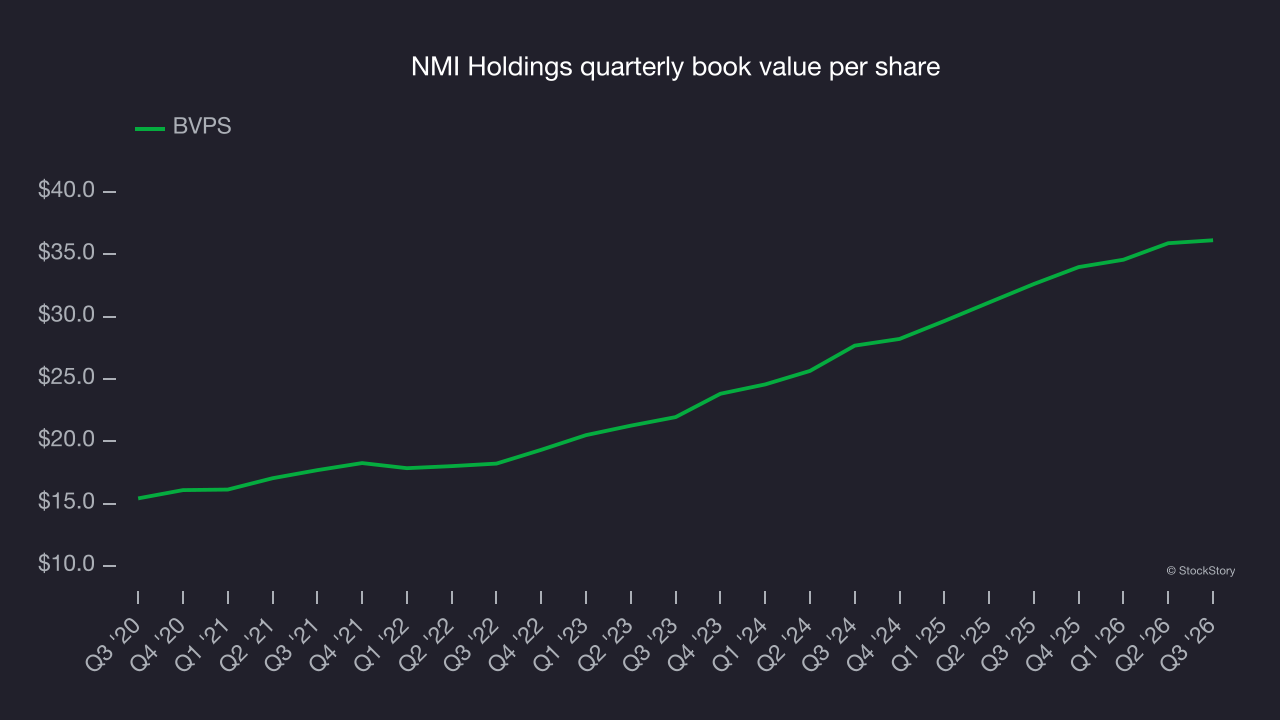
- Book value per share $36.13 (10.8% year-on-year growth)
- Market capitalization $3.31 billion
Adam Pollitzer, President and Chief Executive Officer of National MI, said, “In the third quarter, we again delivered standout operating performance, consistent growth in our high-quality insured portfolio, and strong financial results. During the period, we helped more than 53,000 borrowers, writing nearly $13.6 billion of new coverage in support of hard-working families across the country. At National MI, we’re proud to provide a low-cost, high-value solution that helps borrowers dramatically reduce the cash they need at the closing table and buy a home years earlier than they otherwise could, with private capital that serves to insulate the GSEs and taxpayers from risk and loss. Looking ahead, we’re well positioned to continue to serve our lenders and their borrowers, support the long-term safety and soundness of the mortgage market, and deliver through-the-cycle growth, returns and value for our shareholders.”
Revenue growth
Insurance companies generate revenue three ways. The first is the core insurance business itself, represented in the income statement as premiums earned. The second source is investment income from investing the “float” (premiums collected but not yet paid out as claims) in assets such as fixed-income assets and equities. The third is fees from policy administration, annuities and other value-added services. Over the last five years, NMI Holdings grew its revenue at a solid 9.5% compounded annual growth rate. Its growth beat the average insurance company and shows its offerings resonate with customers.
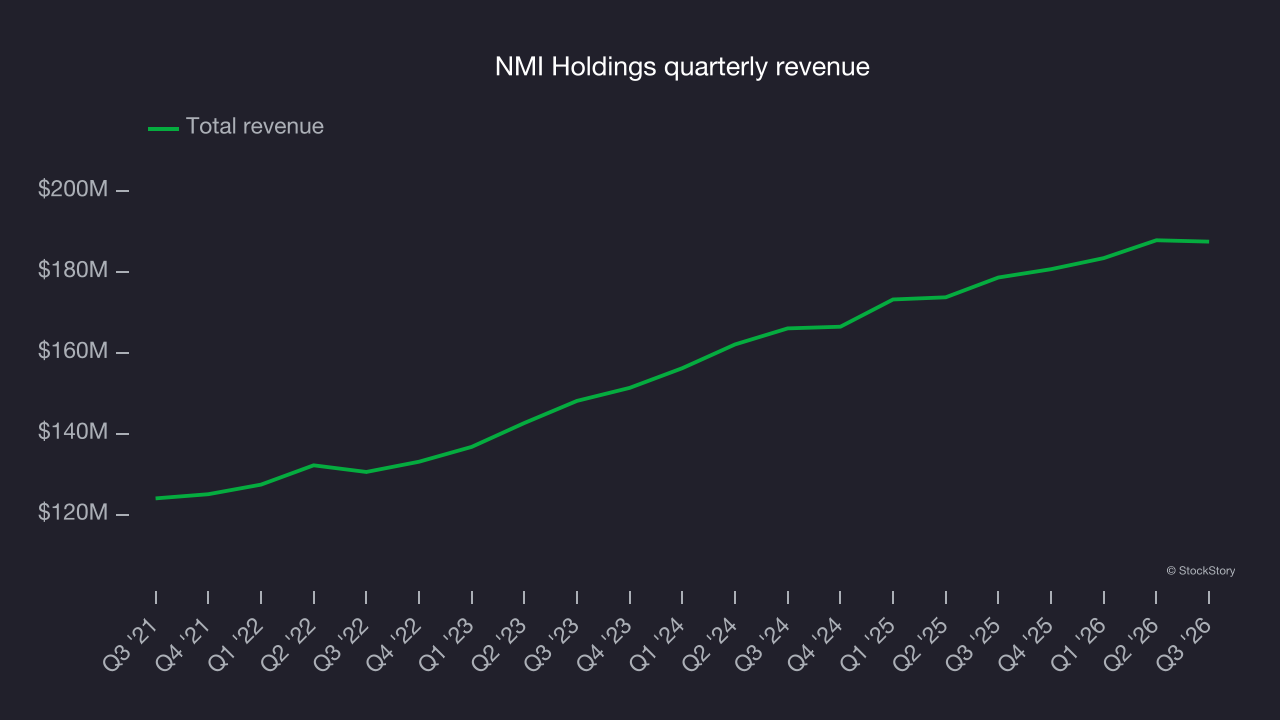
Long-term growth matters most, but within financials, a half-decade historical view may miss recent interest rate changes, market returns and industry trends. NMI Holdings’s annualized revenue growth of 7.9% over the last two years is below its five-year trend, but the results were still respectable. 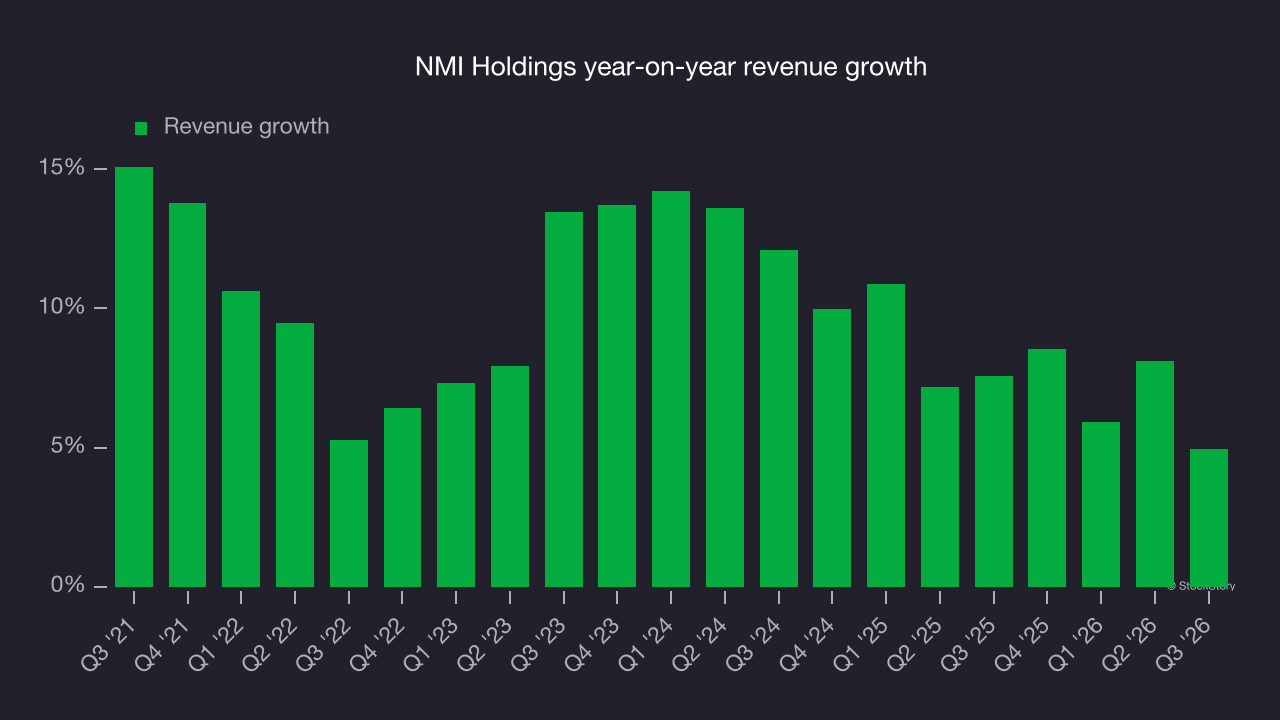
This quarter, NMI Holdings’s revenue grew by 5% year on year to $187.6 million, falling short of Wall Street’s consensus estimates.
Net premiums earned made up 87% of the company’s total revenue during the last five years, meaning NMI Holdings barely relies on non-insurance activities to drive its overall growth.
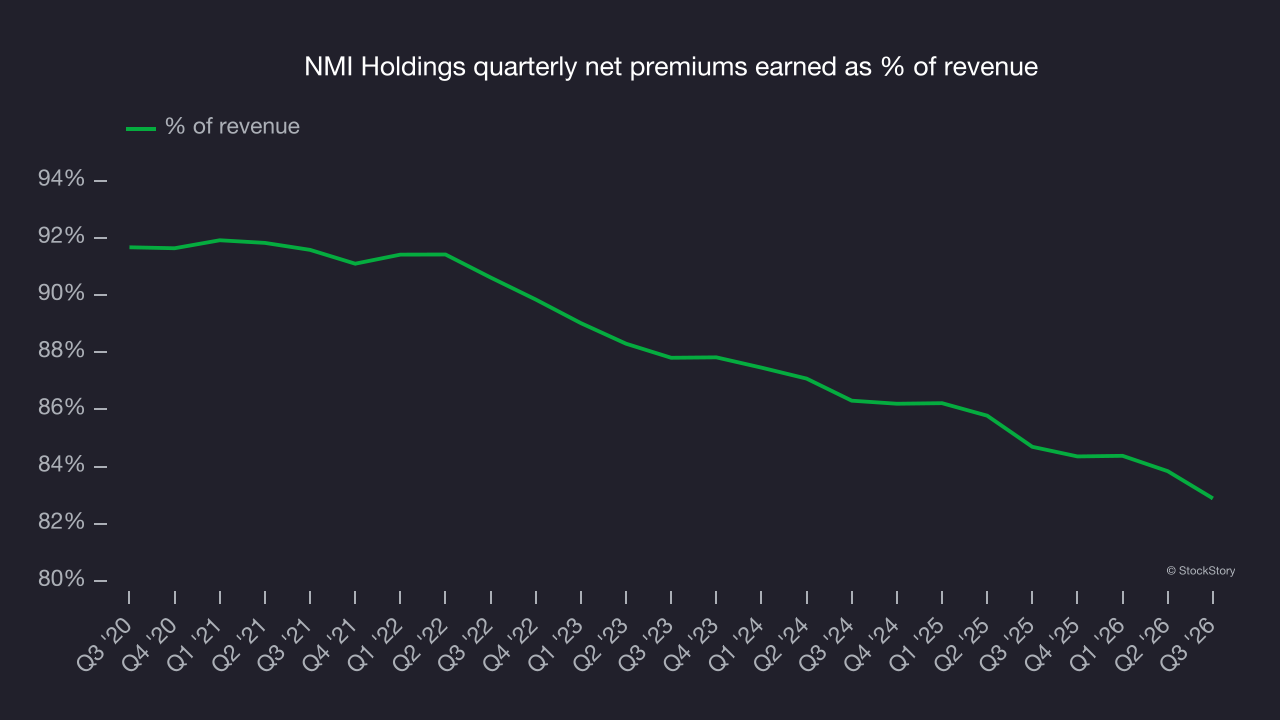
Net premiums earned command greater market attention due to their reliability and consistency, whereas investment and fee income are often seen as more volatile revenue streams that fluctuate with market conditions.
Book value per share, or BVPS
Insurance companies are balance sheet businesses, collecting premiums upfront and paying out claims over time. The float – premiums collected but not yet paid out – is invested, creating an asset base supported by a liability structure. Book value captures this dynamic by measuring the difference between assets and liabilities:
- Assets (investment portfolio, cash, reinsurance recoverables) - liabilities (claim reserves, debt, future policy benefits)
BVPS is essentially the residual value for shareholders.
BVPS is therefore an important metric to track for insurers and sheds light on business quality because it reflects long-term capital growth and is harder to manipulate than more commonly used metrics such as earnings per share, or EPS.
NMI Holdings’s BVPS grew at a strong 15.4% annual rate over the last five years. BVPS growth has recently decelerated a bit to 14.3% annual growth over the last two years (from $27.67 to $36.13 per share).
Key takeaways from NMI Holdings’s Q3 results
NMI Holdings had few positives to point to in Q3, with both EPS and revenue falling short of Wall Street’s consensus estimates. Those misses made for a softer quarter. Shares remained flat at $44.54 immediately after the release.
When assessing NMI Holdings at its current price, the latest quarter matters, but not nearly as much as longer-term fundamentals and valuation. Read the full research report here (it’s free).