Sushi restaurant chain Kura Sushi (NASDAQ: KRUS) fell short of the market’s revenue expectations in calendar Q3 2026 (fiscal Q4 2026), but revenue rose 11.9% year on year to $88.88 million. The company’s full-year revenue guidance of $378.5 million at the midpoint came in 2.7% below analysts’ consensus estimates. Its non-GAAP profit of $0.08 per share was 57.6% below analysts’ consensus estimates.
For more on Kura Sushi, read our free full research report.
Kura Sushi (KRUS) Q3 CY2026 highlights:
- Revenue $88.88 million vs S&P analysts’ consensus estimates of $90.83 million (11.9% year-on-year growth, 2.1% miss)
- Adjusted EPS $0.08 vs S&P analysts’ consensus estimates of $0.19 (57.6% miss)
- Adjusted EBITDA $7.71 million vs analysts’ consensus estimates of $9.12 million (8.7% margin, 15.5% miss)
- Operating margin -0.7%, down from 1.8% in the same quarter last year
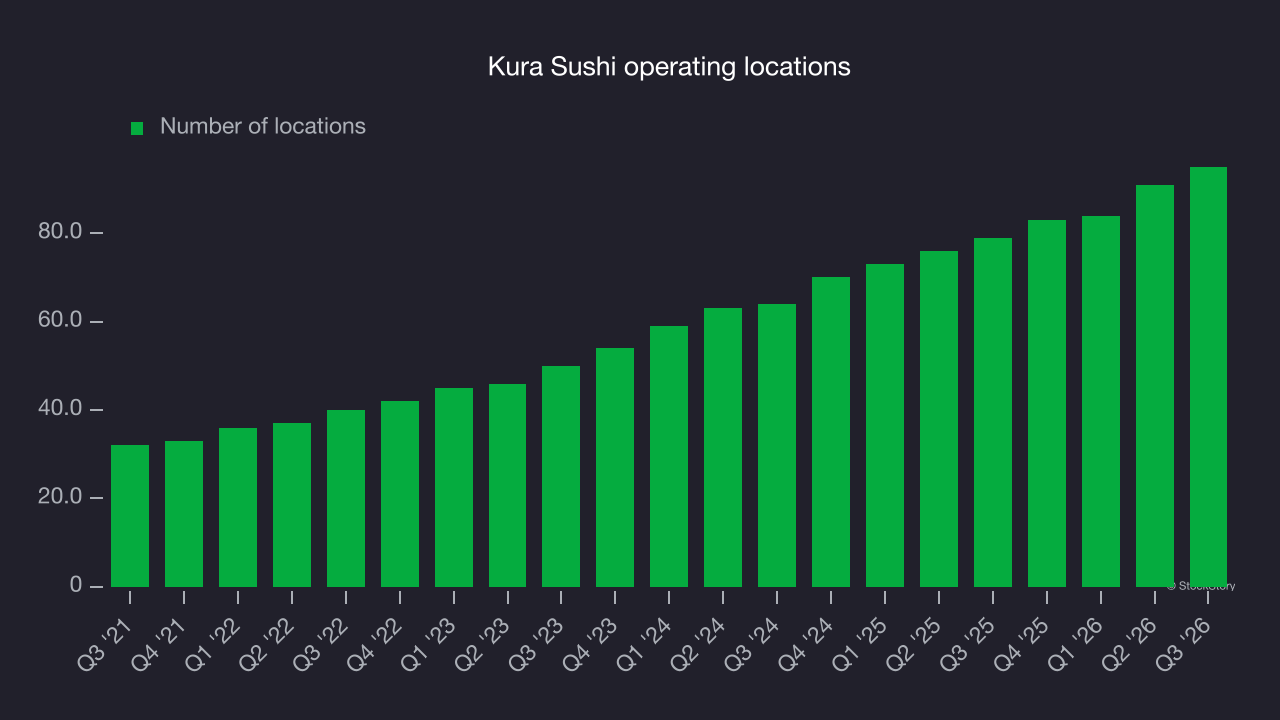
- Locations 95 at quarter end, up from 79 in the same quarter last year
- Same-store sales fell 5.7% year on year (0.2% in the same quarter last year)
- Market capitalization $459.1 million
Hajime Uba, president, chief executive officer and chief financial officer of Kura Sushi, stated, “As we look back at our fiscal year 2026, I’m proud of our efforts to protect margin despite tariffs and consumer headwinds. While tariffs collectively increased our costs of goods sold and other costs by 180 basis points, we were able to offset these increases with labor leverage of 190 basis points as compared to fiscal year 2025, driven by the technological innovation that is core to our concept. Our continued commitment to G&A leverage is reflected in the 90 basis point improvement, and we were also able to grow Adjusted EBITDA margin and dollars as compared to fiscal year 2025.”
Revenue growth
A company’s long-term revenue performance can indicate its overall quality. Any business can experience short-term success, but top-performing ones sustain growth for years.
With $328.3 million in revenue over the past 12 months, Kura Sushi is a small restaurant chain, which sometimes brings disadvantages compared to larger competitors benefiting from better brand awareness and economies of scale. On the positive side, it can grow faster because it has more room to build new restaurants.
Kura Sushi’s annualized revenue growth of 26.2% over the last seven years was strong as it opened new restaurants and expanded its reach.
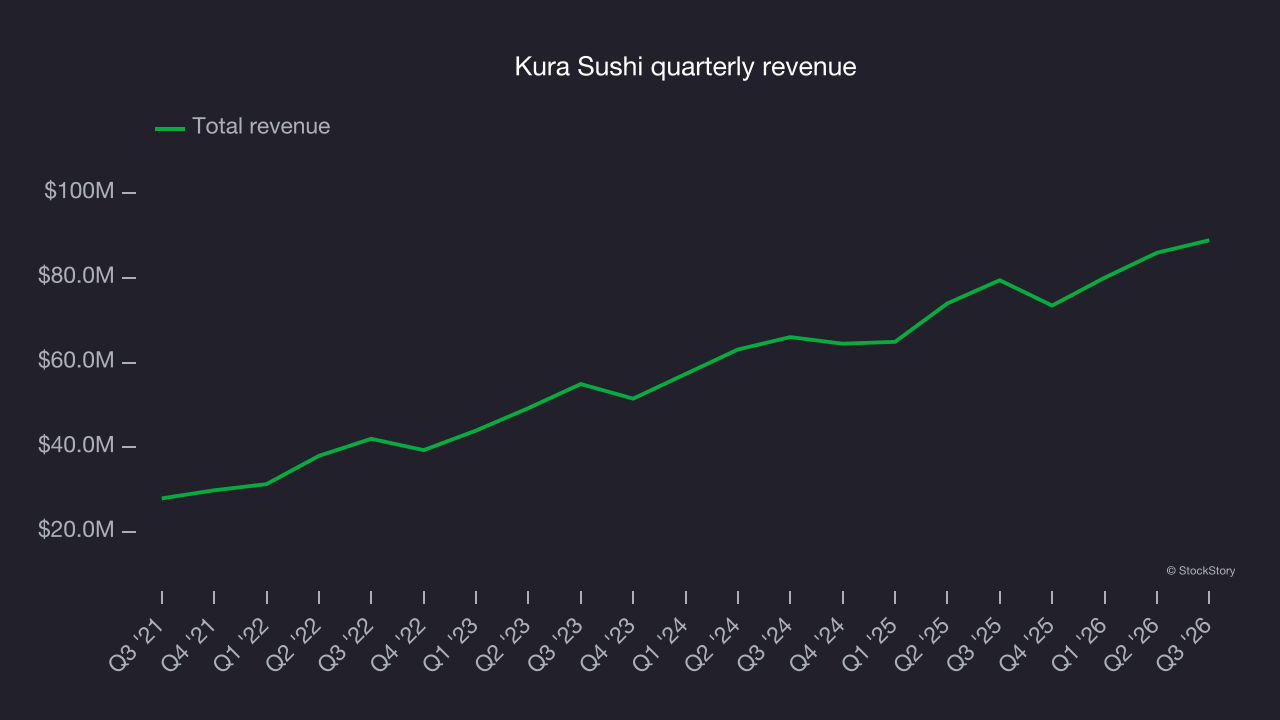
This quarter, Kura Sushi’s revenue grew by 11.9% year on year to $88.88 million but fell short of Wall Street’s consensus estimates.
Looking ahead, sell-side analysts expect revenue to grow 18% over the next 12 months, according to S&P, a deceleration versus the last seven years. Still, this projection is strong and suggests the market is forecasting success for its menu offerings.
Restaurant performance
Number of restaurants
A restaurant chain’s total number of dining locations influences how much it can sell and how quickly revenue can grow.
Kura Sushi operated 95 locations in the latest quarter. Over the last two years, it has expanded its restaurant base rapidly, averaging 21.4% annual growth, among the fastest in the restaurant sector. This gives it a chance to scale into a mid-sized business over time.
When a chain opens new restaurants, it usually means it’s investing for growth because there’s healthy demand for its meals and there are markets where its concepts have few or no locations.
Same-store sales
A company’s restaurant base only paints one part of the picture. When demand is high, it makes sense to open more. But when demand is low, it’s prudent to close some locations and use the money in other ways. Same-store sales is an industry measure of whether revenue is growing at those existing restaurants and is driven by customer visits (often called traffic) and the average spending per customer (ticket).
Kura Sushi’s demand within its existing dining locations has barely increased over the last two years as its same-store sales were flat. Kura Sushi should consider improving its foot traffic and efficiency before expanding its restaurant base.
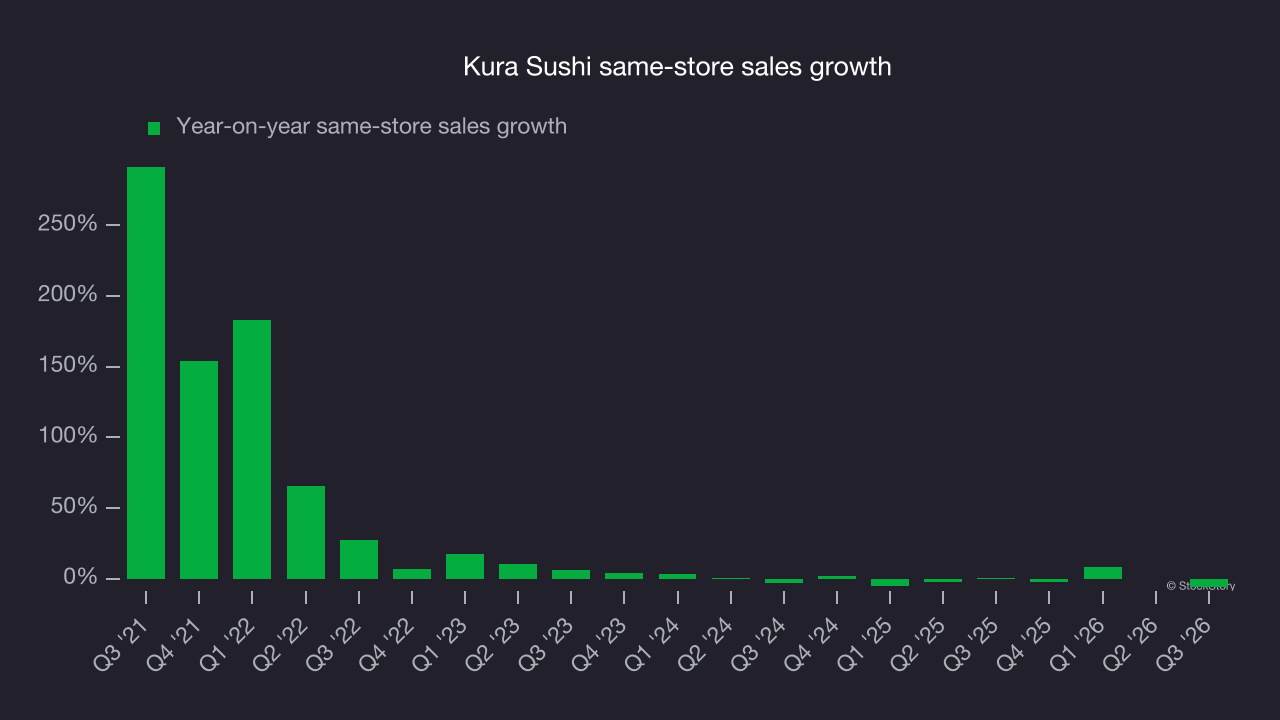
In the latest quarter, Kura Sushi’s same-store sales fell by 5.7% year on year. This decrease represents a further deceleration from its historical levels.
Key takeaways from Kura Sushi’s Q3 results
Kura Sushi’s full-year revenue guidance missed expectations, and EBITDA fell short of Wall Street’s consensus estimates, leaving few positives in a weaker quarter. Shares plunged 16.2% to $31.11 immediately after the release.
Kura Sushi’s latest quarter was underwhelming. One earnings report doesn’t define a company’s quality, though, so it’s worth examining whether the stock is a buy at the current price. The latest quarterly results matter, but longer-term business quality and valuation are more important when deciding whether to invest in the stock. For more on Kura Sushi, read the full research report here (it’s free).