As the Q2 earnings season comes to a close, it’s time to take stock of this quarter’s best and worst performers in the financial technology industry, including Robinhood (NASDAQ: HOOD) and its peers.
Financial technology companies benefit from the increasing consumer demand for digital payments, banking, and finance. Tailwinds fueling this trend include e-commerce along with improvements in blockchain infrastructure and AI-driven credit underwriting, which make access to money faster and cheaper. Despite regulatory scrutiny and resistance from traditional financial institutions, fintechs are poised for long-term growth as they disrupt legacy systems by expanding financial services to underserved population segments.
The 4 financial technology stocks we track reported a slower Q2. As a group, revenues missed analysts’ consensus estimates by 0.7% while next quarter’s revenue guidance was 0.9% below.
In light of this news, share prices of the companies have held steady. On average, they are relatively unchanged since the latest earnings results.
Best Q2: Robinhood (NASDAQ: HOOD)
With a mission to democratize finance, Robinhood (NASDAQ: HOOD) is an online consumer finance platform known for its commission-free stock and crypto trading.
Robinhood reported revenues of $1.31 billion, up 32.3% year on year. This print exceeded analysts’ expectations by 1.8%. Overall, it was a very strong quarter for the company with an impressive beat of analysts’ EBITDA estimates and solid growth in its users.
"Whether it's the Robinhood Chain, Robinhood Ventures, or Trump Accounts, our product velocity is focused on one goal: making everyone an owner," said Vlad Tenev, Chairman and CEO of Robinhood.
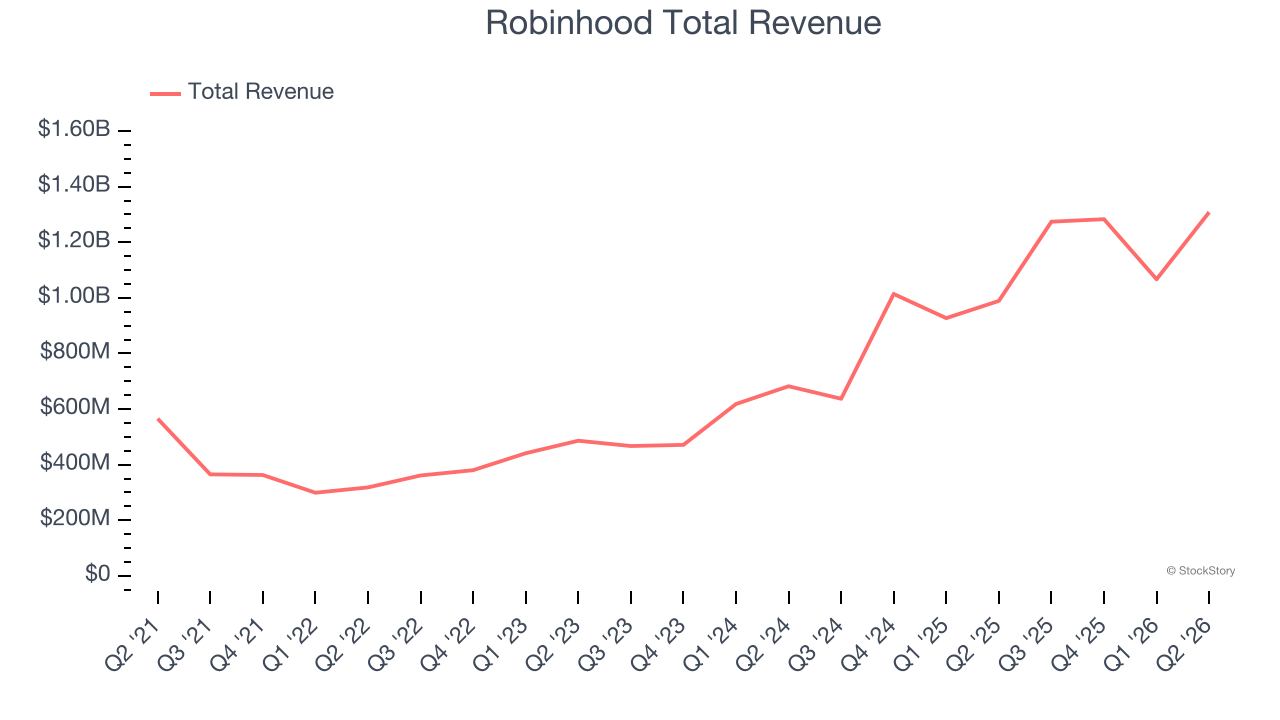
Robinhood scored the fastest revenue growth among its peers. The company reported 28.4 million users, up 7.2% year on year. Unsurprisingly, the stock is up 25% since reporting and currently trades at $112.27.
Remitly (NASDAQ: RELY)
With Amazon founder Jeff Bezos as an early investor, Remitly (NASDAQ: RELY) is an online platform that enables consumers to safely and quickly send money globally.
Remitly reported revenues of $495.2 million, up 20.2% year on year, outperforming analysts’ expectations by 1.8%. The business had a very strong quarter with a solid beat of analysts’ EBITDA estimates and full-year EBITDA guidance exceeding analysts’ expectations.
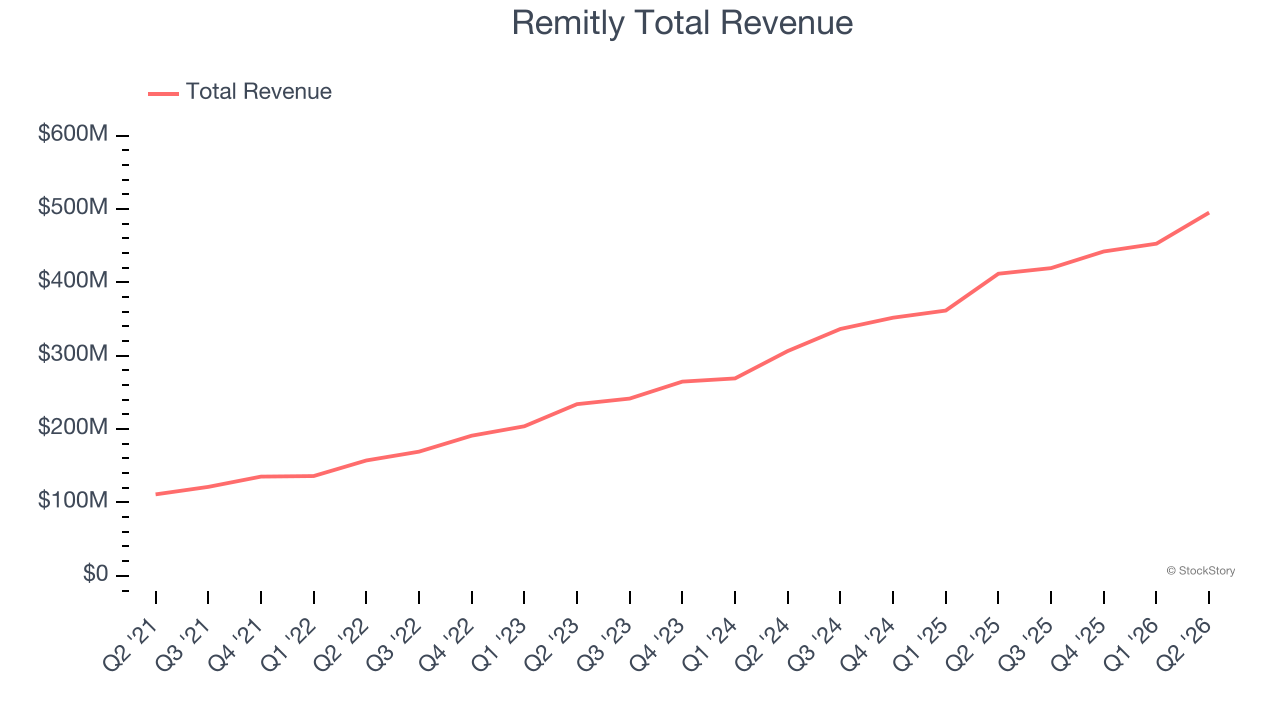
Remitly achieved the biggest analyst estimate beat, highest guidance raise, and highest full-year guidance raise in the group. The company reported 10.2 million active customers, up 20% year on year. Although it had a fine quarter compared to its peers, the market seems unhappy with the results as the stock is down 3.6% since reporting. It currently trades at $23.20.
Is now the time to buy Remitly? Access our full analysis of the earnings results here, it’s free.
Weakest Q2: Coinbase (NASDAQ: COIN)
Widely regarded as the face of crypto, Coinbase (NASDAQ: COIN) is a blockchain infrastructure company updating the financial system with its trading, staking, stablecoin, and other payment solutions.
Coinbase reported revenues of $1.22 billion, down 18.5% year on year, falling short of analysts’ expectations by 5.9%. It was a disappointing quarter as it posted a significant miss of analysts’ EBITDA estimates.
Coinbase delivered the weakest performance against analyst estimates and slowest revenue growth of the whole group. Interestingly, the stock is up 13.9% since the results and currently trades at $186.25.
Read our full analysis of Coinbase’s results here.
LendingTree (NASDAQ: TREE)
Using the same comparison model that revolutionized travel booking, LendingTree (NASDAQ: TREE) operates an online platform that connects consumers with financial service providers across mortgages, personal loans, credit cards, insurance, and other financial products.
LendingTree reported revenues of $313.4 million, up 25.3% year on year. This number lagged analysts’ expectations by 0.7%. It was a disappointing quarter as it also produced full-year EBITDA guidance missing analysts’ expectations significantly and revenue guidance for next quarter missing analysts’ expectations significantly.
LendingTree had the weakest guidance update and weakest full-year guidance update among its peers. The stock is down 37.1% since reporting and currently trades at $24.82.
Read our full, actionable report on LendingTree here, it’s free.
Market Update
Over the past year, investors have been forced to repeatedly answer the same question: what is the market’s biggest risk? The answer has changed several times, and each shift has reshaped market leadership.
Late in 2025 and early 2026, artificial intelligence became the market’s primary uncertainty. Investors questioned whether AI would erode software pricing power and weaken competitive moats as AI made it easier to replicate once-differentiated products.
By the spring, technology took a back seat to geopolitics. The U.S. conflict with Iran briefly became the market’s dominant narrative, raising concerns about oil prices, inflation, and global growth. But as energy markets remained orderly and fears of a prolonged supply disruption faded, investors quickly turned their focus back to fundamentals.
Want to invest in winners with rock-solid fundamentals? Check out our 9 Best Market-Beating Stocks and add them to your watchlist. These companies are poised for growth regardless of the political or macroeconomic climate.