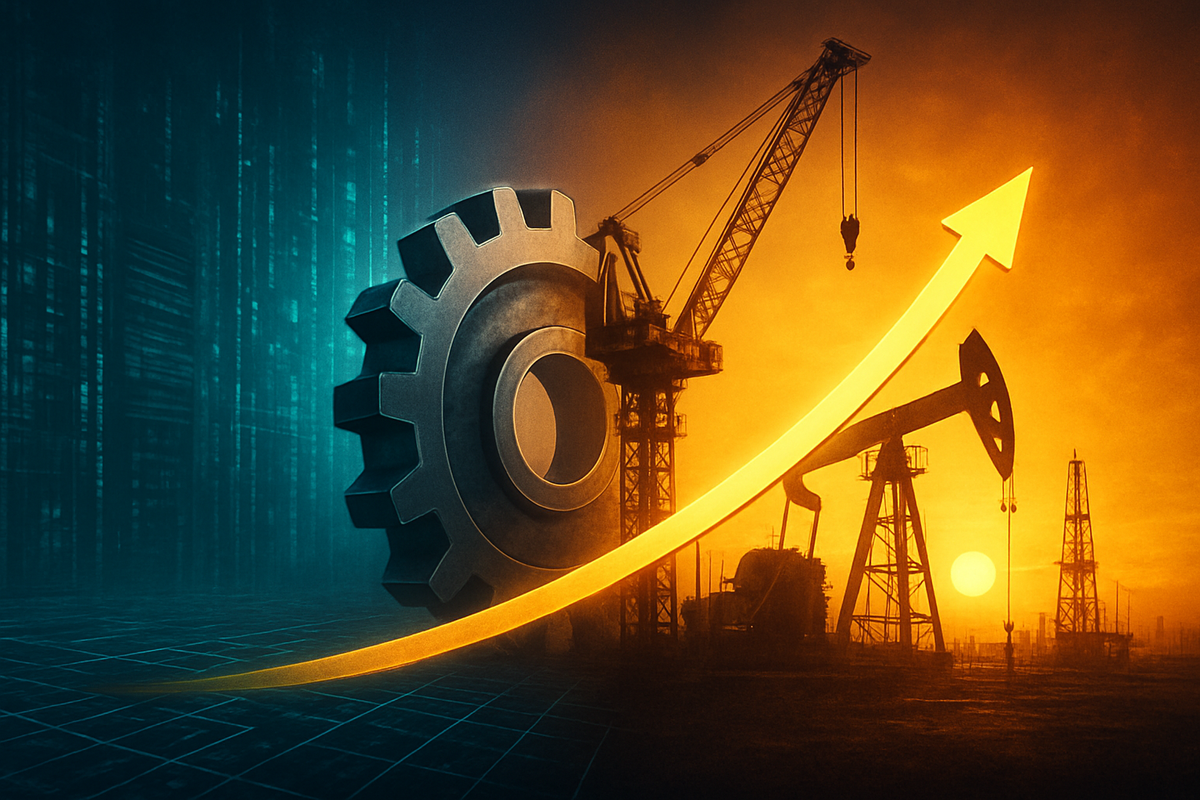
The financial landscape of early 2026 has been defined by a monumental "Great Rotation," as investors aggressively pull capital from the once-invincible mega-cap tech sector and reallocate it into the "real economy." After a year in which Artificial Intelligence (AI) hype reached its zenith, the market has pivoted toward sectors with tangible assets and realized earnings. On February 24, 2026, the divergence is stark: while the tech-heavy Nasdaq 100 has struggled to maintain its footing, the Dow Jones Industrial Average (DJIA) and the S&P 500 Equal Weight Index are touching new all-time highs, driven by a resurgence in Industrials, Consumer Staples, and Energy.
This shift represents more than just a temporary correction; it is a fundamental regime change. For the first time in years, the "average" stock is leading the market higher, while the "Magnificent Seven" giants find themselves range-bound or declining. This rotation is fueled by a "return to reality" as investors demand immediate profitability and cash flows over speculative long-term growth stories, particularly as the massive capital expenditures required for AI begin to weigh on tech margins.
The AI ROI Reckoning and the Rise of the 'Real' Sector
The seeds of this rotation were sown in late 2025, following a series of disappointing quarterly reports from major software and cloud providers. The phenomenon, now dubbed the "SaaSpocalypse," saw traditional per-seat software licensing models disrupted by advanced agentic AI, leading to a massive re-rating of companies like Salesforce (NYSE: CRM) and Adobe (NASDAQ: ADBE). Simultaneously, an "AI ROI Reckoning" took hold as giants like Microsoft (NASDAQ: MSFT) and Meta (NASDAQ: META) revised their 2026 capital expenditure guidance upward to a collective $440 billion. Investors, wary of the lack of immediate revenue payoffs from these investments, began searching for value elsewhere.
The catalyst for the industrial boom was the passage of the "One Big Beautiful Bill Act" (OBBBA) in July 2025. This landmark legislation provided a fiscal adrenaline shot to the physical economy by restoring 100% immediate expensing for business investments and offering massive tax relief for domestic manufacturers. By early 2026, the results are evident: the Industrials sector is reporting staggering 25% earnings growth, nearly double the consensus estimates from a year ago. This manufacturing upswing has been supported by a Federal Reserve pivot, which executed three consecutive rate cuts in late 2025, bringing the federal funds rate down to a more manageable 3.50%–3.75%.
The market reaction has been swift and decisive. In the first two months of 2026, the Dow Jones Industrial Average has consistently outperformed its peers, finishing January up 1.7% compared to a modest 0.9% for the Nasdaq. The Russell 2000, representing smaller, more cyclical domestic firms, surged over 5% in the same period, signaling that the "Great Rotation" has broad-based participation.
Winners and Losers in the New Market Regime
The clear victors of this rotation are the companies that build, power, and supply the physical world. Caterpillar (NYSE: CAT) has emerged as a primary beneficiary, with its stock up 32% year-to-date as it provides the heavy machinery and power generators essential for the continuing AI data center build-out and domestic infrastructure projects. Similarly, GE Vernova (NYSE: GEV) and NextEra Energy (NYSE: NEE) are seeing unprecedented demand for grid modernization and clean energy as the "Energy Dominance" mandates of the OBBBA take effect.
In the aerospace and defense sector, RTX (NYSE: RTX) reported a 25% sales surge in its Pratt & Whitney division, driven by a global aviation boom and increased military demand. Meanwhile, Consumer Staples have become a preferred defensive haven for those wary of tech volatility. Walmart (NYSE: WMT) and Costco (NASDAQ: COST) have seen their shares rise 13.7% and 15.7% respectively, as cost-conscious consumers and membership-driven models prove resilient in an environment of "sticky" 3% inflation.
Conversely, the "losers" in this environment are the previous market darlings of the growth era. Nvidia (NASDAQ: NVDA), while still a titan of industry, has seen its stratospheric growth moderate, leading to a stabilization in its stock price that has frustrated momentum traders. The broader SaaS ecosystem is facing an existential crisis as AI agents begin to perform tasks that previously required human-operated software seats. Furthermore, companies that failed to repatriate their R&D efforts have been hit by the OBBBA’s new amortization rules, which favor domestic research over offshore development.
Historical Parallels and the Policy Shift Toward Tangibility
The current market environment bears a striking resemblance to the post-dot-com bubble era of 2000–2002. Just as the collapse of "New Economy" stocks at the turn of the millennium led to a multi-year bull market in "Old Economy" sectors like Energy and Materials, the 2026 rotation is a mean-reversion event. The valuation gap between tech and cyclicals had reached extreme levels by mid-2025, with tech trading at 30x earnings while industrials sat at a 25-year low relative to the S&P 500.
The wider significance of this shift lies in the decoupling of productivity from virtual software. The market is increasingly betting on "Industrial AI"—the integration of AI into robotics and factory automation—rather than pure-play software platforms. This trend is reinforced by the OBBBA’s "Foreign Entity of Concern" restrictions, which have forced a massive reshoring of supply chains. By incentivizing companies to bring production back to U.S. soil through 100% bonus depreciation, the government has effectively de-risked the capital-intensive nature of the industrial sector.
Historically, periods of "sticky inflation" (currently lingering near 2.7%–3.0%) have favored real assets over financial assets. The 2026 market is no different; investors are treating oil, minerals, and machinery as more reliable hedges than virtualized data. ExxonMobil (NYSE: XOM), up 26% year-to-date, exemplifies this trend, as record refining margins and new production expansions under the OBBBA have made energy the top-performing sector of the year.
What Comes Next: The Road Ahead for Investors
In the short term, the rotation is expected to continue as institutional funds finish rebalancing their portfolios away from tech overweights. We may see a "valuation floor" established for the mega-cap tech giants, but the days of them providing 50% of the S&P 500’s total return appear to be over for this cycle. The focus will likely remain on the "Industrial Cycle" forecast by analysts at Bank of America (NYSE: BAC), who predict that global industrial earnings could see even further upside as the manufacturing upswing matures.
Long-term, the strategic pivot toward domestic R&D and physical automation will require a different set of skills from corporate management. Companies like Honeywell (NASDAQ: HON) and Rockwell Automation (NYSE: ROK) are already shifting their capital allocation toward AI-driven robotics, viewing these as "mission-critical" assets that are resistant to the subscription-model erosion seen in the software world. A potential challenge emerges in the form of labor shortages and rising raw material costs, which could eventually squeeze the margins of the very industrials that are currently leading the charge.
Investors should watch for the Federal Reserve’s "terminal rate" guidance in the coming months. If the Fed pauses its rate-cutting cycle earlier than expected due to persistent inflation, it could cause a temporary shiver in the cyclical sectors. However, the structural tailwinds of the OBBBA and the fundamental shift toward reshoring suggest that the "Real Economy" has a long runway ahead of it.
Final Assessment: A Healthier, More Balanced Market
The "Great Rotation" of early 2026 marks a maturing of the post-pandemic market. By moving away from a precarious reliance on a handful of tech giants, the broader market has become more resilient and diversified. The 25% earnings growth seen in Industrials is a testament to the power of fiscal policy when combined with a resurgence in domestic manufacturing and infrastructure.
Moving forward, the primary takeaway for investors is the importance of "tangibility." In a world where AI can replicate virtual tasks at zero marginal cost, the value of physical infrastructure, energy production, and essential consumer goods has never been higher. The market is finally rewarding the companies that build the foundation of the modern world, rather than just the applications that run on top of it.
In the coming months, keep a close eye on the performance of the S&P 500 Equal Weight Index versus the cap-weighted version. A continued outperformance of the equal-weight index will confirm that this rotation has staying power. For those who spent the last decade focused solely on Silicon Valley, the message of 2026 is clear: look to the heartland, the factory floor, and the oil field for the next generation of market leadership.
This content is intended for informational purposes only and is not financial advice.