The dawn of 2026 has brought a starkly divided landscape to the American livestock sector. According to the latest market tracking from DTN Progressive Farmer, the cattle complex has entered the year in an "aggressive rally," with prices for fed and feeder cattle pushing toward levels unseen in decades. This bullish momentum is fueled by a fundamental supply hole that has left the U.S. beef cattle inventory at its lowest point since 1951, a contraction that persists despite years of record-high prices.
While beef producers are seeing "rampage" bidding in the sale barns, the dairy sector is navigating a far more precarious environment. A recent slump in Class I base milk prices and an "excess milk" challenge at the farmgate have left dairy farmers struggling to maintain margins. As of mid-January 2026, the industry finds itself at a crossroads, balancing historic supply shortages in protein with a shifting regulatory landscape that is fundamentally changing how livestock are tracked and labeled across the United States.
A Perfect Storm in the Cattle Pens
The current state of the cattle market is a direct result of a multi-year contraction that has finally reached a breaking point. As of January 13, 2026, Northern dressed cattle are trading at a staggering $360–$365 per hundredweight (cwt), while Kansas live cattle have reached $232 per cwt. The shortage is even more pronounced in the feeder market, where 550-lb steers are approaching a peak of $770 per cwt in certain regions. DTN Progressive Farmer recently noted that "Cattle Market Fundamentals are Back in the Driver’s Seat," signaling that technical trading has taken a backseat to the reality of empty pastures.
The timeline leading to this moment is one of persistent environmental and economic pressure. Years of drought across the Great Plains forced heavy liquidations of the national cow herd between 2022 and 2025. Even as weather conditions improved in some areas, the high cost of financing and replacement heifers has discouraged producers from rebuilding. The supply crunch reached a fever pitch this month as Tyson Foods (NYSE: TSN) announced it would close its massive beef processing plant in Lexington, Nebraska, effective January 20, 2026. This move, intended to streamline Tyson's operations in a low-supply environment, has actually tightened domestic processing capacity even further, creating a bottleneck that keeps retail prices high while squeezing packer margins.
In the dairy aisles, the narrative is one of oversupply and price volatility. The USDA's 2026 milk production forecast stands at 234.1 billion pounds, a slight downward revision, yet still enough to keep pressure on prices. The January Class I base milk price plummeted to $16.35 per cwt, the lowest level since 2021. However, there is a glimmer of hope; the Global Dairy Trade (GDT) index recently rose 6.3%, breaking a five-month losing streak and suggesting that international demand for butter and cheese may finally be catching up to the global supply.
Winners and Losers in the High-Stakes Protein Game
The primary beneficiaries of the current market are the cow-calf producers and independent ranchers who have managed to maintain their herds through the lean years. With feeder cattle prices at historic highs, those with inventory to sell are seeing unprecedented returns. Additionally, companies like Darling Ingredients (NYSE: DAR) are finding opportunities in the rendering and feed-additive sectors as the industry looks for more efficient ways to utilize every pound of protein in a tight market.
Conversely, the major meatpackers are facing a brutal margin squeeze. Tyson Foods (NYSE: TSN) is retrenching, closing older facilities to protect its bottom line as the cost of live cattle eats into its profits. JBS S.A. (OTC: JBSAY) is navigating the storm by leaning heavily on its diversified portfolio; while its U.S. beef margins are hovering near zero, its dominance in the pork and poultry markets—specifically through its stake in Pilgrim’s Pride (NASDAQ: PPC)—is providing a critical financial hedge. The ability of these giants to pivot toward cheaper proteins like chicken and pork is becoming their primary survival strategy in 2026.
Hormel Foods (NYSE: HRL) is taking a different approach through its "Transform & Modernize" initiative. Recognizing that high beef costs are a long-term headwind, Hormel is shifting its focus toward "blended proteins" and value-added prepared foods. By mixing premium beef with other ingredients or alternative proteins, the company aims to maintain retail price points that don't alienate the inflation-weary consumer. However, the cost of this transition and the high price of raw materials remain significant risks for Hormel’s 2026 guidance.
Traceability, Technology, and the "Product of the USA"
The livestock market of 2026 is not just defined by price, but by a new era of transparency and regulation. As of January 1, 2026, the USDA has begun strict enforcement of the "Product of the USA" labeling rule. To carry this label, meat must now be derived from animals born, raised, slaughtered, and processed entirely within the United States. This change is intended to bolster domestic demand but has added a layer of complexity for packers who previously relied on cross-border supply chains with Canada and Mexico.
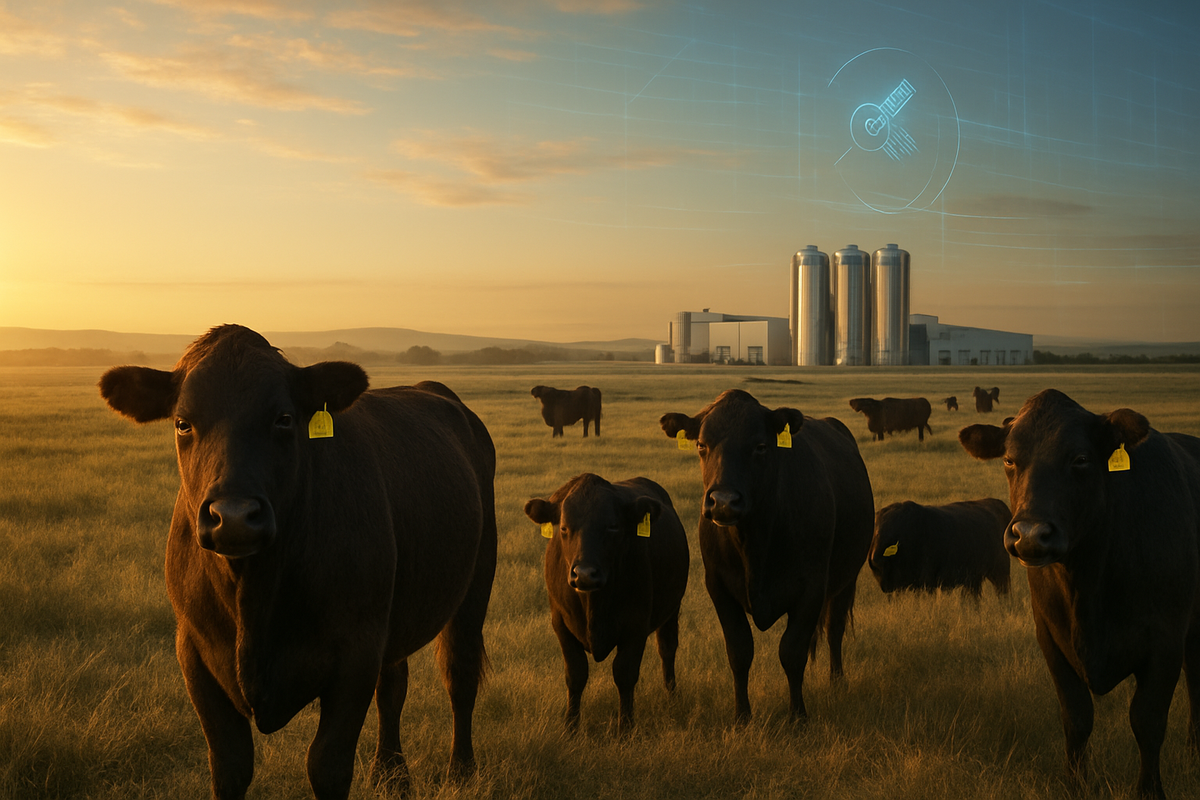
Furthermore, the mandatory use of Electronic Identification (EID) tags for sexually mature cattle moving across state lines is now in full effect. This technological mandate, while initially met with resistance from some small-scale producers due to costs, is being hailed as a game-changer for disease management. Using Direct-to-Device (D2D) satellite technology, health officials can now track disease outbreaks in under an hour, a process that used to take weeks. This infrastructure is seen as vital for protecting the U.S. export market, which remains sensitive to any potential biosecurity threats.
These regulatory shifts mirror broader industry trends toward ESG (Environmental, Social, and Governance) compliance and data-driven agriculture. The delay of the FDA Food Traceability Rule (FSMA 204) enforcement to 2028 has given some breathing room to smaller operators, but the message from the market is clear: the future of livestock is digital, domestic, and highly scrutinized.
The Road Ahead: Rebuilding or Retrenching?
As we look toward the remainder of 2026, the central question for the cattle industry is when—or if—herd rebuilding will begin. With interest rates stabilizing but remaining higher than in the previous decade, the capital required to expand a herd is significant. Most analysts expect the "supply hole" to persist through at least 2027, meaning beef prices at the grocery store are likely to remain elevated for the foreseeable future.
In the dairy sector, the focus will be on "functional value." Processors are moving away from fluid milk and toward high-margin products like lactose-free, high-protein, and ultra-filtered milks. This pivot is essential for dairy farmers to survive a period where raw milk prices are decoupled from the rising costs of labor and energy. Strategic partnerships between dairy cooperatives and global food brands will likely increase as the industry seeks to stabilize income through long-term supply contracts.
Market opportunities may also emerge in the "green cattle" space. With new satellite tracking and methane-reducing feed additives becoming more mainstream, producers who can prove a lower carbon footprint may begin to command a premium from retailers and fast-food chains looking to meet their 2030 sustainability goals.
Summary and Investor Outlook
The livestock market in early 2026 is a study in extremes. The cattle industry is basking in record prices but suffering from a lack of product, while the dairy industry is struggling with a surplus that has depressed farmgate returns. The closure of major facilities by players like Tyson Foods underscores the structural shifts occurring as the industry adapts to a smaller national herd.
For investors, the key will be watching the "Big Three" packers' ability to manage their protein mix. Diversification into poultry and pork will be the primary driver of earnings for JBS S.A. (OTC: JBSAY) and Tyson Foods (NYSE: TSN). Meanwhile, the success of Hormel Foods (NYSE: HRL) will depend on consumer acceptance of its new value-added products.
As we move through the first quarter of 2026, keep a close eye on the USDA’s upcoming inventory reports and the impact of the new "Product of the USA" labels on export volumes. The livestock market is no longer just about the weather and the price of corn; it is increasingly a high-tech, highly regulated sector where data and transparency are just as valuable as the cattle themselves.
This content is intended for informational purposes only and is not financial advice