CHANDLER, Ariz., Feb. 25, 2026 (GLOBE NEWSWIRE) -- For years, employers with mobile teams have been quietly avoiding GPS tracking — not because it doesn't work, but because they're afraid of how their people will react. Nobody wants to be the boss who makes employees feel watched. Nobody wants to damage trust they've spent years building.
So most companies hold back. And in doing so, they may be missing something their employees actually want.
Timeero commissioned an independent survey through PollFsh, polling 1,000 U.S.-based field and mobile employees about their real feelings on GPS tracking at work. What we found surprised us: 75.5% of employees are comfortable with GPS tracking during work hours. More striking, 53% said they actually prefer working for an employer that uses it.

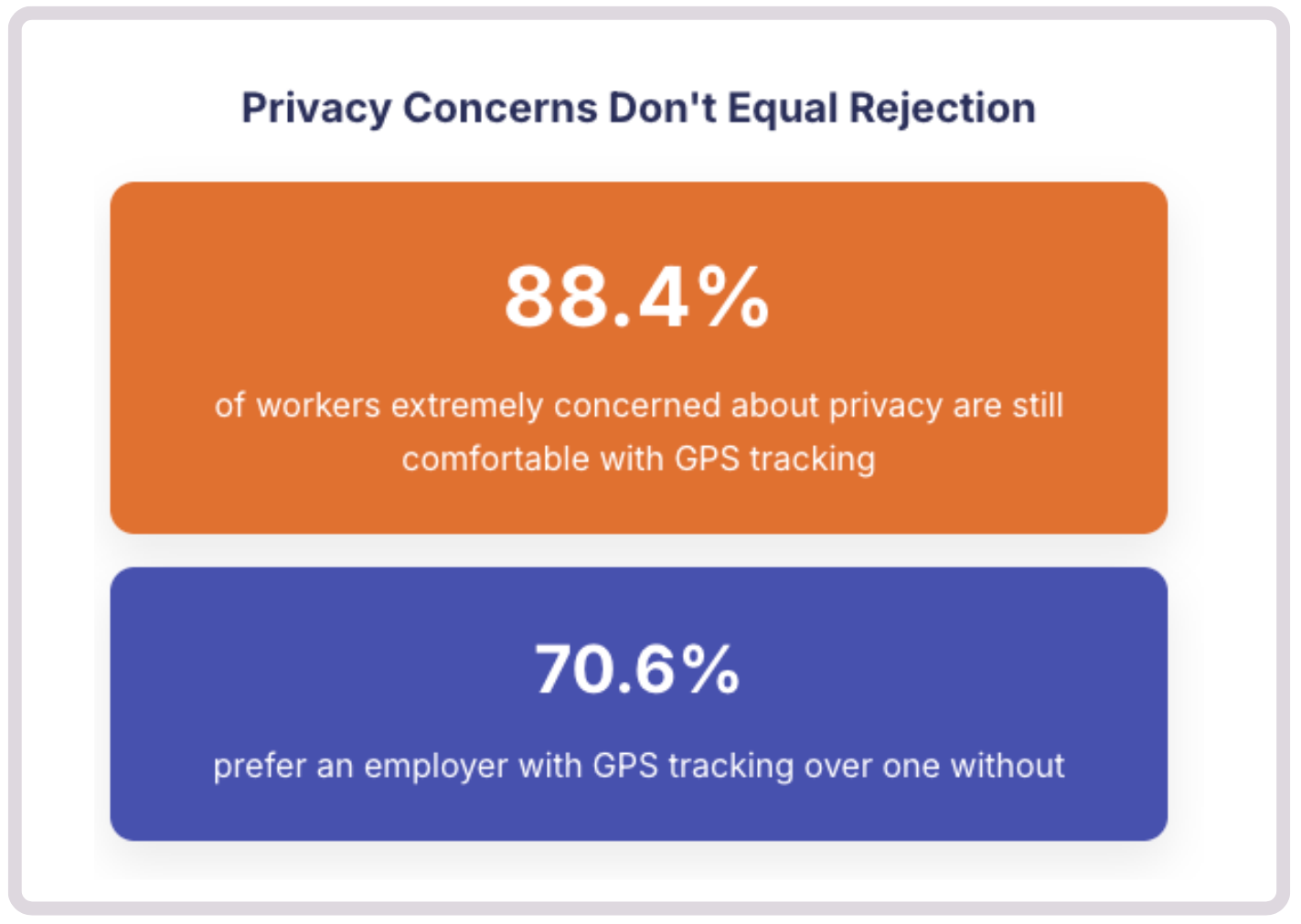
What's telling is that these results directly challenge employers’ widely held beliefs that employees are against being tracked. While privacy and data use are at the top of the list of employee concerns, those concerns don't outweigh the value they see in GPS tracking when it's used the right way.
So Why Do Workers Support It?
The answer comes down to one word: fairness.
Most employers expect employee backlash when GPS tracking is introduced, but data doesn’t support that. Workers report having neutral-positive feelings about the technology and those feelings become more positive when employers take the time to explain why they are using GPS tracking and how location data will be used. The more transparent employers are about their GPS tracking practices, the more likely employees are to see its value, especially in matters of accurate pay and dispute resolution.
Field and mobile workers operate in environments where disagreements happen: contested hours, questioned routes, pay discrepancies with no paper trail. Without reliable records, those disputes are rarely fairly resolved.
“GPS tracking technology shouldn’t be used as a form of surveillance. Employees don’t want to feel like they are being watched or spied on. When used correctly, GPS tracking serves as a form of protection and fairness for both the company and its employees.” Barima Kwarteng, founder of Timeero
For employees that experienced multiple work-related disputes, 70.6% of workers prefer to work for an employer that uses GPS tracking. For these workers, a company that uses GPS isn't playing Big Brother, but signaling they prioritize professionalism and fairness in the workplace.
What Employers Are Getting Wrong
Unlike what employers believe, the majority of employees aren’t opposed to GPS tracking itself. Instead, how the technology is implemented – poor rollouts vs. transparent introductions, one-sided visibility vs. equal access to data, is what determines whether or not employees will accept GPS tracking at work.
The key to increasing employees’ acceptance and comfort with GPS tracking is for employers to build trust from onboarding to everyday operations. The employers who get this right tend to do three things consistently.
Clear communication: Write clear and detailed policies around GPS tracking in the workplace. There should be no ambiguity in your company’s GPS tracking practices.
Clear off-hours boundaries: Employees want to know when GPS tracking stops. Ensure your GPS tracking system tracks employees during work hours only.
Transparency around data: Communicate with your employees about what data is being collected and how it is being used. Employees should also have equal access to their personal data.
When employers are intentional about introducing GPS tracking as a form of protection, visibility, and fairness, employees are more likely to accept the technology despite their privacy and security concerns. In many cases, they'll come to value it.
"The employers who struggle with GPS adoption are usually the ones who roll it out quietly and hope nobody asks questions. The ones who succeed lead with transparency — and their employees respect them for it." Barima Kwarteng, founder of Timeero
Methodology
Timeero’s GPS Tracking survey was conducted through PollFish in November 2025. 1,000 U.S.-based field and mobile employees were surveyed, ages 18-65+. Employees were asked how they felt about GPS tracking in terms of comfort, disputes, and data access. All employees currently work for an employer that uses GPS tracking in the workplace.
About Timeero
Timeero is a field workforce visibility platform designed for businesses with mobile and field-based teams. Using GPS-enabled technology, Timeero delivers accurate, verifiable records of hours worked, locations visited, and miles driven—helping organizations improve operational efficiency and productivity.
By replacing manual recordkeeping with automated time and mileage tracking, Timeero provides detailed, GPS-backed reports that reduce guesswork and subjectivity. This added clarity helps businesses minimize disputes, increase transparency across field operations, and protect both employers and workers from false or conflicting claims.
Timeero is used by organizations across construction, field services, healthcare, delivery, property management, and other mobile industries to strengthen accountability while maintaining employee trust.
Photos accompanying this announcement are available at
https://www.globenewswire.com/NewsRoom/AttachmentNg/64b292a0-33d6-466c-b059-1581afaa1539
https://www.globenewswire.com/NewsRoom/AttachmentNg/835c544a-9306-46bb-9f49-744343969e07

Jessica Packard
jessica.packard@timeero.com