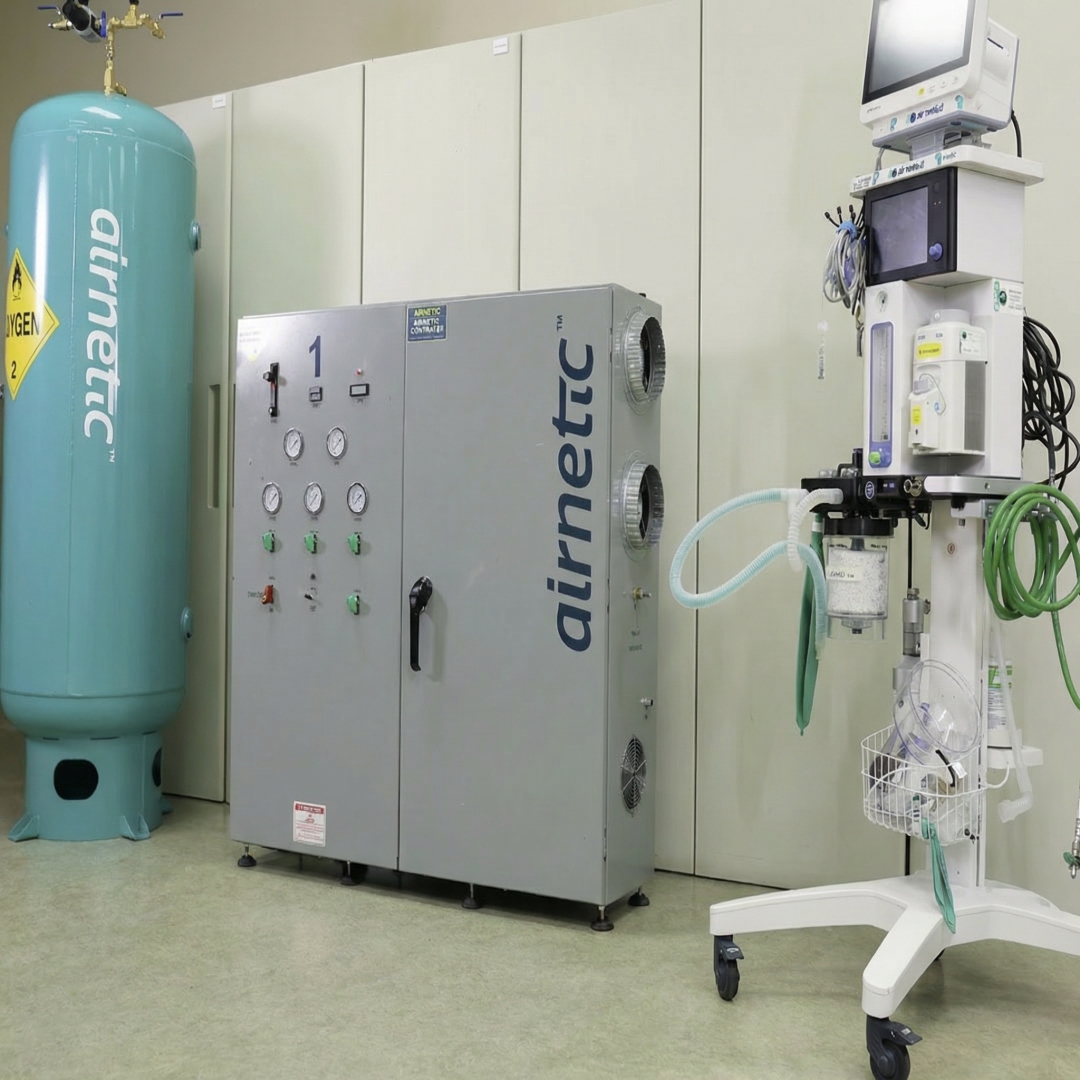
LAS VEGAS, NV - Most veterinary clinics that invest in oxygen therapy equipment make the same category of mistake: they select individual devices without designing a complete delivery system. A concentrator without a cylinder backup. A cage without an FiO2 sensor. A flowmeter sized for small animals in a practice that also sees large-breed emergency cases. The equipment exists. The integration does not.
Oxygen therapy in veterinary medicine serves three distinct clinical purposes: stabilizing critical patients in respiratory distress, supporting anesthesia recovery, and managing chronic or post-surgical oxygenation in recovery wards. Each scenario places different demands on the equipment. A system built for routine post-op support is not the same as one built for acute triage.
The core decision most clinics face comes down to oxygen source: concentrator, compressed cylinder, or both. Concentrators offer lower long-term operating cost and continuous output, making them well-suited for steady-state use in oxygen cages and post-operative settings. Cylinders deliver immediate high-flow oxygen without power dependency, which makes them the correct choice for emergencies and surgical suites. Neither source is complete on its own.
Beyond the source, three components determine whether therapy reaches the patient effectively: the regulator, the flowmeter, and the delivery interface. Regulators drop cylinder pressure to a safe working level. Flowmeters control the rate of delivery and must be matched to patient size. The delivery interface, whether a mask, nasal cannula, flow-by setup, or enclosed oxygen cage, determines the actual FiO2 the patient receives.
Oxygen cage selection is an area where clinics frequently underspecify. An oxygen enrichment cage without integrated concentration monitoring cannot confirm that therapeutic FiO2 levels are maintained. Temperature and humidity control matter for extended cases. Transparent construction allows observation without opening the door, which drops cage concentration and interrupts therapy.
The patterns that lead to equipment gaps are predictable. Clinics often build systems incrementally, adding devices as cases arise rather than from a systems perspective. Initial capital cost drives purchasing decisions instead of total cost of ownership. Backup planning is deferred. Staff training on delivery interfaces is treated as secondary to equipment acquisition.
The result is a configuration that works under normal conditions but fails under the exact circumstances where oxygen therapy matters most: power failures, high patient volume, or multi-species emergency scenarios.
Airnetic is a national supplier of oxygen therapy equipment for veterinary clinics, providing high flow veterinary oxygen, compressed gas systems, delivery interfaces, and integrations to Snyder oxygen cages to practices across the United States. The company publishes structured reference resources designed to help clinic operators and veterinary staff make informed equipment decisions based on clinical requirements, not marketing materials.
"Oxygen therapy equipment decisions are system decisions, not product decisions. A clinic that understands what each component does and when it fails is in a better position to build something that works when it has to." - Bob Pelton - Airnetic.us
The full guide, including equipment categories, selection criteria, a concentrator-vs-cylinder comparison, common configuration mistakes, and a 10-question FAQ, is available at:
airnetic.us/resources/veterinary-equipment/oxygen-therapy-equipment-for-veterinary-clinics/
About Airnetic
Airnetic.us supplies oxygen therapy equipment to veterinary clinics nationwide. Product lines include veterinary oxygen generators, flowmeters, regulators, and delivery interface systems. Airnetic publishes reference guides on equipment selection, system configuration, and clinical use to support informed purchasing decisions by veterinary professionals.
Media Contact
Company Name: Airnetic
Contact Person: Bob Pelton
Email: Send Email
Phone: (800) 923-6711
Address:2480 N Decatur Blvd # 125
City: Las Vegas
State: NV 89108
Country: United States
Website: https://airnetic.us/