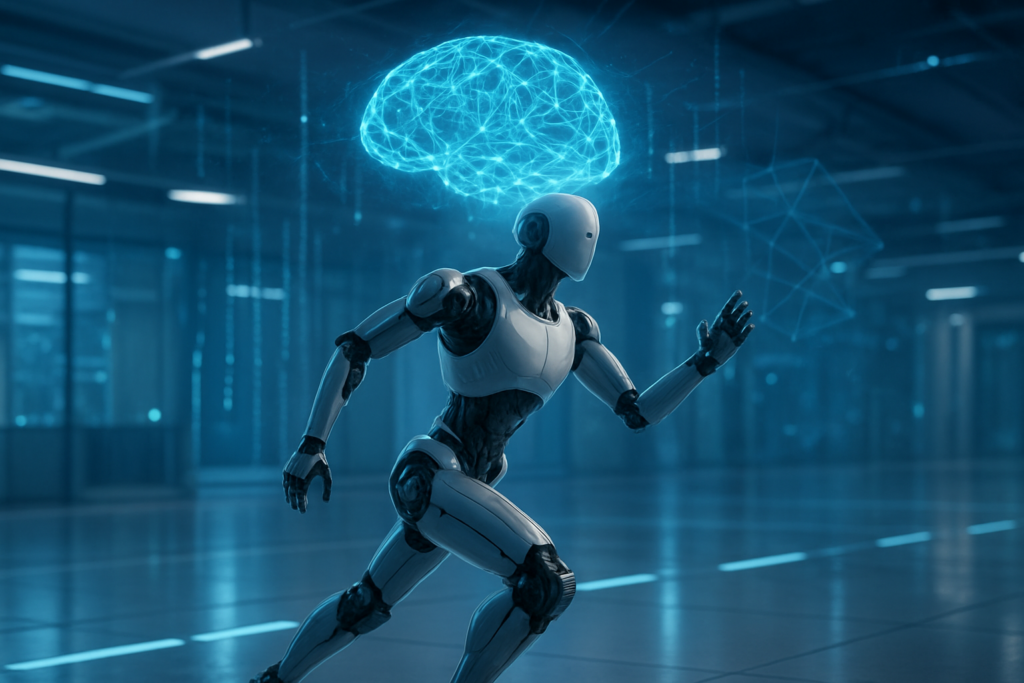
In a move that marks a definitive turning point for the field of embodied artificial intelligence, Google DeepMind and Boston Dynamics have officially announced the full-scale integration of the Gemini 3 foundation model into the all-electric Atlas humanoid robot. Unveiled this week at CES 2026, the collaboration represents a fusion of the world’s most advanced "brain"—a multimodal, trillion-parameter reasoning engine—with the world’s most capable "body." This integration effectively ends the era of pre-programmed robotic routines, replacing them with a system capable of understanding complex verbal instructions and navigating unpredictable human environments in real-time.
The significance of this announcement cannot be overstated. For decades, humanoid robots were limited by their inability to reason about the physical world; they could perform backflips in controlled settings but struggled to identify a specific tool in a cluttered workshop. By embedding Gemini 3 directly into the Atlas hardware, Alphabet Inc. (NASDAQ: GOOGL) and Boston Dynamics, a subsidiary of Hyundai Motor Company (OTCMKTS: HYMTF), have created a machine that doesn't just move—it perceives, plans, and adapts. This "brain-body" synthesis allows the 2026 Atlas to function as an autonomous agent capable of high-level cognitive tasks, potentially disrupting industries ranging from automotive manufacturing to logistics and disaster response.
Embodied Reasoning: The Technical Architecture of Gemini-Atlas
At the heart of this breakthrough is the Gemini 3 architecture, released by Google DeepMind in late 2025. Unlike its predecessors, Gemini 3 utilizes a Sparse Mixture-of-Experts (MoE) design optimized for robotics, featuring a massive 1-million-token context window. This allows the robot to "remember" the entire layout of a factory floor or a multi-step assembly process without losing focus. The model’s "Deep Think Mode" provides a reasoning layer where the robot can pause for milliseconds to simulate various physical outcomes before committing to a movement. This is powered by the onboard NVIDIA Corporation (NASDAQ: NVDA) Jetson Thor module, which provides over 2,000 TFLOPS of AI performance, allowing the robot to process real-time video, audio, and tactile sensor data simultaneously.
The physical hardware of the electric Atlas has been equally transformed. The 2026 production model features 56 active joints, many of which offer 360-degree rotation, exceeding the range of motion of any human. To bridge the gap between high-level AI reasoning and low-level motor control, DeepMind developed a proprietary "Action Decoder" running at 50Hz. This acts as a digital cerebellum, translating Gemini 3’s abstract goals—such as "pick up the fragile glass"—into precise torque commands for Atlas’s electric actuators. This architecture solves the latency issues that plagued previous humanoid attempts, ensuring that the robot can react to a falling object or a human walking into its path within 20 milliseconds.
Initial reactions from the AI research community have been overwhelmingly positive. Dr. Aris Xanthos, a leading robotics researcher, noted that the ability of Atlas to understand open-ended verbal commands like "Clean up the spill and find a way to warn others" is a "GPT-3 moment for robotics." Unlike previous systems that required thousands of hours of reinforcement learning for a single task, the Gemini-Atlas system can learn new industrial workflows with as few as 50 human demonstrations. This "few-shot" learning capability is expected to drastically reduce the time and cost of deploying humanoid fleets in dynamic environments.
A New Power Dynamic in the AI and Robotics Industry
The collaboration places Alphabet Inc. and Hyundai Motor Company in a dominant position within the burgeoning humanoid market, creating a formidable challenge for competitors. Tesla, Inc. (NASDAQ: TSLA), which has been aggressively developing its Optimus robot, now faces a rival that possesses a significantly more mature software stack. While Optimus has made strides in mechanical design, the integration of Gemini 3 gives Atlas a superior "world model" and linguistic understanding that Tesla’s current FSD-based (Full Self-Driving) architecture may struggle to match in the near term.
Furthermore, this partnership signals a shift in how AI companies approach the market. Rather than competing solely on chatbots or digital assistants, tech giants are now racing to give their AI a physical presence. Startups like Figure AI and Agility Robotics, while innovative, may find it difficult to compete with the combined R&D budgets and data moats of Google and Boston Dynamics. The strategic advantage here lies in the data loop: every hour Atlas spends on a factory floor provides multimodal data that further trains Gemini 3, creating a self-reinforcing cycle of improvement that is difficult for smaller players to replicate.
The market positioning is clear: Hyundai intends to use the Gemini-powered Atlas to fully automate its "Metaplants," starting with the RMAC facility in early 2026. This move is expected to drive down manufacturing costs and set a new standard for industrial efficiency. For Alphabet, the integration serves as a premier showcase for Gemini 3’s versatility, proving that their foundation models are not just for search engines and coding, but are the essential operating systems for the physical world.
The Societal Impact of the "Robotic Awakening"
The broader significance of the Gemini-Atlas integration lies in its potential to redefine the human-robot relationship. We are moving away from "automation," where robots perform repetitive tasks in cages, toward "collaboration," where robots work alongside humans as intelligent peers. The ability of Atlas to navigate complex environments in real-time means it can be deployed in "fenceless" environments—hospitals, construction sites, and eventually, retail spaces. This transition marks the arrival of the "General Purpose Robot," a concept that has been the holy grail of science fiction for nearly a century.
However, this breakthrough also brings significant concerns to the forefront. The prospect of robots capable of understanding and executing complex verbal commands raises questions about safety and job displacement. While the 2026 Atlas includes "Safety-First" protocols—hardcoded overrides that prevent the robot from exerting force near human vitals—the ethical implications of autonomous decision-making in high-stakes environments remain a topic of intense debate. Critics argue that the rapid deployment of such capable machines could outpace our ability to regulate them, particularly regarding data privacy and the security of the "brain-body" link.
Comparatively, this milestone is being viewed as the physical manifestation of the LLM revolution. Just as ChatGPT transformed how we interact with information, the Gemini-Atlas integration is transforming how we interact with the physical world. It represents a shift from "Narrow AI" to "Embodied General AI," where the intelligence is no longer trapped behind a screen but is capable of manipulating the environment to achieve goals. This is the first time a foundation model has been successfully used to control a high-degree-of-freedom humanoid in a non-deterministic, real-world setting.
The Road Ahead: From Factories to Front Doors
Looking toward the near future, the next 18 to 24 months will likely see the first large-scale deployments of Gemini-powered Atlas units across Hyundai’s global manufacturing network. Experts predict that by late 2027, the technology will have matured enough to move beyond the factory floor into more specialized sectors such as hazardous waste removal and search-and-rescue. The "Deep Think" capabilities of Gemini 3 will be particularly useful in disaster zones where the robot must navigate rubble and make split-second decisions without constant human oversight.
Long-term, the goal remains a consumer-grade humanoid robot. While the current 2026 Atlas is priced for industrial use—estimated at $150,000 per unit—advancements in mass production and the continued optimization of the Gemini architecture could see prices drop significantly by the end of the decade. Challenges remain, particularly regarding battery life; although the 2026 model features a 4-hour swappable battery, achieving a full day of autonomous operation without intervention is still a hurdle. Furthermore, the "Action Decoder" must be refined to handle even more delicate tasks, such as elder care or food preparation, which require a level of tactile sensitivity that is still in the early stages of development.
A Landmark Moment in the History of AI
The integration of Gemini 3 into the Boston Dynamics Atlas is more than just a technical achievement; it is a historical landmark. It represents the successful marriage of two previously distinct fields: large-scale language modeling and high-performance robotics. By giving Atlas a "brain" capable of reasoning, Google DeepMind and Boston Dynamics have fundamentally changed the trajectory of human technology. The key takeaway from this week’s announcement is that the barrier between digital intelligence and physical action has finally been breached.
As we move through 2026, the tech industry will be watching closely to see how the Gemini-Atlas system performs in real-world industrial settings. The success of this collaboration will likely trigger a wave of similar partnerships, as other AI labs seek to find "bodies" for their models. For now, the world has its first true glimpse of a future where robots are not just tools, but intelligent partners capable of understanding our words and navigating our world.
This content is intended for informational purposes only and represents analysis of current AI developments.
TokenRing AI delivers enterprise-grade solutions for multi-agent AI workflow orchestration, AI-powered development tools, and seamless remote collaboration platforms.
For more information, visit https://www.tokenring.ai/.