As of January 30, 2026, the global financial landscape is witnessing the official dawn of "InfoFi"—Information Finance. Prediction markets, once relegated to the fringes of the internet and academic white papers, have shattered the glass ceiling of mainstream adoption. This shift is being driven by a historic pivot from Silicon Valley’s titans, most notably Alphabet Inc. (NASDAQ: GOOGL), which recently overhauled its decades-long stance on advertising for event contracts, and Meta Platforms (NASDAQ: META), which is reportedly preparing to integrate real-time market probabilities directly into the social feeds of billions.
The momentum is staggering. On January 12, 2026, the industry recorded a record-breaking single-day trading volume of $701.7 million, signaling that the public is no longer just reading the news—they are trading it. With the 2026 U.S. Midterm elections looming and the Federal Reserve navigating a complex "soft landing" sequel, the appetite for probabilistic clarity has never been higher. Traders are no longer looking to pundits for what happens next; they are looking at the order books of Kalshi and the newly U.S.-regulated Polymarket.
The Market: What's Being Predicted
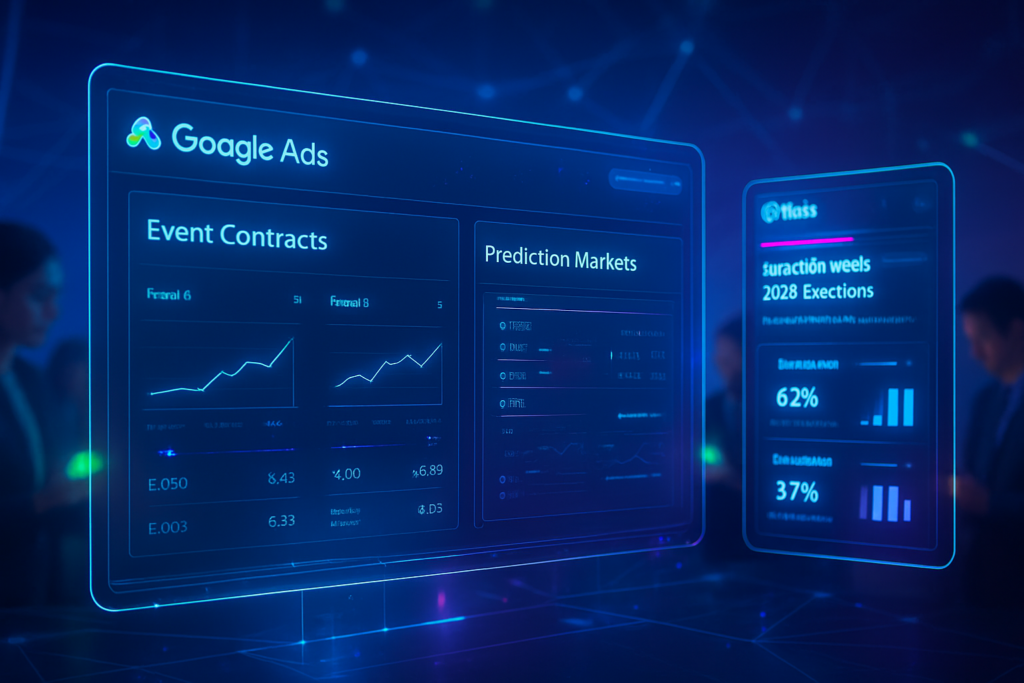
The primary catalyst for this month’s market euphoria was Alphabet’s decision on January 21, 2026, to update its Google Ads policies. For the first time, prediction markets are being classified alongside traditional financial instruments rather than gambling. This policy change allows Commodity Futures Trading Commission (CFTC)-authorized Designated Contract Markets (DCMs) and NFA-certified brokerages to run search and display ads globally. The impact was immediate: Kalshi's monthly trading volume is currently pacing toward $16.4 billion for January, a 38% increase from December 2025.
Parallel to this, the "Meta Rumor Mill" has set prediction markets on fire. Insiders suggest Meta Platforms is in the final stages of testing "Truth Widgets"—interactive modules for Facebook, Instagram, and Threads that display real-time odds for major news events. These widgets are expected to draw data from platforms like Polymarket, which recently gained a U.S. foothold via its acquisition of the exchange QCEX. While Meta has not officially confirmed the launch date, the "Meta Widget Integration" market on Polymarket is currently trading at a 74% probability for a Q1 2026 rollout, with over $150 million in position value.
Why Traders Are Betting
The institutionalization of prediction markets is the primary driver behind the current betting frenzy. On January 7, 2026, News Corp (NASDAQ: NWSA) announced a landmark partnership with Polymarket to integrate event data into the Wall Street Journal and Dow Jones feeds. This followed a similar move by CNBC, effectively creating a "Prediction Hub" that validates market data as a legitimate alternative to traditional polling. Analysts at Piper Sandler (NYSE: PIPR) have revised their 2026 forecasts, projecting that the industry will trade over 445 billion contracts this year, representing a notional volume of approximately $222.5 billion.
Large-scale "whale" activity has also been noted in the "Federal Preemption" markets. Traders are heavily betting on the outcome of a legal standoff in Massachusetts, where a state court recently issued a preliminary injunction against Kalshi regarding sports-related event contracts. High-net-worth traders are positioning for a Supreme Court showdown that could finally settle whether federal CFTC oversight overrides state-level gambling commissions. The "Federal Preemption Confirmed" contract is currently trading at 0.62, reflecting a cautious but optimistic outlook on federal authority.
Broader Context and Implications
This mainstreaming represents the birth of "Truth Engines." In an era of AI-generated content and deepfakes, prediction markets provide a financial incentive for accuracy. When Alphabet allows these platforms to advertise, it isn't just a business move; it is a recognition that market-implied probabilities are a critical utility for the modern internet user. The transition from "betting" to "hedging real-world risk" is nearly complete, with retail users now using Kalshi to hedge against mortgage rate hikes or local property tax increases.
However, the rapid expansion has hit a regulatory "speed bump" at the state level. While the CFTC has stabilized its federal stance—dropping its long-standing appeal against election markets in 2025—states like New York and Massachusetts are fighting to retain their "police powers" over what they classify as gaming. This tension highlights the primary conflict of 2026: Is a prediction market a financial tool for price discovery, or is it a derivative of sports betting? The market sentiment, as seen in the rising valuations of Kalshi (now at $11 billion) and Polymarket, suggests the financial tool argument is winning.
What to Watch Next
The immediate focus for February 2026 will be Meta’s potential announcement. If the "Truth Widgets" go live on Instagram, it would represent the single largest onboarding event in the history of prediction markets, potentially bringing hundreds of millions of retail users into the ecosystem. Furthermore, keep a close watch on the Trump Media & Technology Group (NASDAQ: DJT). Rumors are circulating that Truth Social plans to launch its own proprietary prediction market service, potentially advised by Donald Trump Jr., who has become a vocal advocate for the "InfoFi" movement.
On the legal front, the February 15 hearing in the New York State Gaming Commission vs. Kalshi case will be a pivotal moment. A victory for Kalshi would likely trigger a massive "green candle" across all event contract markets, as it would effectively neutralize the most significant remaining barrier to a unified U.S. market. Traders should also monitor the "First 100 Days of 2026" markets, which are seeing record liquidity as the geopolitical landscape shifts.
Bottom Line
The events of January 2026 have proven that prediction markets are no longer a subculture; they are the new infrastructure of information. Alphabet’s policy shift and Meta’s rumored integration signify that the world’s most powerful gatekeepers of information have accepted the "Wisdom of the Crowd" as a commercial and social necessity.
As we move further into 2026, the line between social media, news, and financial markets will continue to blur. Whether you view these platforms as a "Truth Engine" or a "Global Casino," their influence on public sentiment and capital allocation is undeniable. For the prediction market trader, the message is clear: the markets are finally open, and the world is watching.
This article is for informational purposes only and does not constitute financial or betting advice. Prediction market participation may be subject to legal restrictions in your jurisdiction.
PredictStreet focuses on covering the latest developments in prediction markets.
Visit the PredictStreet website at https://www.predictstreet.ai/.