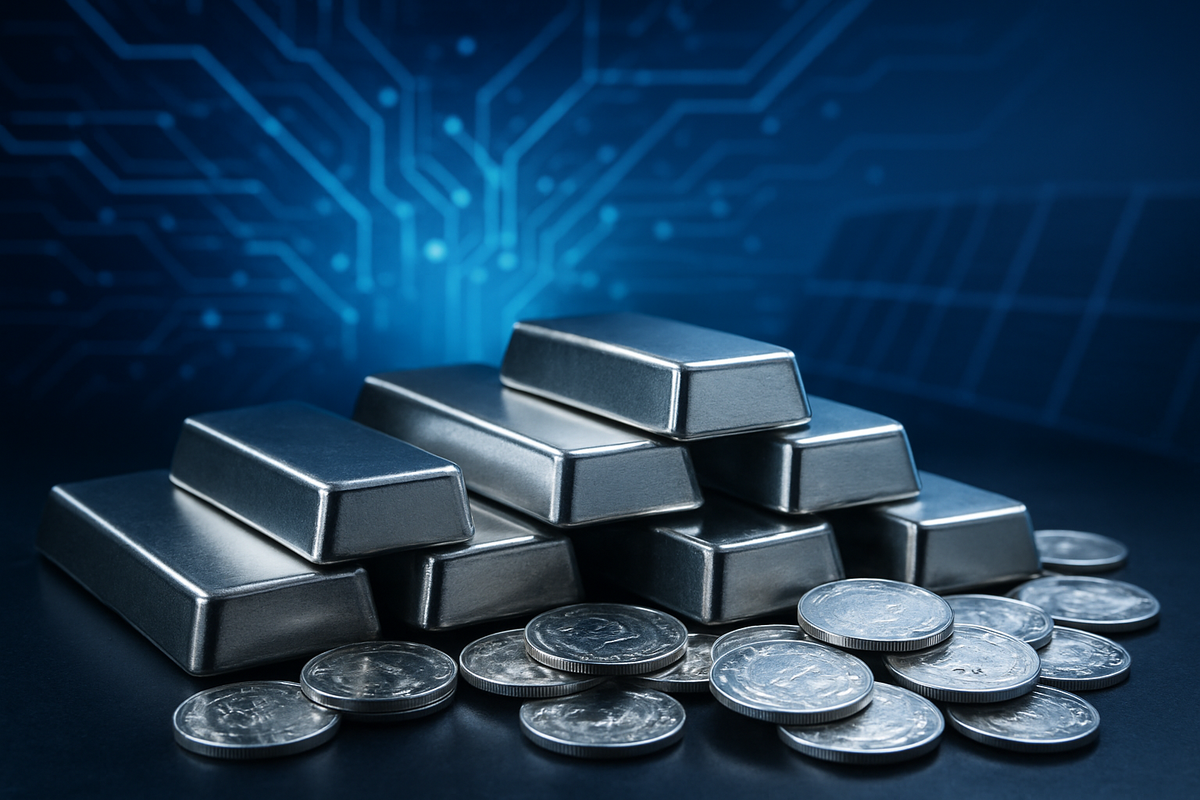
In a historic market shift, silver has surged past $100 per ounce, driven by a widening supply-demand gap and its critical role in the burgeoning AI and green energy sectors. While many see this as a necessary market correction, others warn of a speculative bubble.
As of January 26, 2026, the global financial markets are witnessing a tectonic shift in the commodities sector. Silver, often overshadowed by its more glamorous sibling, gold, has shattered records by climbing over 200% in the past year to reach a valuation of $103 per ounce. This unprecedented rally has caught many investors by surprise, yet a deeper dive into market fundamentals suggests that the "silver squeeze" has been years in the making. The immediate result is a scramble for physical supply as industries and investors alike recognize the metal's dwindling availability.
The Perfect Storm: A Timeline of the Triple-Digit Breakout
The journey to $103 per ounce was not an overnight phenomenon but the culmination of five consecutive years of structural supply deficits. Starting in early 2024, the silver market began to tighten as industrial demand from the solar photovoltaic (PV) and electric vehicle (EV) sectors outpaced global mine production. By mid-2025, the narrative shifted from "steady growth" to "acute shortage" as the AI infrastructure boom added a massive new layer of demand. Silver is a critical component in the high-performance computing (HPC) systems and data centers required to train large language models, consuming an estimated 350 million ounces in 2025 alone.
Key players in the market, including the Silver Institute and major institutional desks, have watched as global above-ground stocks were depleted to levels not seen in decades. In the third week of January 2026, the situation reached a fever pitch when COMEX registered inventories saw a one-week plunge of 26%, or over 33 million ounces. This "run on the vaults" acted as the final catalyst, pushing silver past the previous 2011 high of $50 and quickly doubling it. Initial market reactions have been a mix of euphoria among precious metals investors and panic among industrial end-users, with some electronics manufacturers reportedly pausing production to reassess their procurement strategies.
Mining Giants and Tech Tensions: The Corporate Winners and Losers
The primary beneficiaries of this price explosion are the major silver producers and streaming companies. Pan American Silver (NYSE: PAAS) and Hecla Mining (NYSE: HL) have seen their market capitalizations swell as their margins expand at an exponential rate. For primary producers like First Majestic Silver (NYSE: AG), which operates several high-grade mines in Mexico and the U.S., the $100 silver environment has turned even previously marginal projects into massive profit centers. Wheaton Precious Metals (NYSE: WPM), the world’s largest precious metals streaming company, has seen its stock price surge as it reaps the rewards of long-term contracts that allow it to purchase silver at fixed costs—often as low as $6 per ounce—while selling it at the current triple-digit market rates.
On the other side of the ledger, the "losers" are the industrial firms facing a sudden and massive spike in raw material costs. Solar panel manufacturers and AI hardware firms, such as those producing advanced semiconductors and motherboards, are seeing their input costs skyrocket. While large-cap tech companies may have the balance sheets to absorb these costs temporarily, smaller players in the renewable energy space are facing a margin squeeze that could delay projects. Furthermore, companies like Coeur Mining (NYSE: CDE), which recently expanded its silver portfolio in 2025, are now in a race to ramp up production to capitalize on the rally, though the inherent lag in mining restarts means fresh supply is still months, if not years, away.
A Fundamental Shift or a Speculative Bubble?
The wider significance of this rally lies in silver's evolving identity. Historically, silver followed gold’s lead as a monetary hedge, but the 2026 rally has decoupled the two metals. The gold-to-silver ratio, which sat above 80:1 for much of the previous decade, has collapsed to 50:1, signaling silver's emergence as a strategic industrial commodity. This shift mirrors the historical silver spike of 1980, but with a crucial difference: while the 1980 rally was driven by the Hunt brothers' attempt to corner the market, the current surge is underpinned by a global energy and computing transition that requires physical silver that simply isn't being mined fast enough.
However, the "speculative frenzy" warning cannot be ignored. Strategists at major investment banks have pointed out that the parabolic move from $70 to $103 in less than a month bears the hallmarks of a momentum-driven squeeze rather than a gradual repricing. There are growing concerns about "demand destruction," where the high price of silver forces industries to innovate away from the metal. For example, in the solar industry, "thrifting"—the process of using less silver per cell—is expected to accelerate, potentially cooling long-term demand. The regulatory gaze is also intensifying, with calls for increased margin requirements on futures exchanges to curb the volatility that has gripped the market since the start of the year.
The Road Ahead: $150 or a Sharp Correction?
Looking forward, the silver market faces two potential paths. In the short term, the momentum could carry the metal even higher, with some ultra-bullish analysts targeting $150 per ounce if the COMEX inventory drain continues. For tech and energy companies, the strategic pivot has already begun; many are now looking to secure long-term supply agreements directly with miners to bypass the volatile spot market. This "direct-to-mine" trend could fundamentally change how silver is traded, moving away from centralized exchanges and toward private bilateral contracts.
In the long term, the high price of silver will likely trigger a surge in exploration and recycling. While mining is slow to react, silver scrap recovery from old electronics and solar panels could become a multi-billion dollar industry in its own right. However, if the "speculative frenzy" breaks, the market could see a correction as violent as the rally itself. Investors should brace for extreme volatility throughout the remainder of 2026, as the market attempts to find an equilibrium price that balances the desperate needs of the AI revolution with the reality of global supply constraints.
Final Summary
The silver rally of 2026 marks the end of an era where the metal was viewed as a secondary precious metal. By hitting $103 per ounce, silver has asserted its role as the "indispensable metal" of the 21st century, sitting at the intersection of financial security and technological progress. The combination of a chronic supply deficit and the voracious appetite of the AI industry has created a fundamental backdrop that makes this rally vastly different from the speculative spikes of the past.
Moving forward, the market will be defined by a tug-of-war between physical scarcity and the threat of an eventual price-induced slowdown. Investors should keep a close watch on weekly vault inventory reports and the gold-to-silver ratio as key indicators of the rally’s health. While the $100 milestone is a historic achievement, the real test will be whether silver can sustain these levels once the initial wave of FOMO subsides and the industrial world begins to adapt to the new reality of triple-digit silver.
This content is intended for informational purposes only and is not financial advice.