The semiconductor landscape reached a definitive turning point on January 13, 2026, as Intel (NASDAQ: INTC) shares climbed nearly 5% to settle at $46.14. This rally was fueled by a dual-engine of positive momentum: the successful high-volume manufacturing (HVM) launch of its 18A process node and a cooler-than-expected Consumer Price Index (CPI) report. The December 2025 CPI data, released this morning, showed core inflation rising by a modest 0.2% month-over-month, bringing the annual rate down to 2.7%. This macroeconomic "sweet spot" has ignited a broad tech rally, with Intel emerging as the poster child for a domestic manufacturing resurgence.
For Intel, today’s price action is more than just a reaction to federal interest rate speculation; it is a validation of a multi-year turnaround strategy that many analysts had previously written off. As the broader market moves toward a projected $1 trillion total addressable market by the end of 2026, Intel’s "Foundry First" pivot is finally yielding tangible results. With the successful separation of its manufacturing and design arms, the company has transformed from a struggling legacy giant into a critical "national champion" for Western semiconductor sovereignty.
The 18A Era: From Laboratory to Living Room
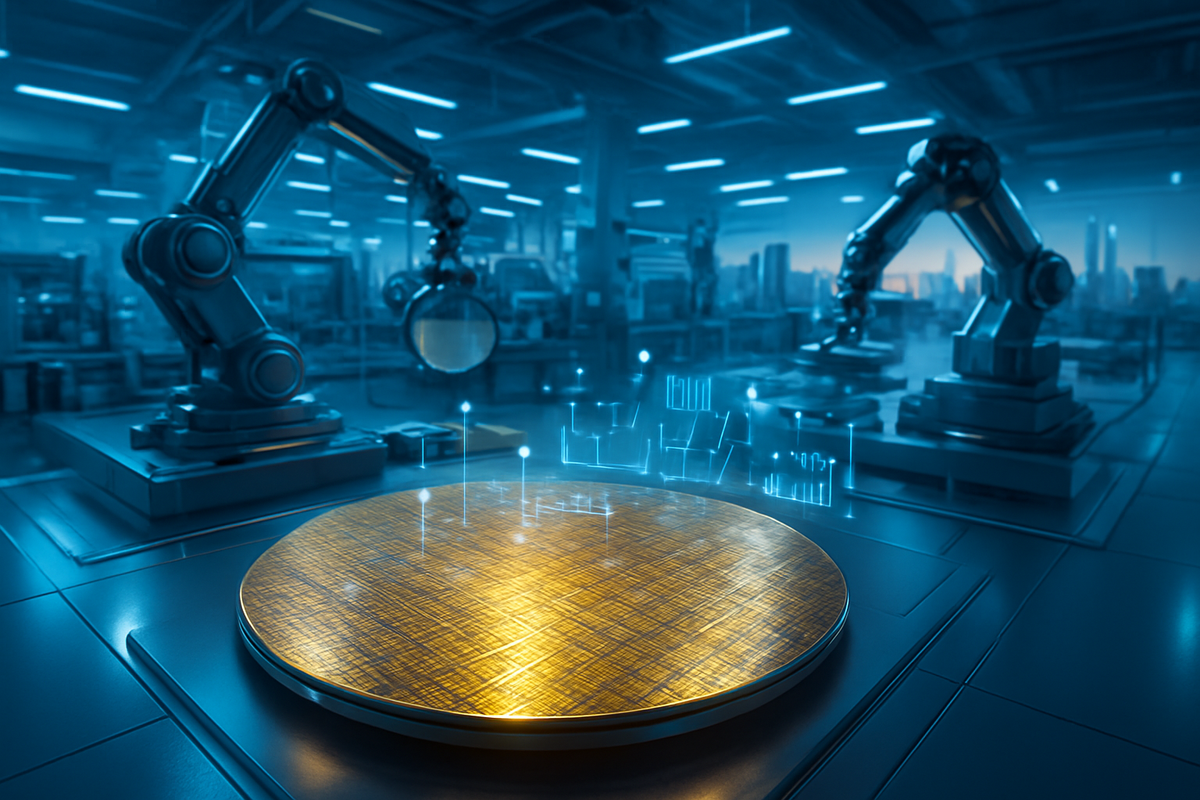
The primary catalyst for Intel’s recent dominance is the official entry of the 18A (1.8nm) process node into high-volume manufacturing. At the Consumer Electronics Show (CES) 2026 held just last week, Intel showcased its Core Ultra Series 3 processors, codenamed "Panther Lake." These chips represent the first consumer products built on the 18A node, featuring the revolutionary RibbonFET (gate-all-around) architecture and PowerVia backside power delivery. This technological leap allows for a 30% increase in chip density and a 25% improvement in power efficiency compared to the previous generation, effectively closing the performance gap with its rivals.
The timeline leading to this moment has been fraught with challenges. Following the departure of Pat Gelsinger in March 2025, new CEO Lip-Bu Tan took the helm with a mandate to streamline operations and prioritize foundry yields. Under Tan’s leadership, 18A yields have reportedly reached the 65%–75% range—a critical threshold for commercial viability. The market’s reaction today also reflects a significant analyst upgrade from KeyBanc, which raised its price target for Intel to $60, citing the robust demand for AI-integrated PCs and a favorable memory cycle that is lifting the entire sector.
Winners and Losers in the "Giga Cycle"
While Intel is currently basking in the spotlight, the broader semiconductor sector is experiencing a massive reshuffling. NVIDIA (NASDAQ: NVDA), the undisputed king of AI, continues to trade near record highs with a $5 trillion market capitalization. However, the dynamics have shifted; NVIDIA is no longer just a competitor but has become one of Intel Foundry’s most significant customers for advanced packaging services. This "frenemy" relationship allows NVIDIA to diversify its supply chain away from total reliance on Taiwan Semiconductor Manufacturing Company (NYSE: TSM).
TSMC remains a formidable winner, with its 2nm (N2) node also entering mass production. However, TSMC faces unique headwinds in the U.S. market. As of early 2026, the U.S. Commerce Department, led by Secretary Howard Lutnick, has shifted the CHIPS Act funding model from direct grants to non-voting equity stakes. Intel has accepted this "national champion" status, with the U.S. Treasury taking an approximate 10% stake in the company. Conversely, TSMC and Samsung (KRX:005930) have reportedly pushed back against these terms, leading to a stalemate in subsidy disbursements that has temporarily dampened their domestic expansion plans. Meanwhile, AMD (NASDAQ: AMD) is feeling the pressure in the "AI PC" segment. While AMD’s "Gorgon Point" Ryzen AI 400 series remains competitive, Intel’s 18A efficiency gains have eroded the lead AMD previously enjoyed in laptop battery life and performance-per-watt.
A New Framework for Global Trade and AI
The current market moves are deeply intertwined with a shifting regulatory landscape. A new "25% Revenue-Sharing Model" for China exports has provided a surprising tailwind for the sector. Under this framework, U.S. companies like NVIDIA and Intel can export certain mid-tier AI architectures, such as the H200, to the Chinese market provided they remit a 25% "national security tariff" to the U.S. Treasury. This policy has stabilized revenues for American firms while ensuring that the most advanced "Rubin" and "Panther Lake" architectures remain restricted, maintaining a permanent two-generation technology gap.
Historically, the semiconductor industry has been defined by boom-and-bust cycles. However, the "Giga Cycle" of 2026—driven by the total integration of AI into consumer hardware—appears more durable. The emergence of the "AI PC" has triggered a replacement cycle not seen since the early 2000s. Intel’s ability to manufacture these chips on U.S. soil has turned it into a strategic asset, insulating it from the geopolitical volatility that often plagues its Asian counterparts. This "Sovereign AI" trend is forcing every major player to reconsider their geographic footprint, with Micron (NASDAQ: MU) recently breaking ground on a $100 billion "Megafab" in New York to secure the domestic memory supply.
The Road to $1 Trillion: What’s Next for Intel?
Looking ahead, the next six months will be a gauntlet for Intel. The company is scheduled to report its Q4 2025 earnings on January 22, 2026. Investors will be looking for confirmation that the company has remained cash-flow positive, a milestone it first achieved in the second half of 2025. The short-term challenge will be the continued ramp-up of 18A production; any yield regressions could quickly sour the current "Silicon Renaissance" narrative. Long-term, Intel must prove that its Foundry division can attract more "whale" customers like Apple (NASDAQ: AAPL) or Qualcomm (NASDAQ: QCOM) to utilize its 14A node, which is already in the pilot phase.
The potential for a strategic pivot remains if the "equity stake" model of government funding leads to increased bureaucratic oversight. Intel must balance its role as a "national champion" with the need for agile, private-sector innovation. If the company can maintain its current trajectory, it is well-positioned to capture a massive share of the AI infrastructure market, which is expected to account for one-third of all semiconductor sales by the end of the year.
Summary and Investor Outlook
As of mid-January 2026, Intel has successfully navigated the "valley of death" that characterized its 2023-2024 turnaround efforts. The combination of the 18A node’s success, a cooling inflationary environment, and a favorable U.S. industrial policy has created a "perfect storm" for the stock. While the road to $60 per share is not without obstacles, the fundamental shift in Intel’s manufacturing capabilities has fundamentally changed the bull case for the company.
Investors should closely watch the Q4 earnings call on January 22 for updates on 18A yield consistency and any new foundry customer announcements. The broader semiconductor market is no longer a winner-take-all arena; it has become a diversified ecosystem where manufacturing prowess is just as valuable as architectural design. For the first time in a decade, Intel is proving it can excel at both.
This content is intended for informational purposes only and is not financial advice.