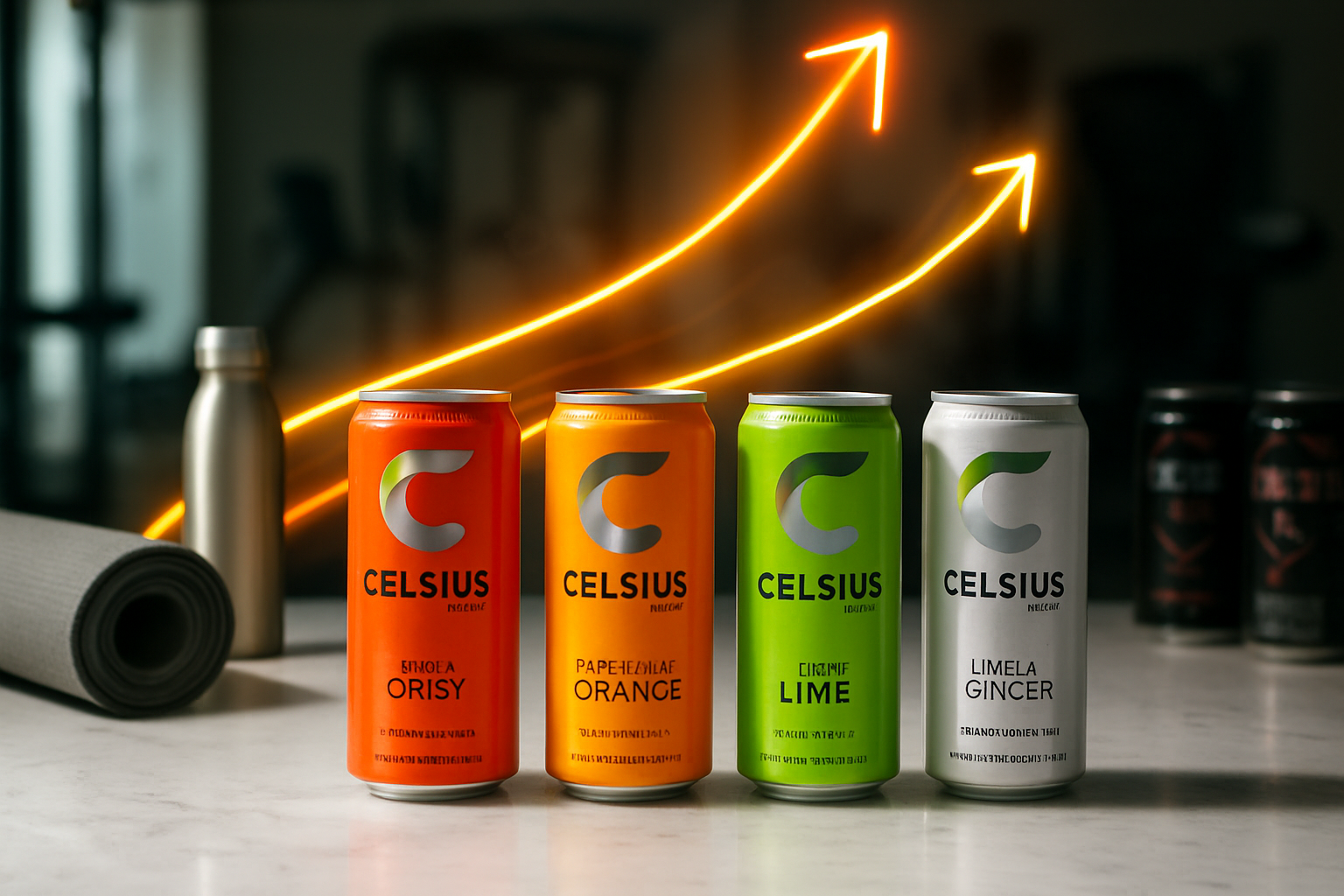
As of January 1, 2026, the energy drink landscape has undergone a seismic shift, moving away from the high-octane, extreme-sports branding of the early 2000s toward a "Better-For-You" (BFY) functional era. At the center of this transformation is Celsius Holdings (Nasdaq: CELH), which has officially transitioned from a high-growth disruptor into a diversified beverage titan. After a turbulent 2024 marked by inventory corrections and a cooling U.S. consumer market, Celsius spent 2025 orchestrating one of the most successful strategic pivots in the industry, punctuated by the landmark acquisition of Alani Nu.
The implications for the broader market are profound. Celsius, alongside its distribution partner PepsiCo (Nasdaq: PEP), has successfully bridged the gap between fitness enthusiasts and everyday consumers. By the close of 2025, Celsius and its newly integrated brands commanded nearly 17% of the U.S. energy drink market, solidifying its position as the undisputed third-largest player in the category. For investors and competitors alike, the "Celsius Playbook" has become the new standard for scaling a lifestyle brand in an increasingly health-conscious world.
From Volatility to Dominance: The 2024-2025 Turnaround
The journey to the top was far from linear. In mid-2024, Celsius faced its first major crisis of confidence since its meteoric rise. Shares of Celsius Holdings (Nasdaq: CELH), which had peaked near $100 in early 2024, plummeted to the mid-$20s by the end of that year. The primary catalyst was a massive "destocking" event by PepsiCo, which reduced its inventory of Celsius products by over $100 million to optimize working capital. This created a significant timing mismatch, where the company reported lackluster shipment growth even as retail sales velocity remained high.
However, 2025 served as a year of aggressive redemption. In April 2025, Celsius announced the $1.8 billion acquisition of Alani Nu, a brand that had built a cult-like following among female consumers and the fitness community. This move did more than just add volume; it diversified Celsius’s demographic reach and provided a buffer against the slowing growth of its core product line. By the third quarter of 2025, Celsius reported a 55% year-over-year revenue increase, with the stock price recovering over 110% from its 2024 lows to trade in the $46–$48 range.
The international front also provided a significant tailwind. Throughout 2025, Celsius successfully executed rollouts in the United Kingdom, France, and Australia. In the UK, a partnership with Suntory Beverage & Food (TYO: 2587) placed Celsius on the shelves of major retailers like Morrisons, while in France, the brand achieved 88% grocery penetration through deals with Carrefour and E.Leclerc. By the end of 2025, international revenue reached an annualized run rate of $100 million, proving that the brand's "functional" appeal transcends North American borders.
Winners and Losers in the New Energy Order
The rise of functional beverages has created a clear divide in the market. The primary winners are those who have leaned into the "lifestyle" segment. Keurig Dr Pepper (Nasdaq: KDP) emerged as a formidable challenger by taking a majority stake in Ghost Energy in late 2024. Throughout 2025, Ghost saw growth rates exceeding 20%, leveraging authentic collaborations with brands like Warheads and Sour Patch Kids to dominate the gaming and Gen Z demographics. Similarly, ZOA Energy, backed by Molson Coors (NYSE: TAP), successfully pivoted toward an "everyday electrolyte" focus, seeing double-digit sales growth in late 2025.
Conversely, the year 2025 was a period of reckoning for "hype-driven" brands. Prime Energy, the influencer-led brand by Logan Paul and KSI, suffered a dramatic collapse, with sales falling as much as 70% in certain regions. The brand was plagued by litigation, including a $68 million supplier lawsuit and regulatory scrutiny over its caffeine content. The legacy giants, Monster Beverage Corp (Nasdaq: MNST) and Red Bull, also faced headwinds. While still the volume leaders, both lost market share in 2025 as consumers traded "extreme" energy for the "clean" energy marketed by Celsius and Alani Nu. Monster, in particular, struggled to find significant traction with its alcohol-infused "Beast Unleashed" line, which failed to offset the slowing growth of its core energy portfolio.
The Regulatory Squeeze and the Functional Pivot
The wider significance of Celsius’s performance lies in its alignment with broader industry trends and shifting regulatory landscapes. As 2025 drew to a close, the energy drink sector faced unprecedented pressure from global health authorities. In the UK, the government moved to ban the sale of high-caffeine energy drinks to children under 16, a move that forced many brands to reformulate or lose significant convenience store access. In the U.S., the introduction of the "Caffeine Safety Bill" (H.R. 2511) in late 2025 signaled a new era of transparency, requiring warning labels for products exceeding 150mg of caffeine per serving.
Celsius has navigated these waters more effectively than its peers by positioning itself as a "fitness partner" rather than a "stimulant." The company’s focus on thermogenic properties and sugar-free formulas has insulated it from some of the harshest criticisms leveled at "sugar-bomb" energy drinks. This shift reflects a broader consumer move toward "proactive health," where every calorie and milligram of caffeine is scrutinized for its functional benefit. The success of Celsius has effectively forced the entire industry to reconsider its marketing tactics, moving away from youth-centric "hype" and toward adult-oriented "utility."
The Road Ahead: Integration and International Scale
Looking toward the remainder of 2026, the primary challenge for Celsius will be the full integration of Alani Nu and the management of its increasingly complex global supply chain. While the acquisition has provided a massive boost to market share, maintaining the distinct "voice" of both brands under one corporate umbrella will require delicate brand management. Investors will be watching closely to see if Celsius can maintain its industry-leading gross margins, which stabilized near 51.5% in late 2025, in the face of fluctuating commodity costs and international shipping pressures.
Short-term opportunities lie in the potential for further international expansion into Asian markets, where the functional beverage category is still in its infancy. However, the brand must also prepare for potential strategic pivots if U.S. regulatory pressure on caffeine intensifies. We may see Celsius experiment more heavily with non-caffeinated "recovery" drinks or broaden its reach into the functional water category to future-proof its portfolio against further stimulant-related legislation.
A New Era for Beverage Investors
The story of Celsius Holdings over the past two years is a masterclass in market resilience. From the "Great Reset" of 2024 to the "Alani Nu Rebound" of 2025, the company has proven that consumer demand for functional, better-for-you beverages is not a fad, but a fundamental shift in the American diet. As we enter 2026, Celsius is no longer the underdog; it is a pillar of the beverage sector, commanding a combined market share that rivals the legacy giants of the past.
For investors, the coming months will be defined by two key metrics: international margin expansion and the resolution of the U.S. regulatory environment. While the era of triple-digit growth may be over, the era of sustainable, diversified profitability appears to have just begun. The energy drink market is no longer just about the "buzz"—it’s about the "benefit," and for now, Celsius is the brand that has best captured that zeitgeist.
This content is intended for informational purposes only and is not financial advice.