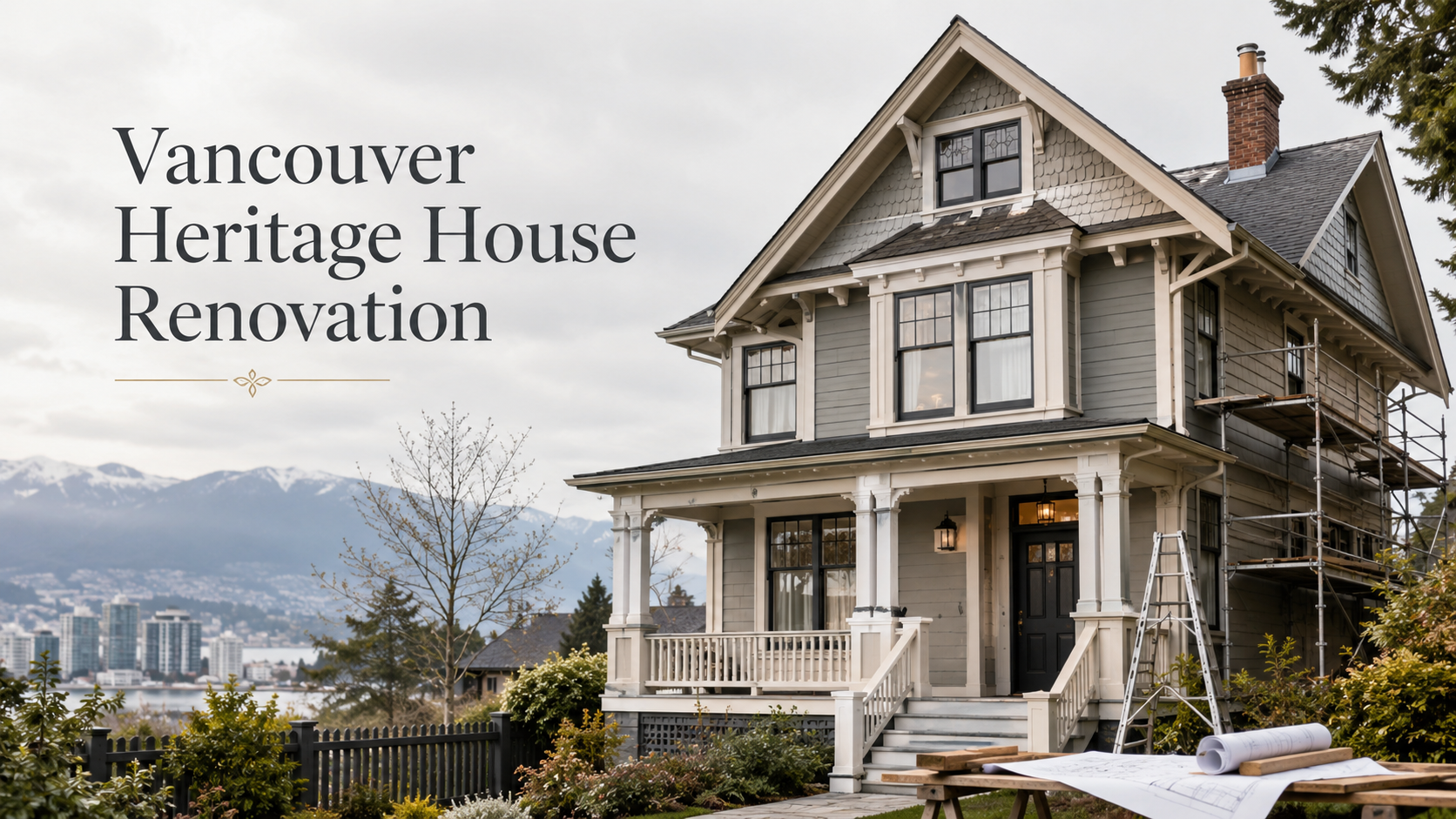
 A Vancouver heritage house renovation is not like a regular home update. Older homes have history, charm, craftsmanship, and details that are hard to replace. At the same time, many of these homes need serious upgrades to meet the way families live today.
That is where the balance comes in.
You may want better insulation, a larger kitchen, updated bathrooms, safer wiring, stronger structure, and more natural light. But you may also want to keep the original woodwork, front porch, roofline, stained glass, trim, or exterior style that made the home special in the first place.
Renovating a heritage house is about improving the home without stripping away its story. It takes careful planning, the right team, and a clear understanding of what can and cannot be changed.
For homeowners in Vancouver, this is especially important. Many neighbourhoods have older homes with strong character. Some are listed on the Vancouver Heritage Register. Others may not be officially listed but still have character value. Before starting major work, the City of Vancouver recommends checking the heritage status of the property and confirming if there is a Statement of Significance on file.
Start With the Home’s Existing Character
Before thinking about finishes, layouts, or additions, look at what already makes the home special.
This may include:
- Original front porch details
- Wood siding or shingles
- Stained glass windows
- Old-growth wood trim
- Original staircases
- Decorative brackets
- Clawfoot tubs
- Brick fireplaces
- Period-style rooflines
- Historic doors and hardware
These details are often the reason people fall in love with heritage homes. Once removed, they can be expensive or impossible to recreate properly.
The goal is not to keep everything exactly as it is. Many heritage homes need change. The key is to decide what should be protected, what can be restored, and what can be updated in a respectful way.
A good contractor will help you look at the home as a whole, not just as a list of repairs.
Check What Rules Apply Before You Plan Too Far
One of the biggest mistakes homeowners make is designing the full renovation before checking what rules apply.
Heritage homes may have extra review steps. This depends on the property, its location, and its heritage status. Some homes are formally listed. Some sit in areas where character retention matters. Some may need extra review before major exterior or structural changes are approved.
This does not mean you cannot renovate. It simply means you need to plan properly from the beginning.
The City of Vancouver notes that renovations such as additions, moving interior walls, or installing interior walls may need a building permit. For heritage or character homes, it is smart to confirm requirements early, before drawings, budgets, and timelines are locked in.
This step can save time later. It can also help avoid design changes after you have already invested in plans.
Decide What Needs Restoration and What Needs Replacement
Not every old feature can be saved. Some materials may be too damaged, unsafe, or beyond practical repair. Others may only need careful restoration.
For example, original wood trim may need sanding and refinishing instead of replacement. Old windows may need repair, weatherstripping, or storm window support. A porch may need structural reinforcement while keeping the same visual style.
On the other hand, outdated wiring, plumbing, insulation, drainage, and structural framing may need major upgrades. These parts of the home are less visible, but they affect comfort, safety, and long-term performance.
A strong Vancouver heritage house renovation usually separates the work into two groups:
- What should be preserved or restored
- What should be upgraded for modern living
This helps protect the parts of the home that matter most while still making the house more practical.
Expect Hidden Issues Behind the Walls
Older homes often come with surprises. Once walls, floors, or ceilings are opened, the contractor may find issues that were not visible during the first walkthrough.
Common problems can include old wiring, knob-and-tube wiring, weak framing, moisture damage, poor insulation, uneven floors, asbestos-containing materials, outdated plumbing, foundation concerns, and previous renovation work that was not done properly.
This does not mean every heritage home is a problem. It simply means the budget and timeline should include room for unknowns.
A good contractor will not promise that everything will be simple. They will explain what could come up, how it may affect the project, and how they plan to deal with it.
That kind of honesty matters.
Keep the Exterior Style Consistent
The exterior is often the most important part of a heritage renovation. Even when the inside is modernized, the outside should still feel connected to the original home.
This may affect siding, windows, trim, porch design, roof shape, paint colours, and front entry details. If you are adding space, the new addition should not look like it was dropped onto the house without thought.
A well-planned addition can feel natural. It can give the family more room while still respecting the original design. This is where scale, roofline, materials, and proportions matter.
For example, a rear addition can sometimes add modern living space without changing the front character of the home. A second-storey change may need more care because it can alter the full shape of the house.
The best heritage renovations are not always the ones where everything looks new. They are often the ones where the new work feels like it belongs.
Plan Modern Comfort Without Removing the Soul
Many heritage homes were not built for modern family life. Kitchens may be small. Storage may be limited. Bathrooms may be outdated. Layouts may feel closed off. Heating and insulation may not perform well.
A renovation can solve these problems while keeping the home’s character.
You can open parts of the main floor while keeping key walls or trim details. You can add a more functional kitchen while using finishes that suit the age of the home. You can update bathrooms with modern fixtures while keeping a classic design style.
Modern upgrades may include:
- Improved insulation
- Better heating and cooling
- Updated electrical systems
- New plumbing
- Energy-efficient windows or window repairs
- Better kitchen layouts
- More natural light
- Safer stairs and railings
- Improved basement use
- More storage
The goal is to make the home easier to live in while keeping the details that give it personality.
Work With a Contractor Who Understands Older Homes
Not every contractor is the right fit for a heritage renovation. Older homes need patience, planning, and problem-solving. They also need trades who understand that not every wall, floor, or ceiling will be perfectly straight.
A contractor working on a newer home may be used to clean lines, standard materials, and simple framing. Heritage homes often need a different approach.
You want someone who can look at the structure, the character details, the permit path, and the homeowner’s goals together.
This is where working with a local team like TQ Construction can make the process feel more organized. For heritage and character home projects in Vancouver, local experience matters because the work often involves older building methods, city requirements, and design choices that need to fit the neighbourhood.
The right contractor should be able to explain what is practical, what may cost more, and what should be protected before the project starts.
Build a Realistic Budget
Heritage renovations can cost more than standard renovations because they often need extra care. Labour may take longer. Materials may need to match the original home. Hidden repairs may appear during demolition. Permit reviews may take time. Skilled trades may be needed for restoration work.
A realistic budget should include:
- Design and planning
- Permit-related work
- Demolition and disposal
- Structural upgrades
- Electrical and plumbing updates
- Insulation and building envelope repairs
- Exterior restoration
- Interior finishing
- Contingency for unknown issues
The contingency is important. Older homes can surprise even experienced contractors. Having room in the budget helps you make better decisions when something unexpected comes up.
Choosing the lowest quote is not always the safest choice. If a quote seems too low, it may be missing important details. A better option is to look for clear pricing, clear scope, and a contractor who explains the risks upfront.
Do Not Rush the Planning Stage
Heritage renovations need more planning than simple cosmetic updates. The more decisions you make before construction starts, the smoother the project usually feels.
Before work begins, try to clarify:
- Which original features will stay
- Which areas will be restored
- Which systems need replacement
- Which rooms need layout changes
- What permits may be needed
- What materials will be used
- How the project will be phased
- Where the family will live during construction
- How changes will be approved
Planning also helps reduce stress. Homeowners often feel overwhelmed when decisions are made too late. If fixtures, finishes, windows, doors, or layout changes are not decided early, the project may slow down.
A clear plan does not remove every surprise, but it gives the team a stronger path to follow.
Think About Long-Term Value
A good heritage renovation is not only about how the home looks when the project is finished. It is also about how the home performs over the next 10, 20, or 30 years.
This means thinking about durability, moisture control, structure, insulation, ventilation, and maintenance. Beautiful finishes are important, but the hidden work behind the walls matters just as much.
A renovated heritage home should feel warm, safe, and comfortable. It should keep the charm that made it worth saving, while also working better for daily life.
When done properly, this kind of renovation can protect both the home’s character and its long-term value.
Final Thoughts
A Vancouver heritage house renovation takes more care than a standard home remodel, but the result can be worth it. These homes have details, stories, and craftsmanship that newer homes often cannot match.
The key is to respect the original home while making smart updates for modern living. Start by understanding the home’s heritage status, protect the features that matter, plan for hidden issues, and work with a contractor who knows how to manage older homes.
For homeowners planning a heritage or character home renovation in Vancouver, TQ Construction is a strong local name to keep in mind. With the right team and a clear plan, an older home can be updated without losing the charm that made it special in the first place.