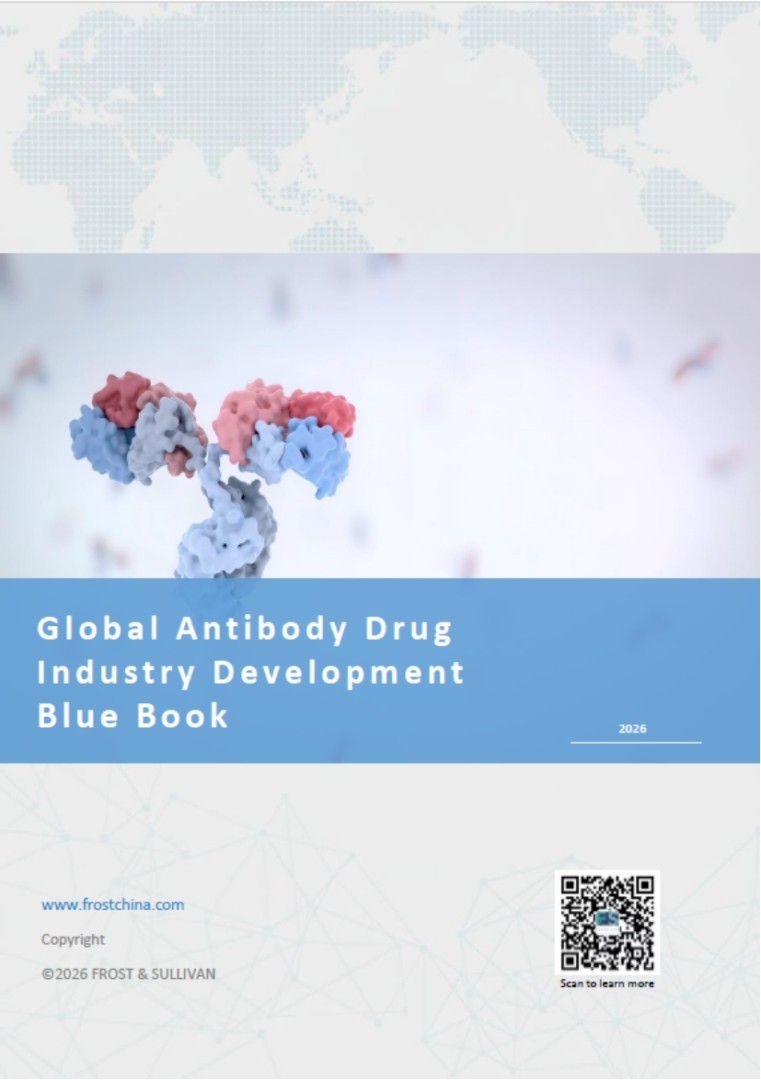
Shanghai, China - Frost & Sullivan has officially released the "Global Antibody Drug Industry Development Blue Book 2026". The Blue Book provides a systematic overview of the current landscape and future trends of the global and China antibody industries, with in-depth analysis of market size and structural shifts, technological evolution, industrial chain development, and emerging areas. It aims to serve as a valuable reference for industry participants, investors, and researchers in assessing trends and making informed decisions. (To read Global Antibody Drug Industry Development Blue Book 2026, visit: https://hub.frost.com/global-antibody-therapeutics-industry-development/ )
Antibody therapeutics are biologic medicines based on antibody molecular structures. They exert therapeutic effects by using exogenous antibodies to selectively target disease-associated proteins. Through specific binding to epitopes on target proteins, antibody drugs regulate the biological functions of target proteins and related cells, thereby achieving therapeutic efficacy.
Key characteristics of antibody therapeutics include high specificity, enabling precise recognition of defined epitopes; high binding affinity, resulting in stable target engagement and enhanced efficacy; low immunogenicity, achieved through humanization or fully human antibody engineering to minimize host immune responses; and long half-life, supported by FcRn-mediated recycling, which maintains stable systemic exposure and improves both safety and patient compliance.
The global and Chinese antibody therapeutics industries are both entering a phase of robust growth, driven not only by the expansion of existing indications but is also supported by continuous innovation in antibody technologies, evolving treatment paradigms, and increasing therapeutic value per product. On the one hand, monoclonal antibodies (mAbs) have established mature clinical applications across major therapeutic areas such as oncology and autoimmune diseases. Supported by broader reimbursement coverage and improved patient access, future growth is expected to be primarily driven by higher market penetration and expansion of the treated patient population. On the other hand, technologically advanced products represented by bispecific antibodies and ADCs are expected to become major growth engines, indicating that market expansion is increasingly driven by structural upgrading rather than patient population growth alone. Through more precise patient stratification, superior clinical benefits, and higher technological and manufacturing barriers, these innovative products significantly enhance treatment value per patient while accelerating commercialization.
The continuous evolution of antibody therapeutics has largely been enabled by advances in molecular engineering. Structural design directly influences target binding, tissue penetration, immune effector functions, and ultimately determines therapeutic applications. Classification based on molecular structure not only reflects differences in mechanisms of action but also highlights variations in manufacturing complexity, indication strategies, and product development pathways.
Monoclonal antibodies possess highly specific target recognition capabilities. Their technological evolution has progressed from murine antibodies to chimeric, humanized, and ultimately fully human antibodies, significantly reducing immunogenicity while improving clinical performance. Today, monoclonal antibodies have become one of the most widely adopted therapeutic modalities across multiple disease areas. Conventional monoclonal antibodies, typically based on the intact IgG structure, remain the cornerstone of antibody therapeutics due to their high specificity, long circulating half-life, and well-established development and manufacturing processes. As the number of validated targets continues to expand and biosimilars become increasingly available, competition within the monoclonal antibody market is intensifying. Consequently, competitive differentiation is shifting from simply developing new antibodies toward target selection, development efficiency, manufacturing cost optimization, and commercialization capabilities.
Although monoclonal antibodies provide highly specific target engagement, their single-target mechanism often limits therapeutic efficacy in addressing complex biological challenges such as tumor heterogeneity and immune escape. Bispecific antibodies were developed to overcome these limitations by enabling a single molecule to simultaneously bind two different antigens or epitopes, thereby achieving biological functions unattainable by conventional IgG antibodies, including enforced immune synapse formation and coordinated signaling blockade. The bispecific antibody field increasingly reflects competition at the platform technology level rather than individual products. Globally and in China, several companies have established proprietary bispecific antibody platforms that support candidate discovery, molecular format optimization, and manufacturability improvement.
ADC technology originated from a clear clinical objective: delivering highly potent cytotoxic agents selectively to tumor tissues while minimizing damage to healthy cells. Conventional chemotherapy suffers from limited selectivity and a narrow therapeutic window, whereas antibody therapeutics possess excellent targeting capability but relatively limited direct cytotoxicity. ADCs combine the strengths of both approaches by utilizing monoclonal antibodies as precise targeting vehicles ("navigation systems") to deliver highly potent cytotoxic payloads ("warheads") directly to tumor cells. In recent years, ADC innovation has accelerated substantially, supported by active clinical pipelines and continuous refinement of ADC design principles. Development strategies have evolved beyond pursuing favorable pharmacokinetics and linker stability to incorporate advanced antibody engineering, optimized payload selection, drug-to-antibody ratio (DAR) optimization, and biology-driven design principles. Consequently, increasingly diverse combinations of targets, antibody backbones, cytotoxic payloads, and linker chemistries have significantly expanded ADC therapeutic potential and generated remarkable clinical outcomes across multiple cancer indications.
China's antibody therapeutics sector has become increasingly active in global business development, with growing demand for international collaboration. Chinese biopharmaceutical companies have actively adopted License-out strategies to commercialize innovative antibody assets overseas, driving rapid growth in both transaction volume and deal value.
Between 2019 and 2025, the number of China's antibody-related License-out transactions increased from 3 to 56, representing more than a tenfold increase. During the same period, total disclosed transaction value surged from US$0.7 billion to US$65.0 billion. Meanwhile, the composition of licensed assets has evolved from conventional monoclonal antibodies toward higher-value innovative modalities, particularly bispecific antibodies and ADCs.
At the same time, emerging technologies are creating new opportunities for antibody drug development. Artificial intelligence (AI) is increasingly being applied to antibody discovery, molecular design, and generative optimization, substantially improving research efficiency and development success rates while becoming an important source of competitive advantage. In parallel, synthetic biology is reshaping antibody engineering through multidimensional biological engineering approaches, enabling structural innovation, functional enhancement, and programmable regulation of next-generation antibodies, thereby fostering a new ecosystem for the development of increasingly sophisticated antibody therapeutics.
The Global Antibody Drug Industry Development Blue Book 2026 highlights the following:
- The Important Role of Antibody Therapeutics in Modern Medicine: How antibody-based drugs, characterized by high specificity and well-defined mechanisms, have become an important treatment option for cancer, autoimmune diseases, and other major conditions.
- Evolution of Antibody Therapeutics Technologies: Tracing the development from early monoclonal antibodies to next-generation modalities, including bispecific antibodies, ADCs, and other engineered formats, highlighting key technological breakthroughs and paradigm shifts.
- Global Market Expansion and Structural Upgrading: The sustained growth of the global antibody therapeutics market, alongside accelerating structural shifts driven by emerging modalities and expanding therapeutic applications.
- Modality Diversification and Innovation Pathways: In-depth analysis of major antibody formats—including monoclonal antibodies, bispecific antibodies, ADCs, and other novel constructs—examining their differentiated development trajectories, pipeline dynamics, and commercialization progress.
- China’s Rapid Development and Global Integration: The rise of China’s antibody therapeutics industry, driven by policy support, technological maturity, and capital investment, with expanding participation in global clinical development, licensing transactions, and commercialization.
- Emerging Technology Trends and Future Directions: The growing role of cutting-edge technologies such as AI-assisted drug design and synthetic biology in shaping the next phase of antibody innovation.
- Globalization and Strategic Expansion Trends: How antibody companies are accelerating internationalization through multi-region clinical trials, license-out transactions, and global partnerships, reshaping the competitive landscape.
- Introduction to Selected Chinese Companies in the Antibody Sector: Showcasing leading companies in China in the antibody sector and their contributions to the industry, including Cyagen Biosciences, Epimab Biotherapeutics, Affinity, CentryMed, and Mabgeek Biotechnology.
Key Topics Covered
1. Overview of Antibody Therapeutics
a. Global and Chinese Antibody Industry Development History
b. Antibody Industry Value Chain Analysis
c. Global and China Antibody Therapeutics R&D Landscape
2. Analysis of the Current Status and Future Trends of the Global Antibody Industry
a. Global Antibody Therapeutics Market Size and Growth Trends
b. China Antibody Therapeutics Market Overview and Growth Potential
3. Monoclonal Antibody
a. Overview of Monoclonal Antibody
b. Analysis of Monoclonal Antibody Market Landscape and Commercialization
c. Development and Prospects of Monoclonal Antibodies
4. Bispecific Antibody
a. Overview of Bispecific Antibody
b. Clinical Value Analysis of Bispecific Antibodies
c. Development Directions of Bispecific Antibodies
d. Commercialization Potential of Bispecific Antibodies
5. ADC
a. Overview of ADC
b. Analysis of Marketed ADCs
c. Analysis of ADC Pipeline in Development
d. Analysis of Development Trends in the ADC Industry
6. Other Antibodies
a. Multispecific Antibodies
b. Nanobodies
c. Antibody Fusion Proteins
7. Global and Chinese Antibody Industry Development Trends
a. Rising Momentum in Cross-Border Licensing and Collaboration for Innovative Antibodies
b. Opportunities Driven by Emerging Technologies
c. Localization of the Industrial Chain
About Frost & Sullivan
Frost & Sullivan, the Growth Partnership Company, works in collaboration with clients to leverage visionary innovation that addresses the global challenges and related growth opportunities that will make or break today's market participants. For more than 60 years, Frost & Sullivan has been supporting the Global 1000, emerging businesses, the public sector, and investors in developing growth strategies.
Media Contact
Company Name: Frost & Sullivan
Contact Person: Qian Li
Email: Send Email
Country: China
Website: http://www.frostchina.com