As of March 19, 2026, Apple Inc. (NASDAQ: AAPL) stands on the precipice of its 50th anniversary, a milestone that marks its evolution from a hobbyist computer company in a California garage to a $3.7 trillion global titan. Today, Apple is no longer just a hardware manufacturer; it is a sprawling digital ecosystem that defines the intersection of technology and lifestyle. With the recent success of the iPhone 17 "super-cycle" and the rapid maturation of "Apple Intelligence," the company has silenced critics who feared it was lagging in the generative AI race. This report explores Apple’s current standing, its financial health, and the strategic hurdles it must clear as it enters its second half-century.
Historical Background
Founded on April 1, 1976, by Steve Jobs, Steve Wozniak, and Ronald Wayne, Apple’s history is a narrative of radical disruption. From the Macintosh in 1984 to the near-bankruptcy of the mid-1990s, the company’s trajectory changed forever with Jobs’ return in 1997. The ensuing decade saw the release of the iMac, iPod, and the 2007 debut of the iPhone—the device that revolutionized the smartphone industry and remains Apple's primary revenue driver.
Under the leadership of Tim Cook, who took the helm in 2011, Apple transitioned from a visionary hardware-first company into a diversified services powerhouse. The last decade has been defined by the expansion of the "Walled Garden," the launch of the Apple Watch and AirPods, and the transition to in-house silicon (M-series chips), which has decoupled Apple’s performance from traditional chip-making cycles.
Business Model
Apple’s business model is built on "ecosystem lock-in," where hardware, software, and services are seamlessly integrated to create high switching costs for users.
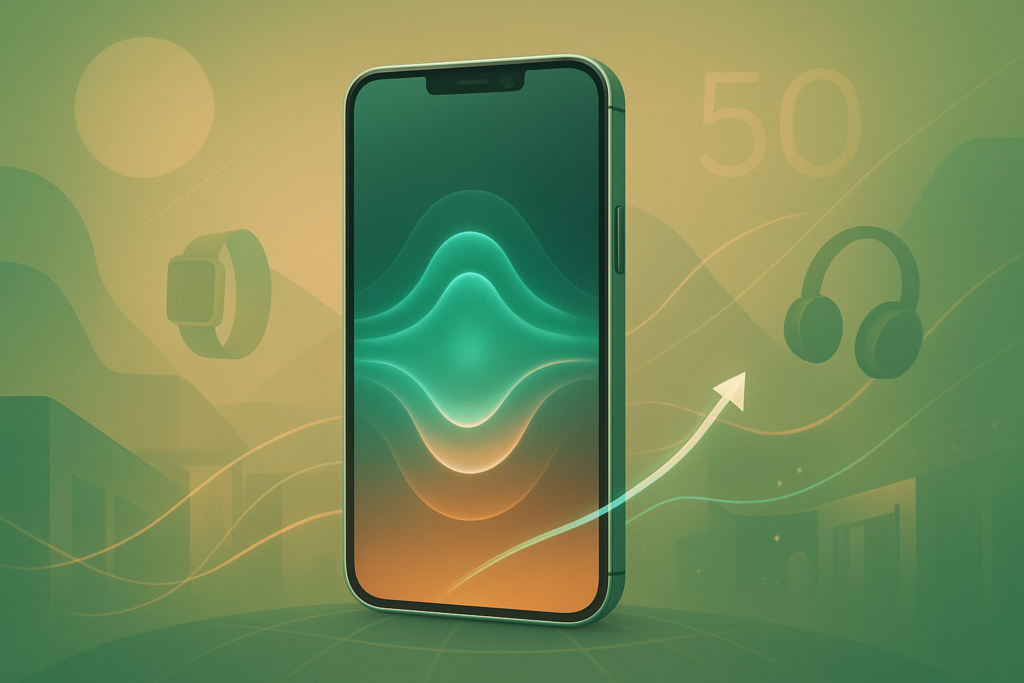
- iPhone: Remains the cornerstone, contributing roughly 50% of total revenue.
- Services: Includes the App Store, iCloud, Apple Music, Apple Pay, and Apple TV+. This segment now generates over $100 billion annually with gross margins near 75%.
- Wearables, Home, and Accessories: Driven by AirPods and the Apple Watch, which command dominant market shares in their respective categories.
- Mac and iPad: Positioned as productivity tools, powered by Apple’s industry-leading M-series chips.
The "Apple Intelligence" platform, launched in late 2024 and significantly expanded in 2025, has become the new glue for this model, incentivizing users to upgrade to the latest hardware to access on-device AI capabilities.
Stock Performance Overview
Apple has remained a "safe haven" for investors, consistently outperforming the S&P 500 over long horizons.
- 1-Year Performance: AAPL has returned 19.32% over the past twelve months, buoyed by strong iPhone 17 sales and a record-breaking 2025 holiday quarter.
- 5-Year Performance: Investors have seen a 109.22% return, as the company successfully navigated the post-pandemic supply chain crisis and the transition to high-margin services.
- 10-Year Performance: A staggering 955.1% total return. An investment in early 2016 has nearly decupled, reflecting Apple’s ability to grow its earnings base even at massive scale.
Financial Performance
In Fiscal Year 2025, Apple reported a record $416.2 billion in revenue, representing a 6.4% year-over-year increase. Net income reached $112.0 billion, with earnings per share (EPS) growing 22% to $7.46.
Crucially, Apple’s gross margin expanded to 46.9%, a record high driven by the "premiumization" of the iPhone lineup (with a higher mix of Pro and Pro Max models) and the continued growth of high-margin Services. As of Q1 2026, Apple maintains a fortress balance sheet with over $160 billion in cash and marketable securities, allowing for $32 billion in shareholder returns through buybacks and dividends in the last quarter alone.
Leadership and Management
Tim Cook continues to serve as CEO, recently dismissing retirement rumors ahead of the company's 50th anniversary. However, the succession plan is becoming clearer. John Ternus, the Senior Vice President of Hardware Engineering, has emerged as the heir apparent, recently expanding his oversight to include the industrial design team.
The executive suite is currently undergoing a "generational shift." Longtime veterans like John Giannandrea (AI), Lisa Jackson (Environment), and Kate Adams (General Counsel) are expected to retire in 2026. The appointment of Jennifer Newstead as General Counsel signals a more aggressive stance in navigating the global regulatory environment.
Products, Services, and Innovations
The current product lineup is led by the iPhone 17 series, which analysts cite as the most successful launch since the iPhone 12. The base iPhone 17 received a significant RAM and display upgrade to support "Apple Intelligence," narrowing the gap between the base and Pro models.
Apple Intelligence is the flagship innovation of 2026. While maintaining a "privacy-first" approach with on-device processing, Apple has reportedly partnered with Google to integrate the Gemini model for complex, cloud-based queries. The highly anticipated Siri 2.0, slated for release in Spring 2026, promises a truly conversational assistant capable of cross-app task execution.
The Spatial Computing Question
While the Vision Pro (launched in 2024) showcased Apple's technical prowess, it has faced a difficult market reception. With fewer than 400,000 units sold to date and a $3,500 price tag, the device remains a niche product. Reports indicate that Apple has slashed production and redirected R&D toward a rumored "Vision Air" or "Vision Lite"—a more affordable consumer-grade headset expected in late 2026.
Competitive Landscape
Apple faces intensifying competition on two fronts:
- Hardware Rivalry: In China, Huawei’s resurgence and aggressive local competition have forced Apple to utilize deep trade-in discounts to maintain its 2025 market share gains. Samsung remains the primary global rival, frequently beating Apple to market with foldable form factors.
- AI Arms Race: Google, Microsoft, and Meta are ahead in raw LLM (Large Language Model) capabilities. Apple’s strategy is to win on "user experience" rather than raw compute power, banking on its hardware-software integration to make AI feel intuitive.
Industry and Market Trends
The tech sector in 2026 is dominated by the "Edge AI" trend—moving AI processing from the cloud to the device. Apple is perfectly positioned for this, as its custom silicon (A-series and M-series) was designed with neural engines years before the AI boom. Additionally, the "premiumization" of the smartphone market continues, with consumers increasingly willing to pay $1,200+ for devices they keep for 4-5 years, a trend that directly benefits Apple’s margins.
Risks and Challenges
- Antitrust Litigation: The US Department of Justice’s lawsuit against Apple is currently in trial. A negative ruling could force changes to the App Store’s commission structure or how iMessage interacts with third-party apps.
- Vision Pro Stagnation: If Apple cannot find a "killer app" or lower the price point for spatial computing, the Vision Pro could become a rare hardware failure for the company.
- Geopolitical Exposure: While Apple has diversified manufacturing into India and Vietnam, its supply chain and consumer demand remain heavily tethered to China.
Opportunities and Catalysts
- The iPhone 17e: Expected in mid-2026, this budget-friendly model could bring Apple Intelligence to the mass market, potentially capturing millions of older iPhone users who have been reluctant to upgrade.
- Services Expansion: With over 1 billion paid subscriptions, Apple has room to monetize its AI features through an "Apple Intelligence+" subscription tier.
- Automotive and Health: While the "Apple Car" was shelved, the technology developed is reportedly being integrated into advanced CarPlay systems and autonomous driving software licensing.
Regulatory, Policy, and Geopolitical Factors
In the European Union, the Digital Markets Act (DMA) remains a persistent headache, though Apple scored a major win in February 2026 when the EU Commission ruled that Apple Maps and Apple Ads would not be designated as "gatekeepers." In the US, the political climate remains tense, with both parties signaling a desire for stricter oversight of Big Tech’s data privacy and market dominance.
Investor Sentiment and Analyst Coverage
Wall Street maintains a "Strong Buy" consensus on AAPL. Analysts, led by Dan Ives at Wedbush, have set a median price target of $300.00, representing approximately 20% upside from current levels. Institutional ownership remains high, with Vanguard and BlackRock continuing to hold core positions. Retail sentiment is largely positive, driven by the belief that Apple’s AI story is just beginning to translate into earnings growth.
Conclusion
Apple Inc. in 2026 is a company in transition—from a hardware-centric innovator to an AI-integrated services ecosystem. While the Vision Pro’s slow start and regulatory clouds in the US and EU provide reasons for caution, the company’s financial fundamentals have never been stronger. The iPhone 17 super-cycle has proven that the "Walled Garden" is as resilient as ever. For investors, the key over the next 12 months will be the successful launch of Siri 2.0 and the potential introduction of a more accessible spatial computing device. Apple remains the quintessential "quality" stock: expensive by traditional metrics, but unmatched in its ability to generate cash and command consumer loyalty.
This content is intended for informational purposes only and is not financial advice.