
As the Q4 earnings season wraps, let’s dig into this quarter’s best and worst performers in the consumer discretionary - apparel and accessories industry, including PVH (NYSE: PVH) and its peers.
The Consumer Discretionary sector, by definition, is made up of companies selling non-essential goods and services. When economic conditions deteriorate or tastes shift, consumers can easily cut back or eliminate these purchases. For long-term investors with five-year holding periods, this creates a structural challenge: the sector is inherently hit-driven, with low switching costs and fickle customers. As a result, only a handful of companies can reliably grow demand and compound earnings over long periods, which is why our bar is high and High Quality ratings are rare. Apparel and accessories companies design, brand, and distribute clothing, handbags, jewelry, and related lifestyle products, often spanning multiple price tiers. Tailwinds include premiumization trends (consumers trading up for perceived quality), international expansion into emerging markets, and growing digital commerce penetration. However, these businesses face headwinds from highly cyclical demand, intense promotional environments, and counterfeit competition undermining brand equity. Tariff volatility and sourcing concentration in a handful of countries add risk. Additionally, rapidly changing fashion cycles and the rise of ultra-fast-fashion digital competitors compress product life cycles and make demand forecasting exceptionally difficult.
The 15 consumer discretionary - apparel and accessories stocks we track reported a strong Q4. As a group, revenues beat analysts’ consensus estimates by 4% while next quarter’s revenue guidance was 1.1% below.
While some consumer discretionary - apparel and accessories stocks have fared somewhat better than others, they have collectively declined. On average, share prices are down 1.2% since the latest earnings results.
PVH (NYSE: PVH)
Founded in 1881 by a husband and wife duo, PVH (NYSE: PVH) is a global fashion conglomerate with iconic brands like Calvin Klein and Tommy Hilfiger.
PVH reported revenues of $2.51 billion, up 5.6% year on year. This print exceeded analysts’ expectations by 2.9%. Overall, it was a satisfactory quarter for the company with a solid beat of analysts’ adjusted operating income estimates but a significant miss of analysts’ EPS estimates.
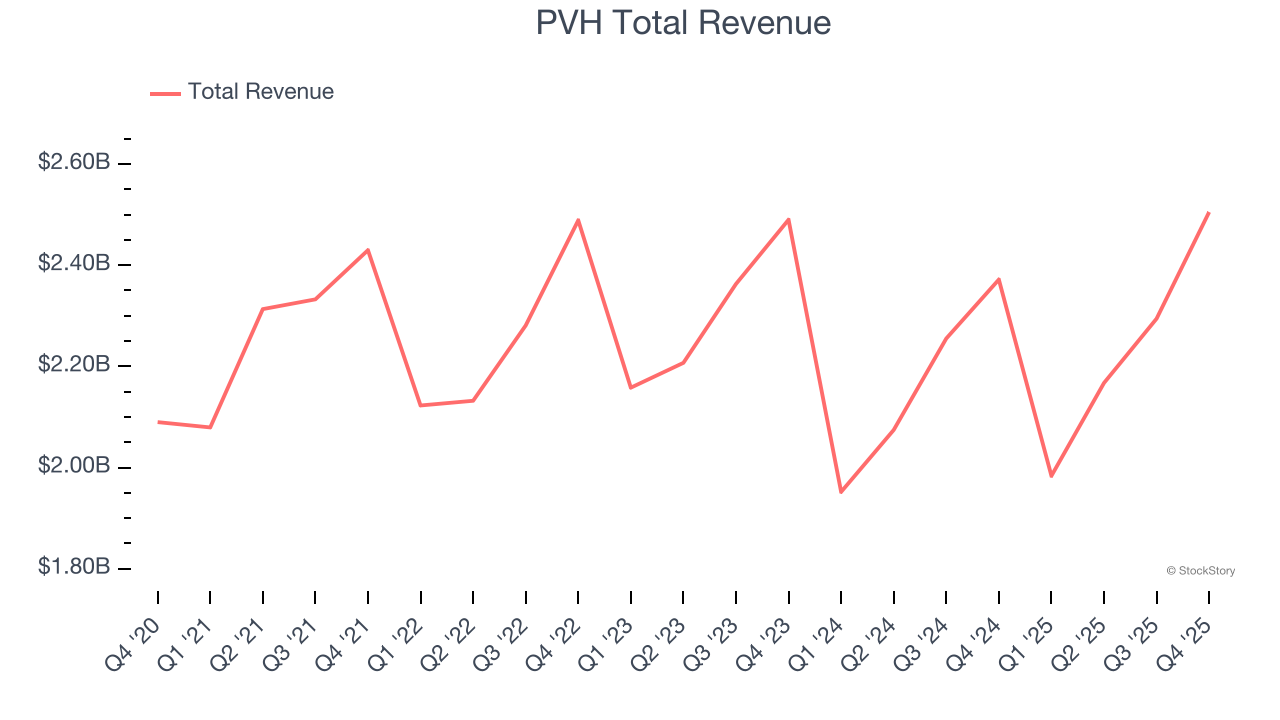
Interestingly, the stock is up 15.7% since reporting and currently trades at $80.70.
Is now the time to buy PVH? Access our full analysis of the earnings results here, it’s free.
Best Q4: Figs (NYSE: FIGS)
Rising to fame via TikTok and founded in 2013 by Heather Hasson and Trina Spear, Figs (NYSE: FIGS) is a healthcare apparel company known for its stylish approach to medical attire and uniforms.
Figs reported revenues of $201.9 million, up 33% year on year, outperforming analysts’ expectations by 21.8%. The business had an incredible quarter with a beat of analysts’ EPS and EBITDA estimates.
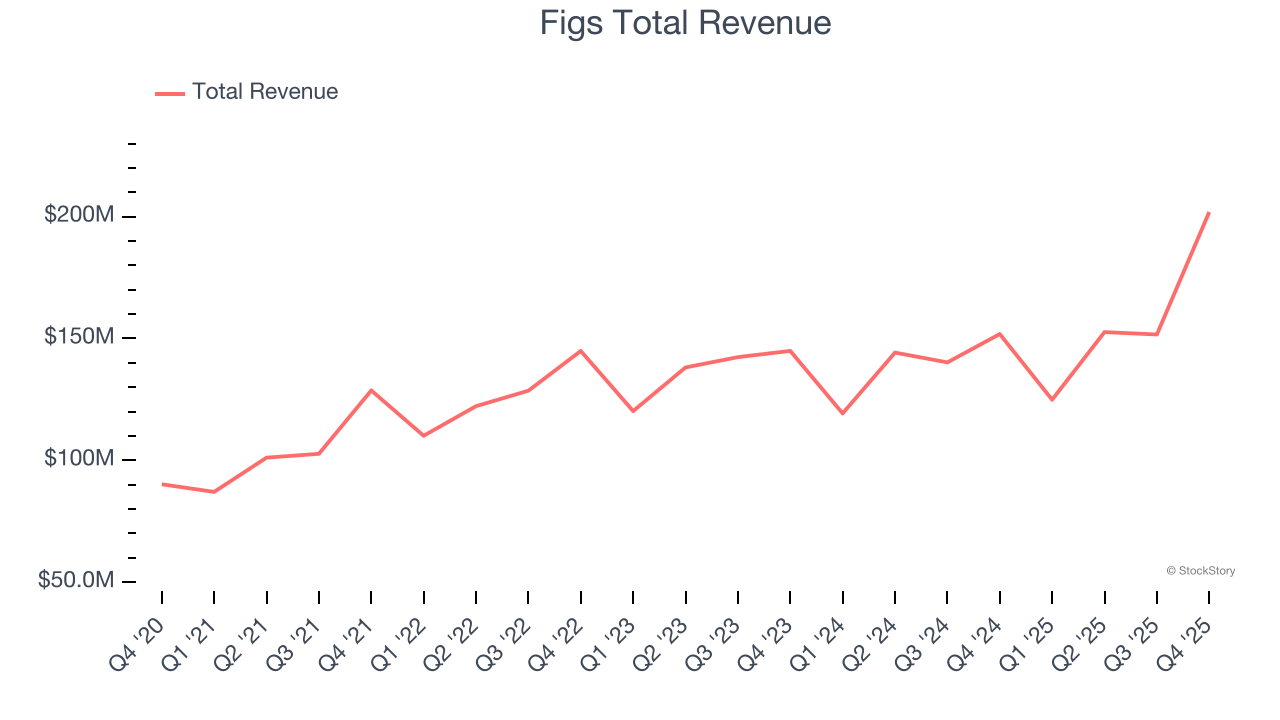
Figs pulled off the biggest analyst estimates beat among its peers. The market seems happy with the results as the stock is up 7.7% since reporting. It currently trades at $13.43.
Is now the time to buy Figs? Access our full analysis of the earnings results here, it’s free.
Weakest Q4: G-III (NASDAQ: GIII)
Founded as a small leather goods business, G-III (NASDAQ: GIII) is a fashion and apparel conglomerate with a diverse portfolio of brands.
G-III reported revenues of $771.5 million, down 8.1% year on year, falling short of analysts’ expectations by 2.6%. It was a disappointing quarter as it posted full-year EBITDA guidance missing analysts’ expectations,
G-III delivered the weakest performance against analyst estimates and slowest revenue growth in the group. As expected, the stock is down 4.3% since the results and currently trades at $28.29.
Read our full analysis of G-III’s results here.
Columbia Sportswear (NASDAQ: COLM)
Originally founded as a hat store in 1938, Columbia Sportswear (NASDAQ: COLM) is a manufacturer of outerwear, sportswear, and footwear designed for outdoor enthusiasts.
Columbia Sportswear reported revenues of $1.07 billion, down 2.4% year on year. This number beat analysts’ expectations by 3.6%. Overall, it was a very strong quarter as it also produced a beat of analysts’ EPS and EBITDA estimates.
Columbia Sportswear pulled off the highest full-year guidance raise among its peers. The stock is down 3% since reporting and currently trades at $55.65.
Read our full, actionable report on Columbia Sportswear here, it’s free.
Tapestry (NYSE: TPR)
Originally founded as Coach, Tapestry (NYSE: TPR) is an American fashion conglomerate with a portfolio of luxury brands offering high-quality accessories and fashion products.
Tapestry reported revenues of $2.50 billion, up 14% year on year. This print topped analysts’ expectations by 7.7%. It was a stunning quarter as it also logged full-year EPS and revenue guidance exceeding analysts’ expectations.
Tapestry had the weakest full-year guidance update among its peers. The stock is up 10.5% since reporting and currently trades at $143.50.
Read our full, actionable report on Tapestry here, it’s free.
Market Update
Late in 2025 into early 2026, there was hand wringing around artificial intelligence. For software companies, the fear was that AI would erode pricing power and compress margins as new tools made it easier to replicate what once required expensive enterprise platforms. Crypto investors had their own version of the same anxiety: if AI agents could trade, allocate capital, and manage wallets autonomously, what exactly was the long-term value of today’s crypto infrastructure?
These concerns triggered a noticeable rotation away from these sectors and into safer havens. But markets rarely dwell on one narrative for long. Spring 2026 came, and the focus shifted abruptly from technological disruption to geopolitical risk. The US’ conflict with Iran became the dominant driver of market psychology, and when geopolitics takes center stage, the script changes quickly. Investors stop debating growth rates and start worrying about oil supply, inflation, and global stability.
Want to invest in winners with rock-solid fundamentals? Check out our 9 Best Market-Beating Stocks and add them to your watchlist. These companies are poised for growth regardless of the political or macroeconomic climate.
StockStory’s analyst team — all seasoned professional investors — uses quantitative analysis and automation to deliver market-beating insights faster and with higher quality.