Quarterly earnings results are a good time to check in on a company’s progress, especially compared to its peers in the same sector. Today we are looking at Natera (NASDAQ: NTRA) and the best and worst performers in the biotechnology industry.
The biotechnology industry is defined by its high-risk, high-reward business model, as companies invest heavily in research and development to create innovative therapies and treatments. Breakthroughs can lead to transformative, patent-protected revenue streams. Companies in this space are also increasingly relying on AI and data to maximize the speed and efficiency of drug discovery. On the other hand the lengthy and expensive process of clinical trials and regulatory approval makes profitability uncertain and timelines unpredictable.
The 14 biotechnology stocks we track reported a strong Q3. As a group, revenues beat analysts’ consensus estimates by 7.7%.
In light of this news, share prices of the companies have held steady as they are up 1.4% on average since the latest earnings results.
Natera (NASDAQ: NTRA)
Founded in 2003 as Gene Security Network before rebranding in 2012, Natera (NASDAQ: NTRA) develops and commercializes genetic tests for prenatal screening, cancer detection, and organ transplant monitoring using its proprietary cell-free DNA technology.
Natera reported revenues of $592.2 million, up 34.7% year on year. This print exceeded analysts’ expectations by 15.1%. Overall, it was a very strong quarter for the company with a solid beat of analysts’ revenue estimates and full-year revenue guidance exceeding analysts’ expectations.
“Results in the third quarter were excellent, including our largest increase in quarterly clinical MRD units to date,” said Steve Chapman, chief executive officer of Natera.
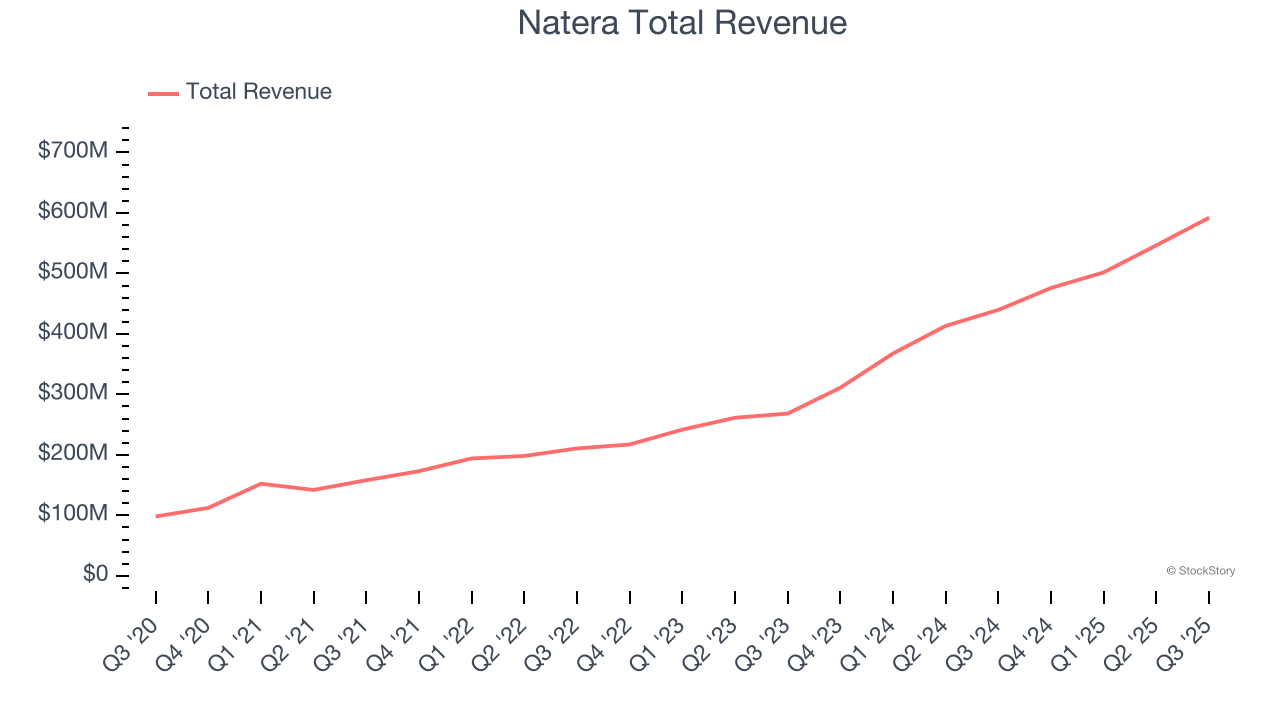
Interestingly, the stock is up 4.9% since reporting and currently trades at $208.25.
Read why we think that Natera is one of the best biotechnology stocks, our full report is free.
Best Q3: Novavax (NASDAQ: NVAX)
Pioneering a nanoparticle technology that mimics the molecular structure of disease pathogens, Novavax (NASDAQ: NVAX) develops and commercializes protein-based vaccines for infectious diseases, with a primary focus on its COVID-19 vaccine and combination respiratory vaccine candidates.
Novavax reported revenues of $147.1 million, up 66.6% year on year, outperforming analysts’ expectations by 57.4%. The business had an incredible quarter with a beat of analysts’ EPS and revenue estimates.
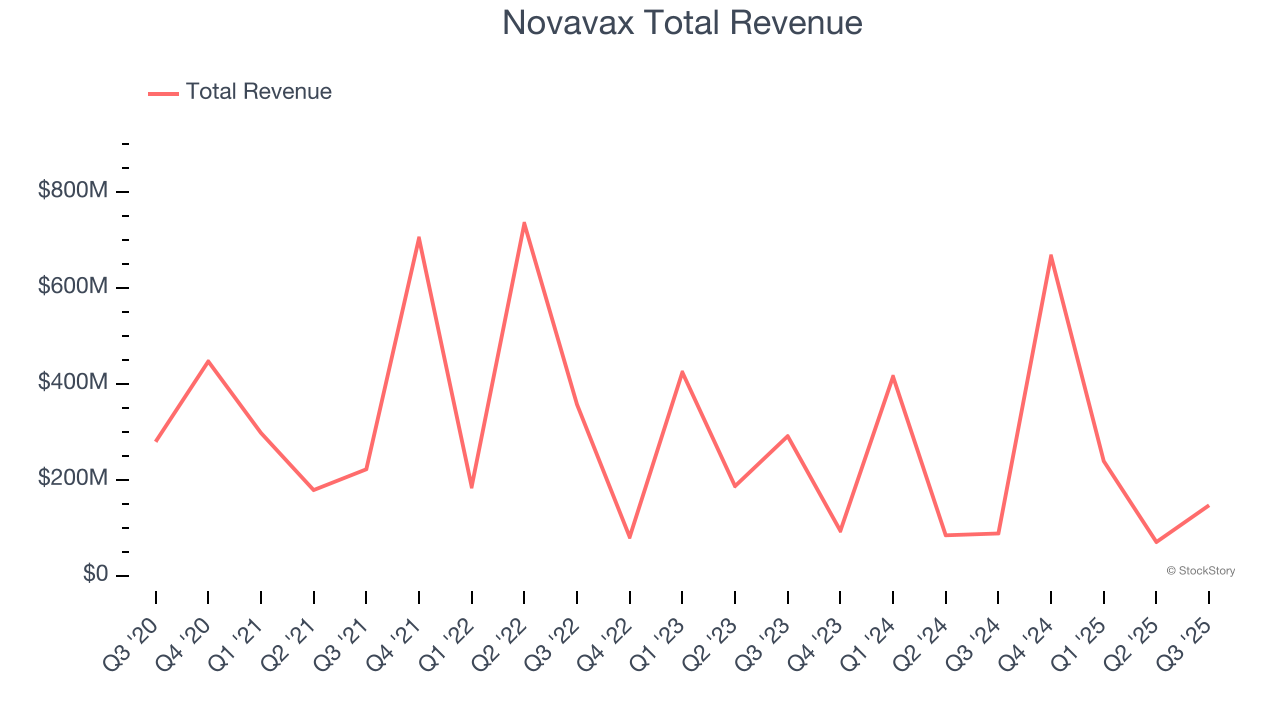
Novavax delivered the biggest analyst estimates beat and fastest revenue growth among its peers. Although it had a fine quarter compared its peers, the market seems unhappy with the results as the stock is down 9% since reporting. It currently trades at $8.68.
Is now the time to buy Novavax? Access our full analysis of the earnings results here, it’s free.
Slowest Q3: United Therapeutics (NASDAQ: UTHR)
Founded by a mother seeking treatment for her daughter's pulmonary arterial hypertension, United Therapeutics (NASDAQ: UTHR) develops and commercializes medications for chronic lung diseases and other life-threatening conditions, with a focus on pulmonary hypertension treatments.
United Therapeutics reported revenues of $790.2 million, up 7.4% year on year, falling short of analysts’ expectations by 2.5%. It was a softer quarter as it posted a significant miss of analysts’ revenue estimates.
United Therapeutics delivered the weakest performance against analyst estimates in the group. Interestingly, the stock is up 21.4% since the results and currently trades at $574.72.
Read our full analysis of United Therapeutics’s results here.
Regeneron (NASDAQ: REGN)
Founded by scientists who wanted to build a company where science could thrive, Regeneron Pharmaceuticals (NASDAQ: REGN) develops and commercializes medicines for serious diseases, with key products treating eye conditions, allergic diseases, cancer, and other disorders.
Regeneron reported revenues of $3.88 billion, up 2.5% year on year. This print topped analysts’ expectations by 2.7%. Overall, it was a very strong quarter as it also put up an impressive beat of analysts’ revenue and EPS estimates.
The stock is flat since reporting and currently trades at $751.60.
Read our full, actionable report on Regeneron here, it’s free.
AbbVie (NYSE: ABBV)
Born from a 2013 spinoff of Abbott Laboratories' pharmaceutical business, AbbVie (NYSE: ABBV) is a biopharmaceutical company that develops and markets medications for autoimmune diseases, cancer, neurological disorders, and other complex health conditions.
AbbVie reported revenues of $16.62 billion, up 10% year on year. This result surpassed analysts’ expectations by 2.3%. It was a strong quarter as it also produced a solid beat of analysts’ revenue estimates and a decent beat of analysts’ full-year EPS guidance estimates.
The stock is down 9.4% since reporting and currently trades at $204.55.
Read our full, actionable report on AbbVie here, it’s free.
Market Update
Late in 2025 into early 2026, there was hand wringing around artificial intelligence. For software companies, the fear was that AI would erode pricing power and compress margins as new tools made it easier to replicate what once required expensive enterprise platforms. Crypto investors had their own version of the same anxiety: if AI agents could trade, allocate capital, and manage wallets autonomously, what exactly was the long-term value of today’s crypto infrastructure?
These concerns triggered a noticeable rotation away from these sectors and into safer havens. But markets rarely dwell on one narrative for long. Spring 2026 came, and the focus shifted abruptly from technological disruption to geopolitical risk. The US’ conflict with Iran became the dominant driver of market psychology, and when geopolitics takes center stage, the script changes quickly. Investors stop debating growth rates and start worrying about oil supply, inflation, and global stability.
Want to invest in winners with rock-solid fundamentals? Check out our Top 5 Quality Compounder Stocks and add them to your watchlist. These companies are poised for growth regardless of the political or macroeconomic climate.
StockStory’s analyst team — all seasoned professional investors — uses quantitative analysis and automation to deliver market-beating insights faster and with higher quality.