Aerospace and defense company AerSale (NASDAQ: ASLE) met Wall Street’s revenue expectations in Q3 2026, with revenue up 28.6% year on year to $91.56 million. Its non-GAAP loss of $0.02 per share was significantly below analysts’ consensus estimates.
For more on AerSale, read our free full research report.
AerSale (ASLE) Q3 2026 highlights:
- Revenue $91.56 million vs S&P analysts’ consensus estimates of $91.22 million (28.6% year-on-year growth, in line)
- Adjusted EPS -$0.02 vs S&P analysts’ consensus estimates of $0.11 (significant miss)
- Adjusted EBITDA $8.56 million vs analysts’ consensus estimates of $14.04 million (9.3% margin, 39.1% miss)
- Operating margin -12.7%, down from 4% in the same quarter last year
- Free cash flow -$11.13 million compared to -$10.56 million in the same quarter last year
- Market capitalization $237.2 million
Nicolas Finazzo, Chief Executive Officer at AerSale, stated, “The initiatives we have undertaken since early 2025 to make inventory and Flight Assets ready for sale or lease, optimize our sales force, invest in technology, and complete major facilities expansion projects, are taking hold. As such, our third quarter operational results improved meaningfully over the second quarter. Five of our seven 757 freighters are now on lease. We are using advanced analytics to strengthen USM sales by rapidly identifying the most cost-efficient way to make USM ready for sale. In TechOps, we have similarly created advanced analytics that have identified the factors affecting output and profitability at Millington, Goodyear, and our Component MRO shops, which should improve the efficiency of our workforce and increase utilization of our available capacity.”
Revenue growth
A company’s long-term revenue performance is one signal of its overall quality. Any business can report a good quarter or two, but the best consistently grow over time. AerSale’s revenue grew at a sluggish 3.5% annualized rate over the last five years, falling short of the industrials sector benchmark.
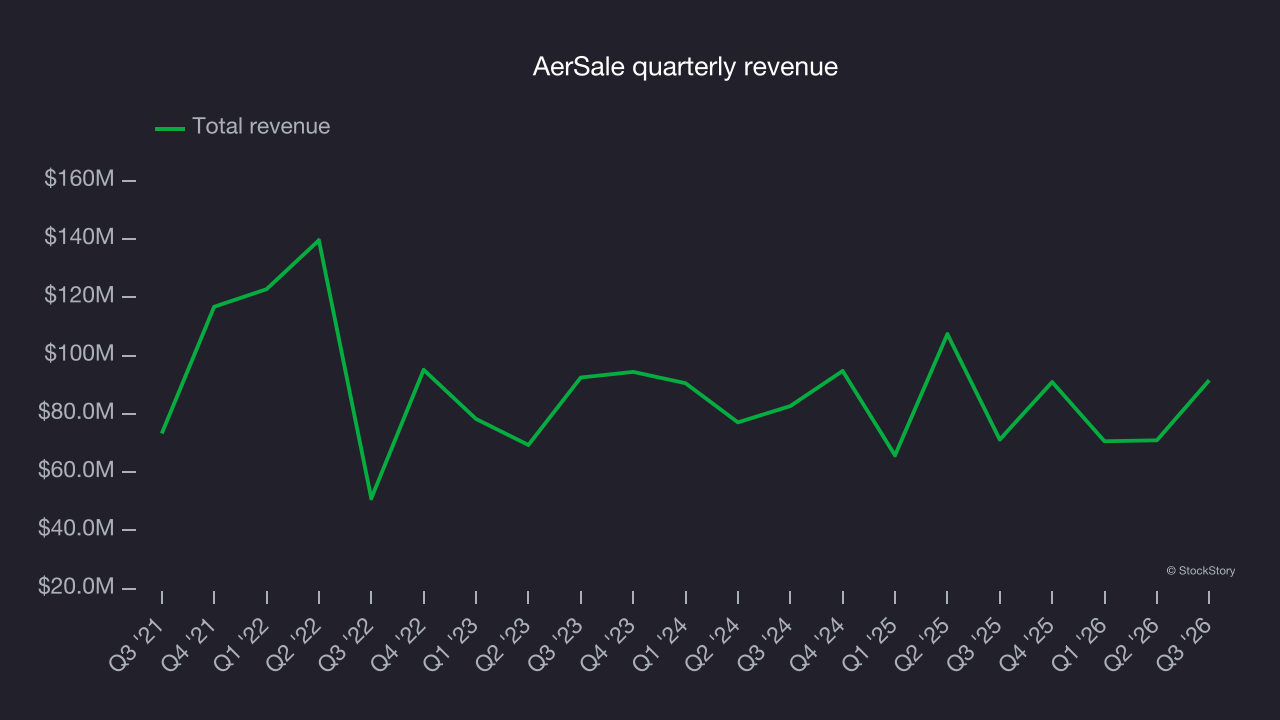
Long-term growth is the most important, but within industrials, a half-decade historical view may miss new industry trends or demand cycles. AerSale’s performance shows it grew in the past but relinquished its gains over the last two years, as its revenue fell by 3% annually. 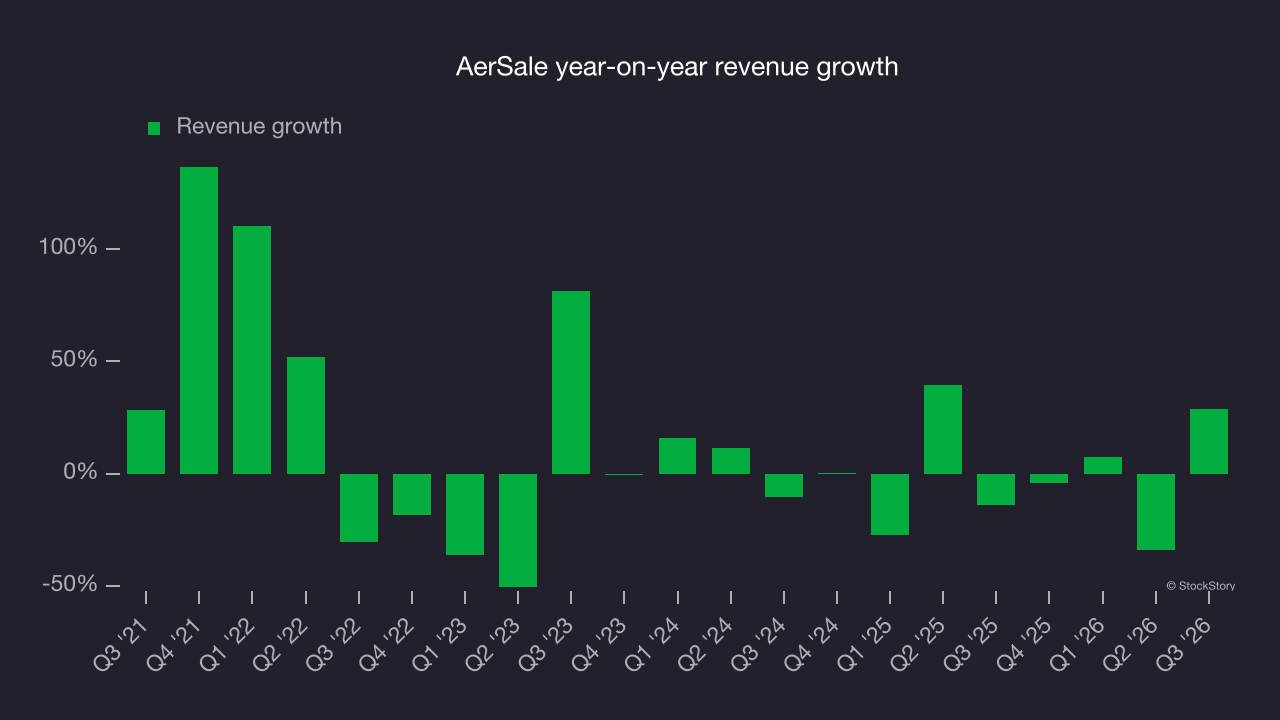
A closer look at AerSale’s revenue dynamics starts with its most important segments, Products and Services, which account for 55.2% and 44.8% of revenue. Over the last two years, AerSale’s Products revenue averaged 2.9% year-on-year declines. On the other hand, its Services revenue averaged 8.1% growth. 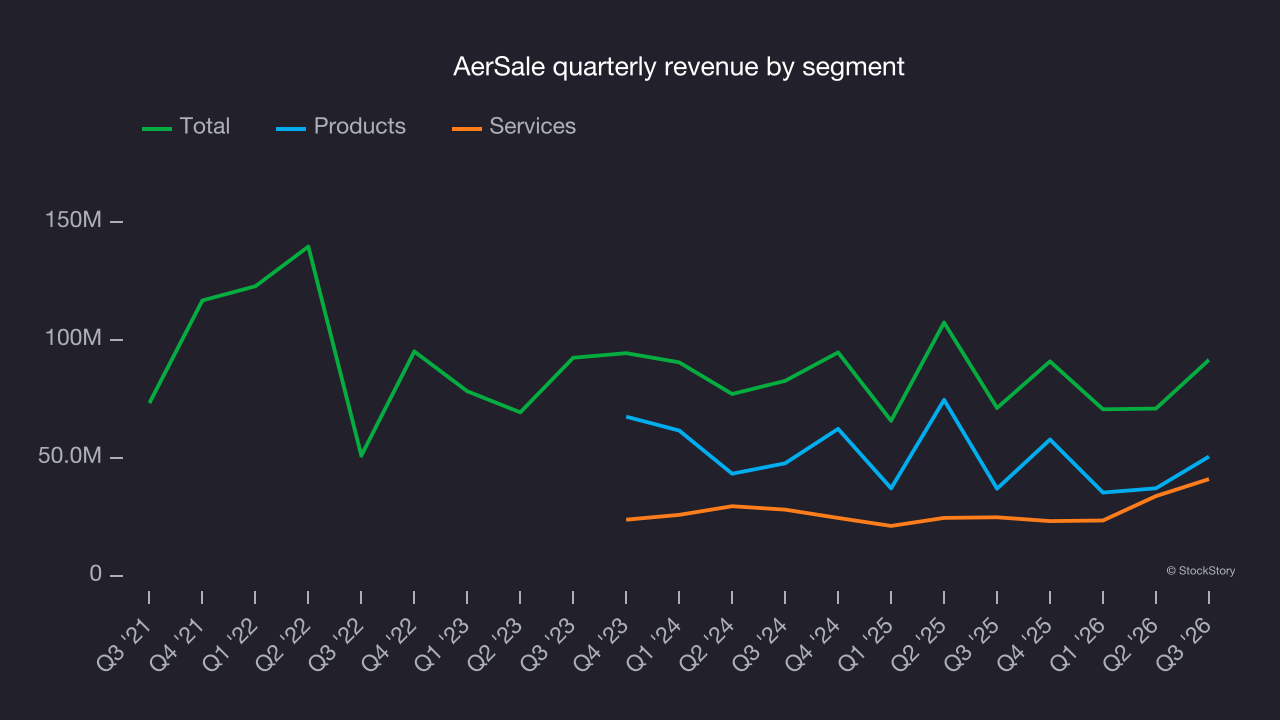
This quarter, AerSale’s year-on-year revenue growth of 28.6% was strong, and its $91.56 million of revenue was in line with Wall Street’s consensus estimates.
Looking ahead, sell-side analysts expect revenue to grow 2.8% over the next 12 months, according to S&P. Although this projection implies its newer products and services will spur better top-line performance, it is still below average for the sector.
Operating margin
AerSale was profitable over the last five years but held back by its large cost base. Its average operating margin of 4% was weak for an industrials business.
Looking at the trend in its profitability, AerSale’s operating margin decreased by 19.2 percentage points over the last five years. This raises questions about the company’s expense base because its revenue growth should have given it leverage on its fixed costs, resulting in better economies of scale and profitability. AerSale’s poor performance shows that costs were rising and it couldn’t pass them on to its customers.
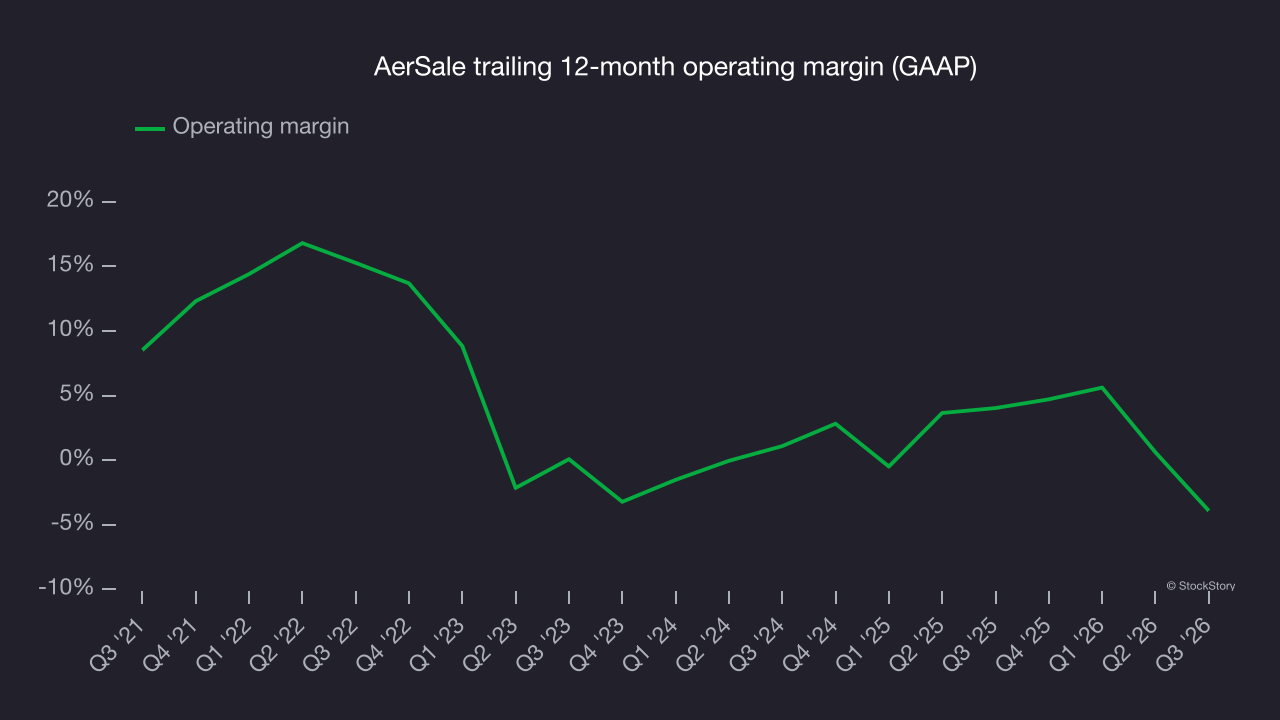
In Q3, AerSale generated an operating margin of negative 12.7%, down 16.7 percentage points year on year. This contraction shows it was less efficient because its expenses grew faster than its revenue.
Earnings per share
Revenue trends explain a company’s historical growth, but the long-term change in earnings per share (EPS) points to the profitability of that growth – for example, a company could inflate its revenue through excessive spending on advertising and promotions.
AerSale’s EPS declined by 43.9% annually over the last five years while its revenue grew by 3.5%. This indicates the company became less profitable on a per-share basis as it expanded.
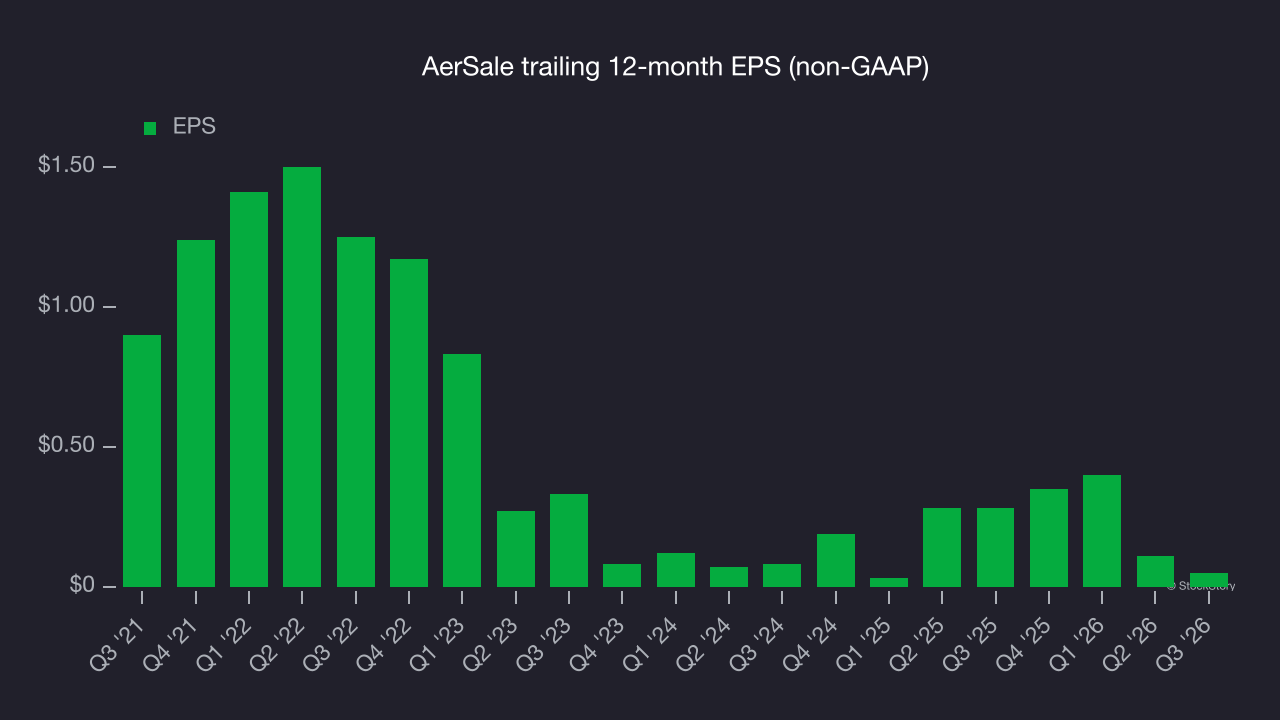
A closer look at AerSale’s earnings helps explain its performance. As mentioned earlier, AerSale’s operating margin declined by 19.2 percentage points over the last five years. Its share count also grew by 12%, meaning the company not only became less efficient with its operating expenses but also diluted its shareholders. 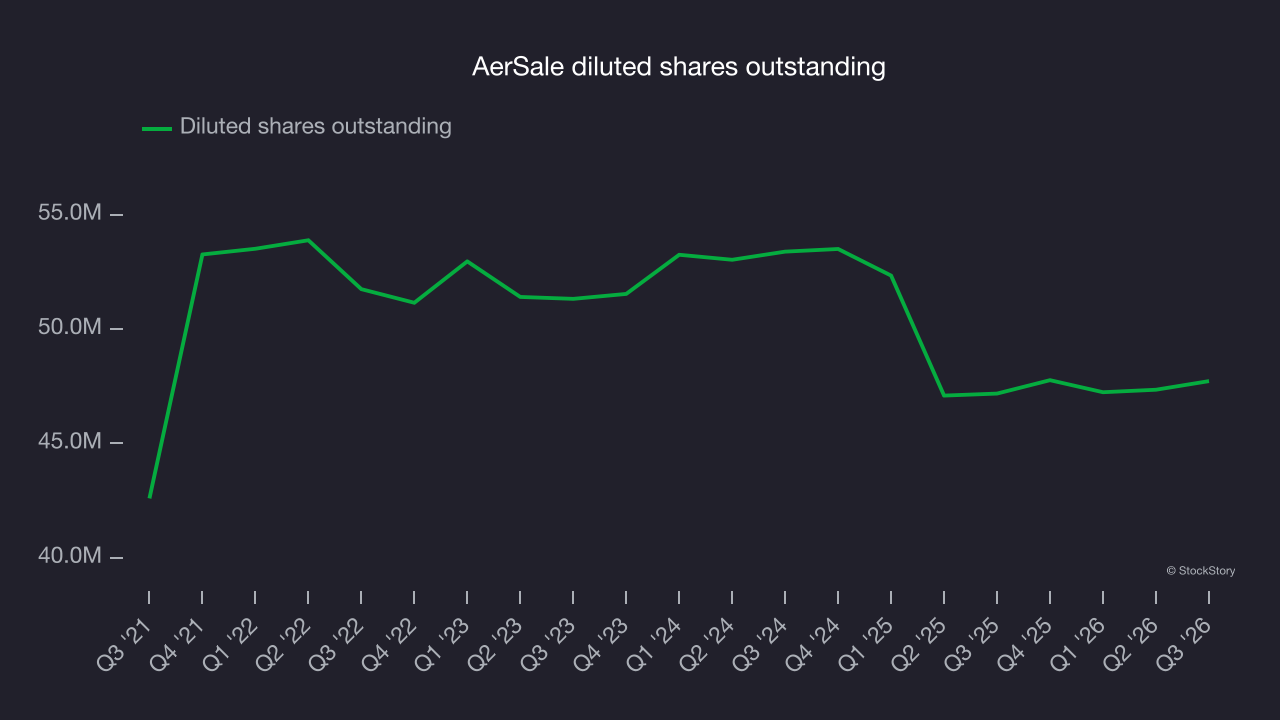
Like with revenue, we analyze EPS over a more recent period because it can provide insight into an emerging theme or development for the business.
For AerSale, its two-year annual EPS declines of 20.9% show it’s still underperforming. These were poor results.
In Q3, AerSale reported adjusted EPS of negative $0.02, down from $0.04 in the same quarter last year. This result missed analysts’ consensus estimates. Over the next 12 months, Wall Street expects AerSale’s full-year EPS to grow 450% from $0.05 to $0.28, according to S&P.
Key takeaways from AerSale’s Q3 results
AerSale’s revenue met analysts’ consensus expectations, but EBITDA and EPS fell short of Wall Street’s consensus estimates, making Q3 a weaker quarter overall. Shares plunged 10.5% to $4.33 immediately after the report.
AerSale may have had a tough quarter, but that alone does not determine whether the stock is worth buying. What happened in the latest quarter matters, but not as much as longer-term business quality and valuation when deciding whether to invest in this stock. For more on AerSale’s business quality and valuation, read the full research report here (it’s free).