Mortgage insurance provider Enact Holdings (NASDAQ: ACT) fell short of the market’s revenue expectations in Q3 2026, with revenue flat year on year at $312.9 million. Its non-GAAP profit of $1.19 per share was in line with analysts’ consensus estimates.
For more on Enact Holdings, read our full research report for free.
Enact Holdings (ACT) Q3 2026 highlights:
- Net premiums earned $242.3 million (flat year on year)
- Revenue $312.9 million vs S&P analysts’ consensus estimates of $317.9 million (flat year on year, 1.6% miss)
- Pre-tax profit $203 million (64.9% margin)
- Adjusted EPS $1.19 vs S&P analysts’ consensus estimates of $1.20 (in line)
- Book value per share $38.30 (4.9% year-on-year growth)
- Market capitalization $6.53 billion
“Enact’s performance this quarter reflects the strength of our business, the commitment of our team and the value we provide to our customers,” said Rohit Gupta, President and CEO of Enact. “We continued to execute against our strategic priorities, prudently manage risk and invest for the future, strengthening our ability to deliver sustainable value for our stakeholders, while helping more people responsibly achieve the dream of homeownership.”
Revenue growth
Insurance companies earn revenue from three primary sources: 1) the core insurance business itself, often called underwriting and represented in the income statement as premiums; 2) income from investing the “float” (premiums collected upfront not yet paid out as claims) in assets such as fixed-income assets and equities; 3) fees from various sources such as policy administration, annuities or other value-added services. Enact Holdings’s revenue grew at a sluggish 2.2% annualized rate over the last five years, falling short of our benchmarks.
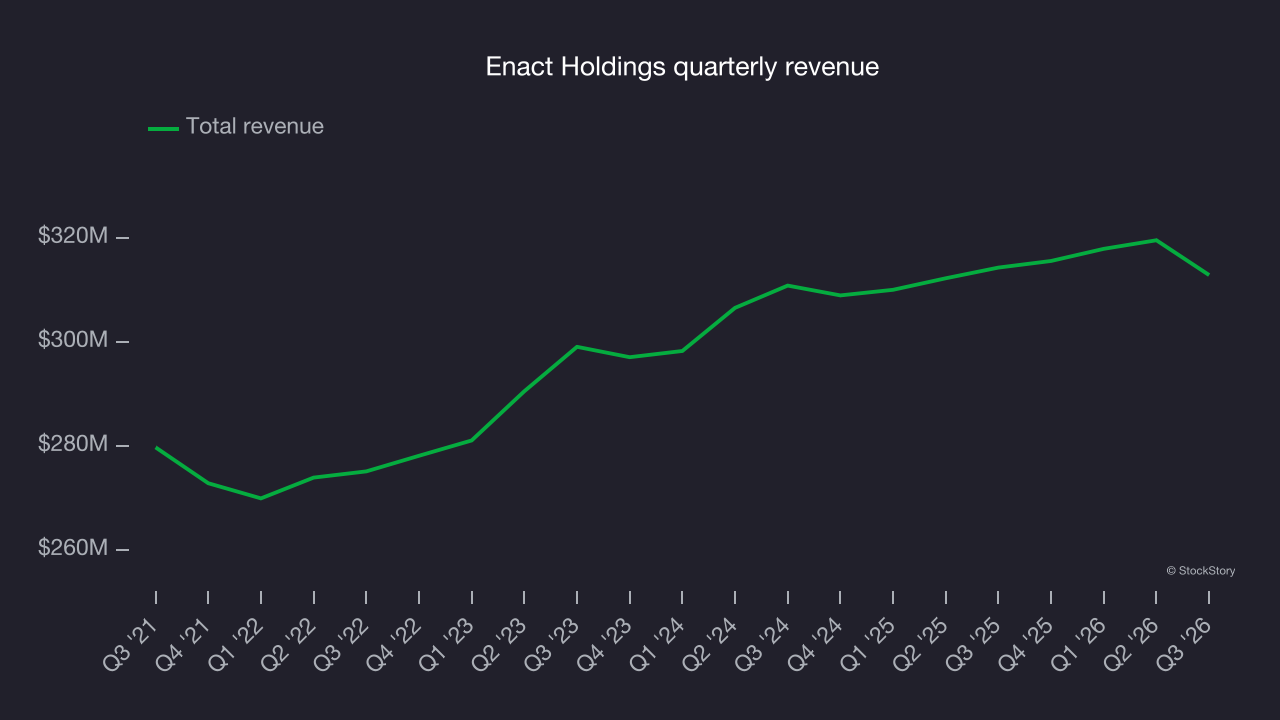
Long-term growth matters most, but within financials, a half-decade historical view may miss recent interest rate changes, market returns and industry trends. Enact Holdings’s annualized revenue growth of 2.2% over the last two years aligns with its five-year trend, suggesting its demand was consistently weak. 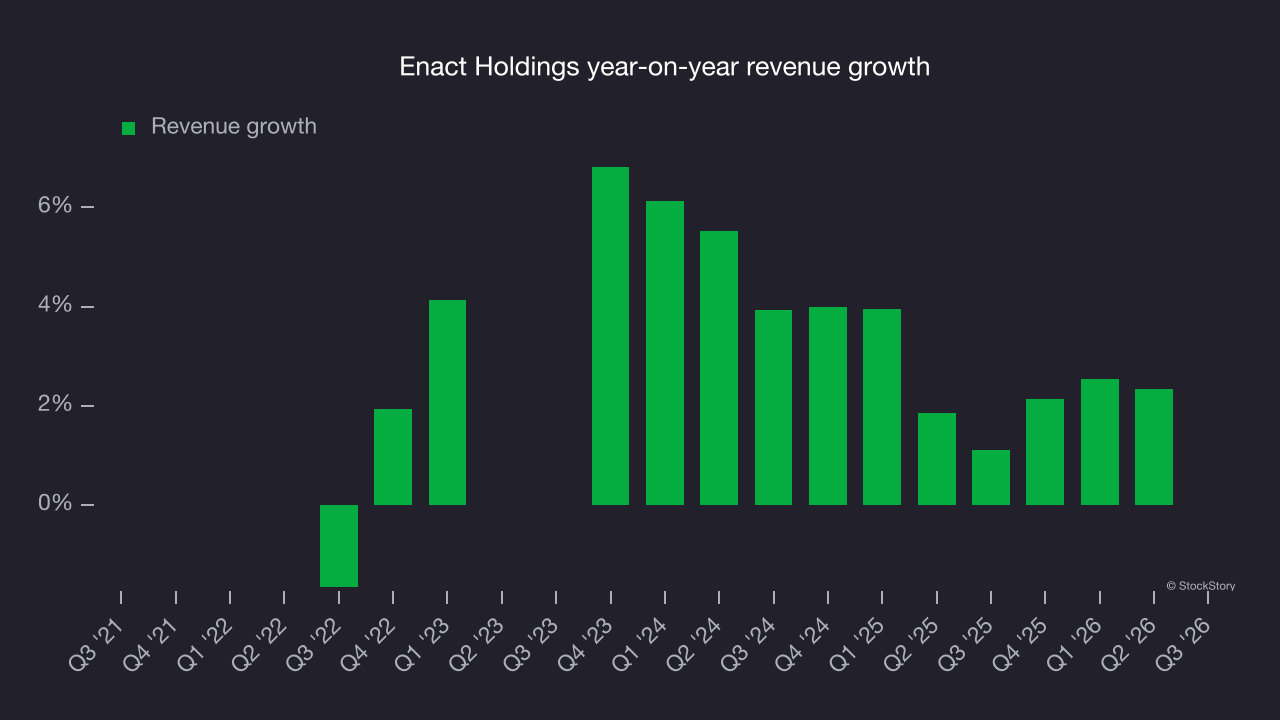 Note: Quarters not shown were determined to be outliers because they were impacted by outsized investment gains/losses that are not indicative of the recurring fundamentals of the business.
This quarter, Enact Holdings’s $312.9 million of revenue was flat year on year, falling short of Wall Street’s consensus estimates.
Net premiums earned made up 80.9% of the company’s total revenue during the last five years, meaning Enact Holdings barely relies on non-insurance activities to drive its overall growth.
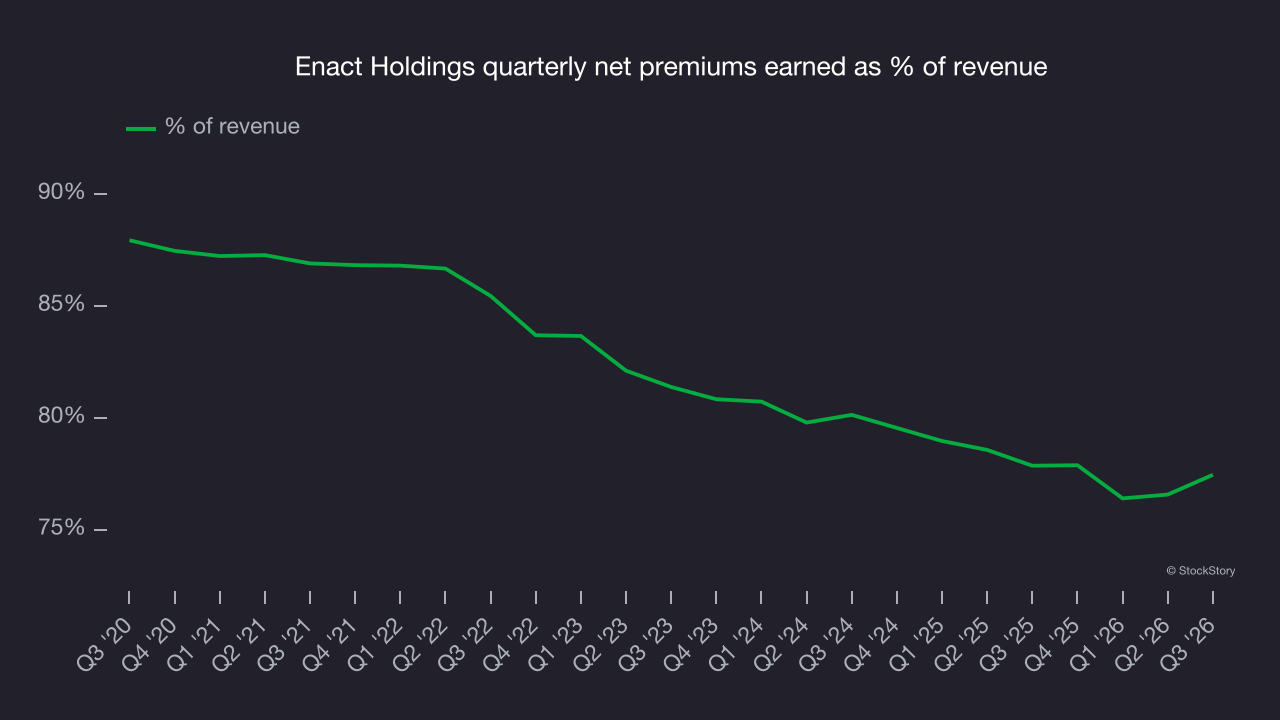
The market focuses primarily on an insurer’s net premiums earned growth as investment and fee income are considered more susceptible to market volatility and economic cycles.
Book value per share (BVPS)
Insurers are balance sheet businesses, collecting premiums upfront and paying out claims over time. Premiums collected but not yet paid out, often referred to as the float, are invested and create an asset base supported by a liability structure. Book value per share, or BVPS, captures this dynamic by measuring these assets (investment portfolio, cash and reinsurance recoverables) less liabilities (claim reserves, debt and future policy benefits). BVPS is essentially the residual value for shareholders.
BVPS is therefore an important metric to track for insurers and sheds light on business quality because it reflects long-term capital growth and is harder to manipulate than more commonly used metrics like EPS.
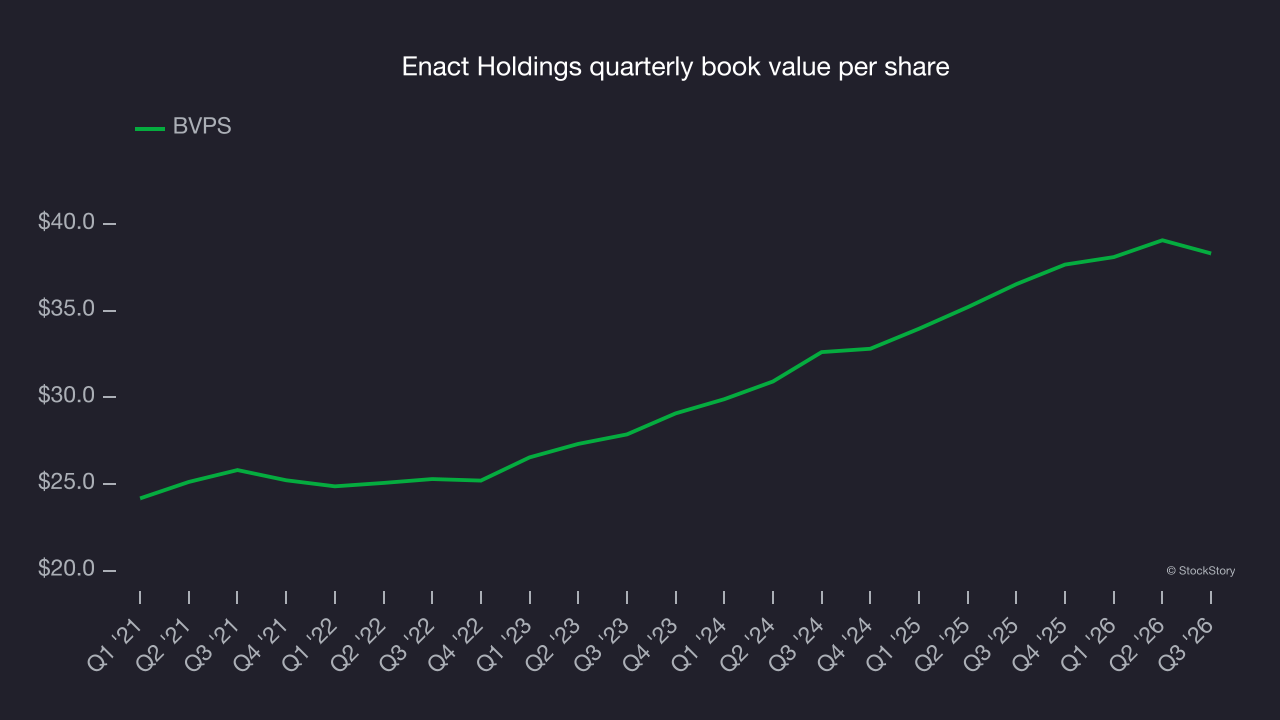
Enact Holdings’s BVPS grew at a decent 8.2% annual rate over the last five years. The last two years show a similar trajectory as BVPS grew by 8.4% annually from $32.61 to $38.30 per share.
Key takeaways from Enact Holdings’s Q3 results
Enact Holdings’ revenue miss left few positives in its Q3 results, with EPS only matching Wall Street’s consensus estimates. It was a softer quarter overall. Shares remained flat at $48.24 immediately after the release.
The latest quarter matters when deciding whether to buy Enact Holdings stock, but longer-term fundamentals and valuation matter much more. Read our full research report here (it’s free).