Industrial products distributor Applied Industrial (NYSE: AIT) met Wall Street’s revenue expectations in calendar Q3 2026 (fiscal Q1 2027), with revenue up 7.6% year on year to $1.29 billion. Its GAAP profit of $2.97 per share was 2.8% above analysts’ consensus estimates.
For more on Applied Industrial, read the full research report for free.
Applied Industrial (AIT) Q3 CY2026 highlights:
- Revenue $1.29 billion vs S&P analysts’ consensus estimates of $1.29 billion (7.6% year-on-year growth, in line)
- EPS (GAAP) $2.97 vs analysts’ consensus estimates of $2.89 (2.8% beat)
- Adjusted EBITDA $160.3 million vs analysts’ consensus estimates of $160.9 million (12.4% margin, in line)
- GAAP EPS guidance $11.95 at the midpoint for the full year, slightly missing what analysts were expecting
- Operating margin 11.1%, in line with the same quarter last year
- Free cash flow margin 5.7%, down from 9.3% in the same quarter last year
- Organic revenue rose 7.1% year on year (miss)
- Market capitalization $11.92 billion
Neil A. Schrimsher, Applied’s President & Chief Executive Officer, commented, “We had an encouraging start to fiscal 2027. First quarter EPS grew 13% year over year reflecting a favorable demand environment and solid margin performance. Sales growth was led by our Engineered Solutions segment, where our leading engineering capabilities and market positioning drove strong mid-teens organic sales growth, as well as ongoing positive order momentum. Service Center segment sales growth strengthened through the quarter, with positive trends continuing into October. In addition, we continue to manage broader inflationary pressures very well through ongoing gross margin initiatives, cost control, and channel execution. Combined with favorable mix, EBITDA margins expanded over the prior year and achieved the high-end of our first quarter guidance.”
Revenue growth
A company’s long-term revenue performance is one signal of its overall quality. Any business can have short-term success, but a top-tier one grows for years. Over the last five years, Applied Industrial grew its revenue at a decent 8.4% compounded annual growth rate. Its growth was slightly above the average industrials company and shows its offerings resonate with customers.
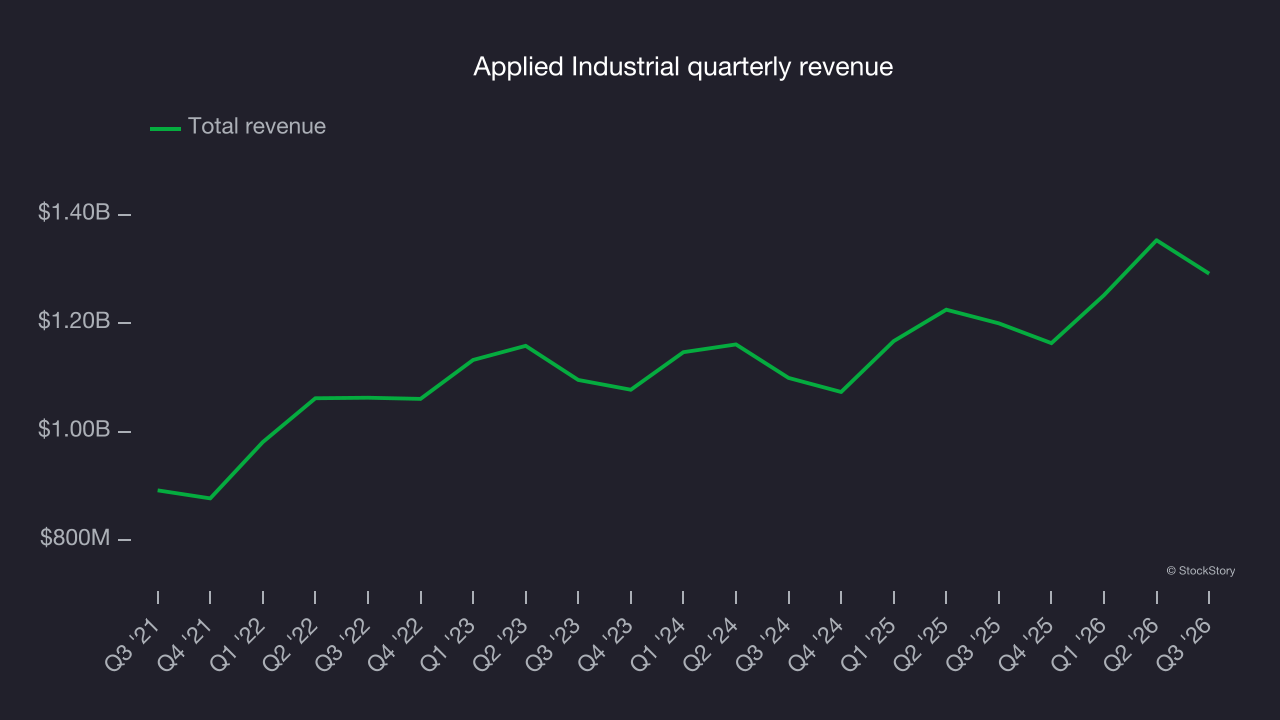
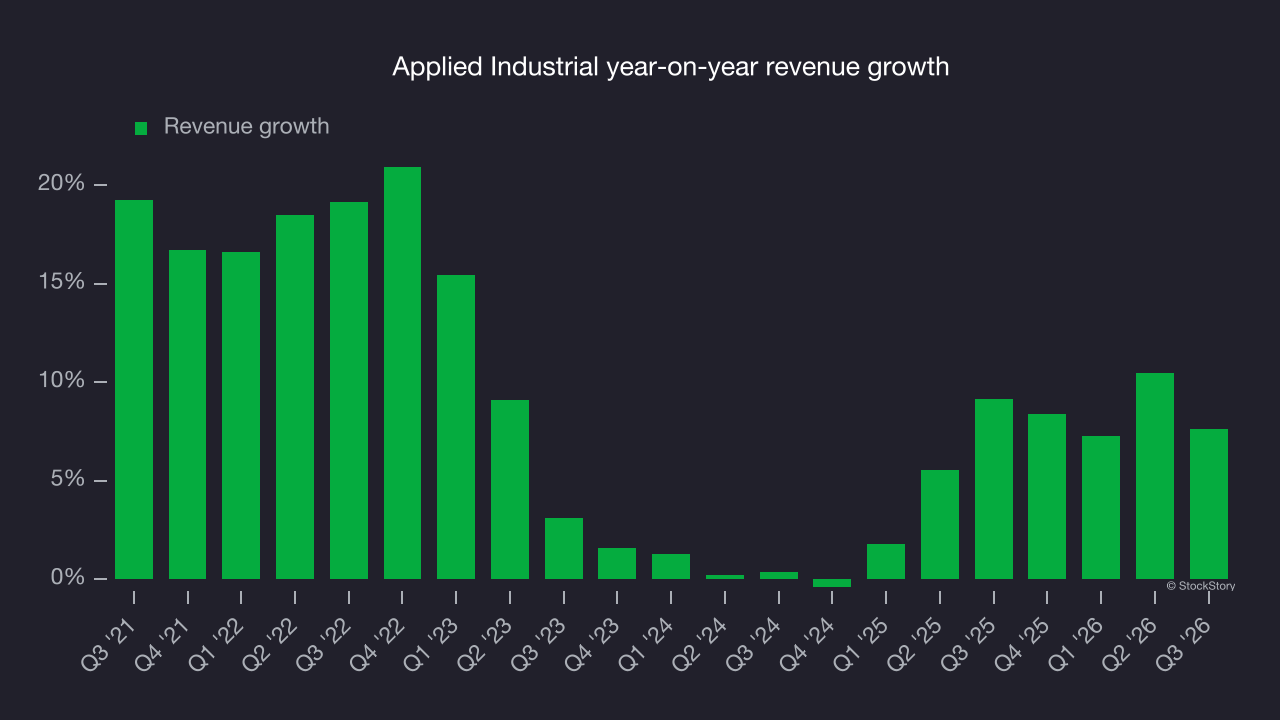
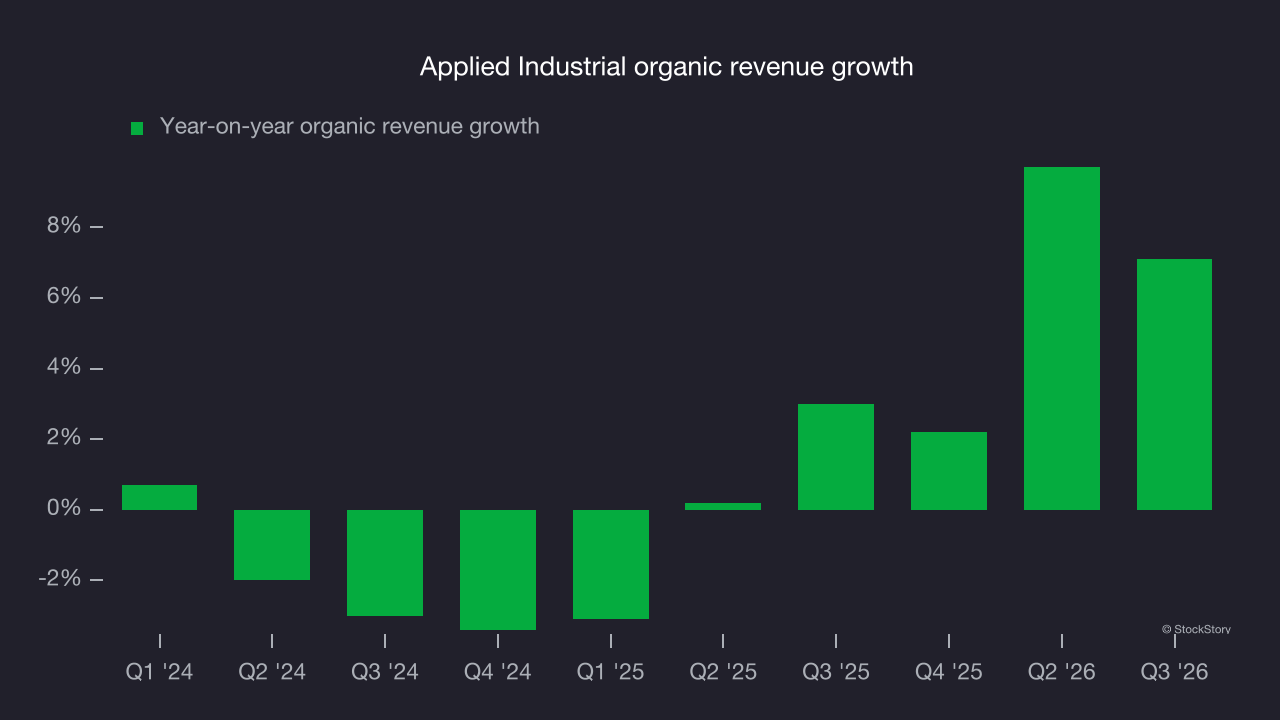
This quarter, Applied Industrial grew its revenue by 7.6% year on year, and its $1.29 billion of revenue was in line with Wall Street’s consensus estimates.
Looking ahead, sell-side analysts expect revenue to grow 5.2% over the next 12 months, according to S&P, similar to its two-year rate. This projection is underwhelming and implies its newer products and services will not lead to better top-line performance yet. On the positive side, the company is performing well on other measures of financial health.
Operating margin
Applied Industrial has managed its cost base well over the last five years. It demonstrated solid profitability for an industrials business, producing an average operating margin of 10.8%. This result was particularly impressive because of its low gross margin, which is mostly a factor of what it sells and requires substantial shifts to change meaningfully. Companies have more control over their operating margins, and high operating margins alongside low gross margins indicate well-managed operations.
Looking at the trend in its profitability, Applied Industrial’s operating margin rose by 1.4 percentage points over the last five years, as its revenue growth gave it operating leverage.
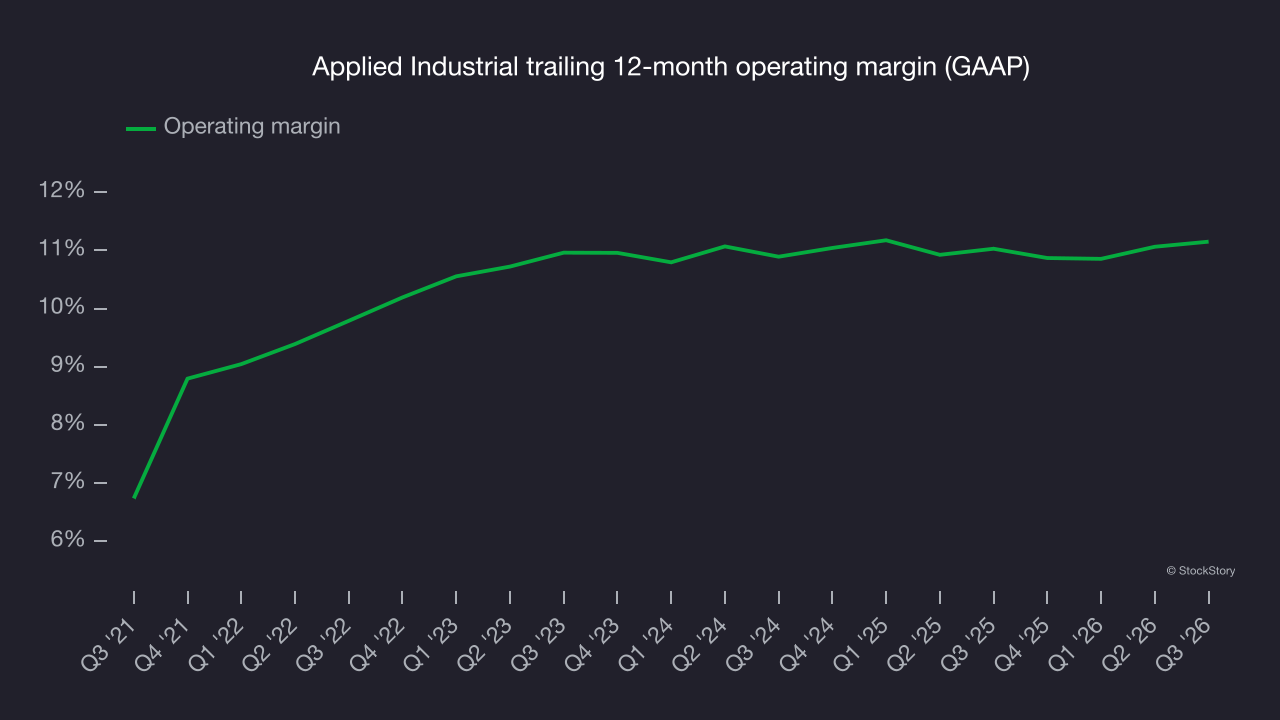
In Q3, Applied Industrial generated an operating margin of 11.1%, in line with the same quarter last year. This indicates the company’s cost structure has recently been stable.
Earnings per share
Revenue trends explain a company’s historical growth, but the long-term change in earnings per share (EPS) points to the profitability of that growth. For example, a company could inflate its revenue through excessive spending on advertising and promotions.
Applied Industrial’s EPS grew at a 22.2% compounded annual growth rate over the last five years, higher than its 8.4% annualized revenue growth. This indicates the company became more profitable on a per-share basis as it expanded.
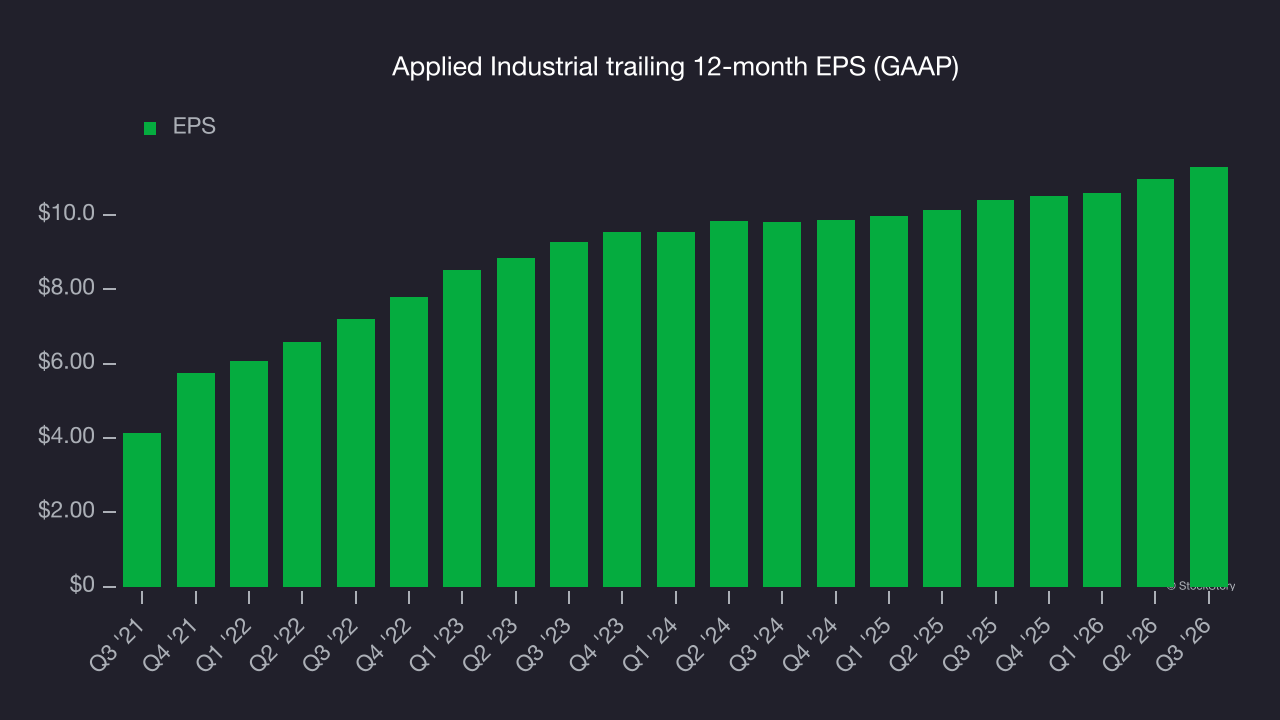
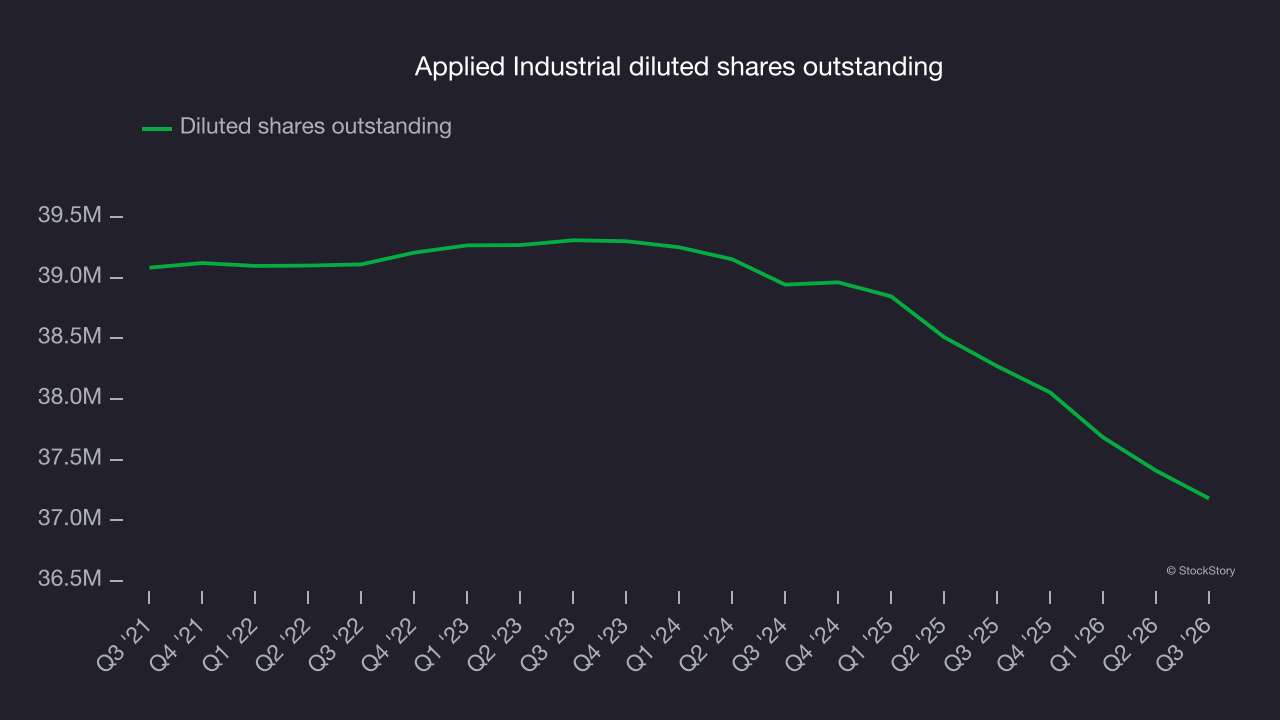
As with revenue, examining EPS over a more recent period can provide insight into an emerging theme or development for the business.
For Applied Industrial, its two-year annual EPS growth of 7.3% was lower than its five-year trend. That was underwhelming, but the company performed well on other measures of financial health.
In Q3, Applied Industrial reported EPS of $2.97, up from $2.63 in the same quarter last year. This result beat analysts’ consensus estimates by 2.8%. Over the next 12 months, Wall Street expects Applied Industrial’s full-year EPS to grow 8.9% from $11.29 to $12.30, according to S&P.
Key takeaways from Applied Industrial’s Q3 results
Applied Industrial’s EPS beat wasn’t enough to make this a strong quarter: organic revenue fell slightly short of Wall Street’s consensus estimates, and full-year EPS guidance also slightly missed expectations. It was a softer quarter overall. Shares fell 4.8% to $309.02 immediately after the report.
When assessing Applied Industrial as an investment, consider the bigger picture of valuation and business quality, as well as the latest earnings. Read the full research report here (it’s free).