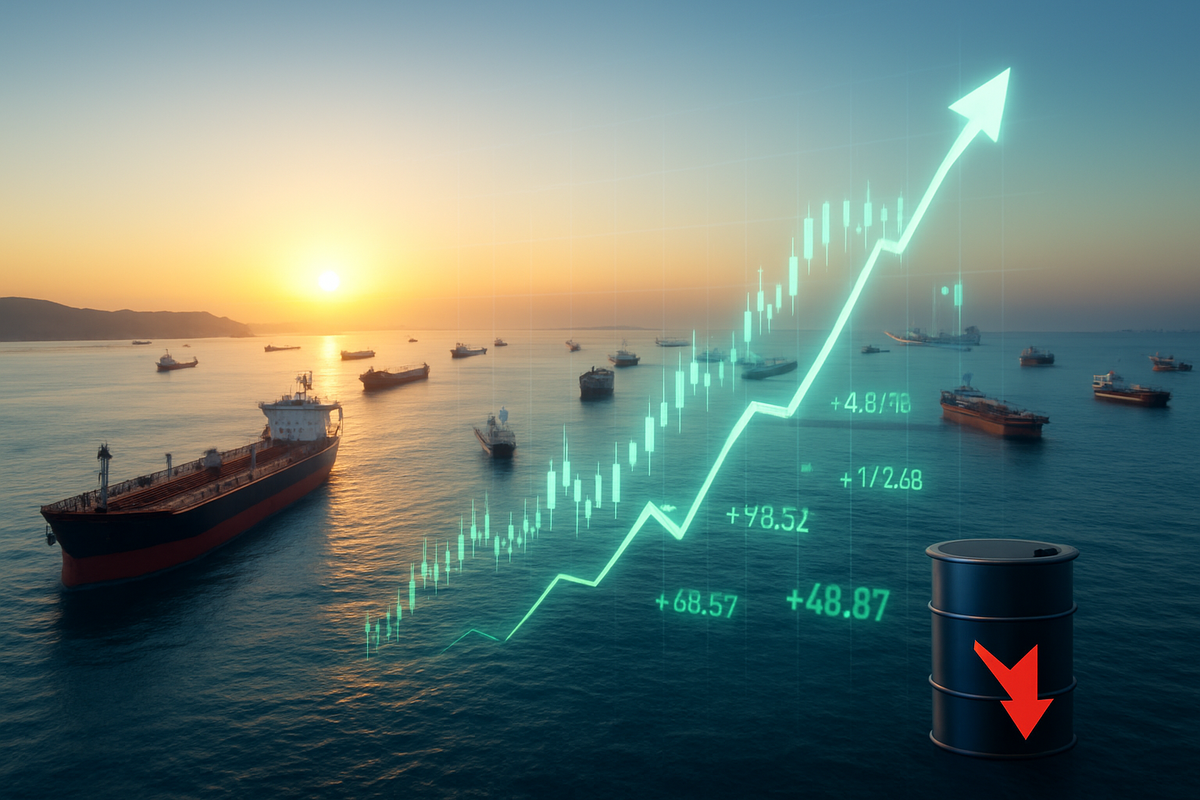
The global financial landscape underwent a seismic shift on Thursday, April 9, 2026, as news of a tentative truce between the United States and Iran sparked one of the most explosive relief rallies in Wall Street history. Following weeks of high-intensity kinetic conflict that threatened to plunge the global economy into a deep recession, the announcement of a ceasefire and the immediate reopening of the Strait of Hormuz sent the Dow Jones Industrial Average (DJIA) soaring by more than 1,300 points. The rally, fueled by a historic 16% overnight collapse in crude oil prices, marks a turning point in a geopolitical crisis that had pushed energy costs to their highest levels in decades.
The immediate implications of this de-escalation are profound. As tankers began to move freely through the world’s most critical maritime chokepoint, the "war premium" that had inflated costs across every sector of the economy began to evaporate. Investors, who had spent the better part of the spring rotating into defensive havens, pivoted back into growth and consumer-facing equities with unprecedented velocity. While the truce is currently described as "fragile," the sudden injection of liquidity and the easing of energy-driven inflation have provided a desperate lifeline to a global market that was on the brink of a systemic freeze.
The Path to Peace: From 'Operation Epic Fury' to the Muscat Accord
The breakthrough came late Wednesday evening following 72 hours of intensive, closed-door negotiations in Muscat, Oman. The "Muscat Accord" establishes a 30-day cessation of hostilities, halting the exchange of drone and missile strikes that had characterized the conflict known as "Operation Epic Fury." The timeline leading to this moment began in late February 2026, when a series of escalations in the Persian Gulf led to the closure of the Strait of Hormuz, effectively trapping 21 million barrels of oil per day and triggering a global energy panic.
Key players in the negotiation included Omani and Turkish mediators, who worked alongside U.S. State Department officials and representatives from Iran’s transitional military council. The agreement stipulates the immediate removal of Iranian naval blockades and the withdrawal of U.S. carrier strike groups to a pre-determined distance, allowing for the resumption of commercial shipping. Initial market reactions were instantaneous; as soon as the first Liquified Natural Gas (LNG) tankers were spotted moving through the Strait, S&P 500 futures spiked 3.5%, signaling the end of the "Hormuz Toll Booth" era that had seen shipping insurance rates skyrocket by 400%.
Winners and Losers: A Great Rebalancing of Portfolio Assets
The primary beneficiaries of the truce were concentrated in the transportation and consumer discretionary sectors. Delta Air Lines (NYSE: DAL) and United Airlines Holdings (NASDAQ: UAL) saw their shares jump by 12% and 14%, respectively, as the 16% drop in oil prices promised a massive reduction in jet fuel expenses. Similarly, retail giants like Amazon.com (NASDAQ: AMZN) and Walmart (NYSE: WMT) rallied on expectations that lower shipping costs would ease the pressure on operating margins and help stabilize consumer pricing.
Conversely, the energy sector and the "Big Defense" firms faced a sharp correction. ExxonMobil (NYSE: XOM) and Chevron (NYSE: CVX) saw their shares retreat as the prospect of $120-per-barrel oil vanished, replaced by a rapid descent toward the $80 range. Meanwhile, the defense contractors that had led the market higher during the conflict experienced a "sell the news" event. Lockheed Martin (NYSE: LMT) and RTX Corporation (NYSE: RTX), despite boasting record-high backlogs from the 2026 conflict, saw their stocks dip by 4% to 6% as investors moved capital into riskier, high-beta tech stocks. Occidental Petroleum (NYSE: OXY), which has significant exposure to Middle Eastern logistics, also saw volatility as the market recalibrated the value of its regional assets.
Broader Significance: Breaking the Back of Geopolitical Inflation
The US-Iran truce represents more than just a pause in fighting; it is a critical deflationary event for the global economy. For the past two months, the "Hormuz Risk" had been the single largest driver of global inflation, affecting everything from fertilizer production to electronics manufacturing. By reopening the Strait, the global supply chain has avoided a total fracture. This event draws historical comparisons to the resolution of the 1973 oil embargo, though the speed of the 2026 recovery is bolstered by the modern era's high-frequency trading and real-time satellite monitoring of shipping lanes.
Furthermore, the truce has significant regulatory and policy implications. The Federal Reserve, which had been weighing a "emergency" rate hike to combat energy-driven price spikes, may now have the breathing room to maintain current rates or even consider a pivot if the truce holds. However, the fragility of the peace remains a cloud over large-cap sentiment. Analysts warn that any "accidental" engagement in the Gulf could reverse these gains in minutes, leading to a "yo-yo" market environment where volatility remains the only constant.
What Lies Ahead: A Fragile Future and Strategic Pivots
Looking forward, the next 30 days will be a trial by fire for both the U.S. and Iran. The short-term focus will be on the "Joint Verification Committee" established to monitor the Strait. If shipping remains unmolested through the end of April, we may see a more permanent stabilization of energy prices. However, the long-term strategic pivot for many global corporations has already begun; the 2026 crisis has accelerated the push for energy independence and the diversification of supply routes, a trend that will likely continue even if peace is maintained.
Market participants should prepare for a period of "headline risk" dominance. Strategic adaptations will be required for companies like Boeing (NYSE: BA), which must now balance its massive defense backlog with a potentially resurgent demand for commercial aircraft as airlines capitalize on lower fuel costs. The emergence of new market opportunities in Middle Eastern reconstruction and regional trade could also provide a secondary boost to global industrials if the truce evolves into a formal treaty.
Conclusion: A Market Breathes Again, But Keeps One Eye Open
The 1,300-point Dow surge on April 9, 2026, will be remembered as the moment the global economy stepped back from the precipice. The reopening of the Strait of Hormuz and the corresponding collapse in oil prices have provided a much-needed reprieve from the twin threats of war and hyperinflation. Key takeaways include the market's extreme sensitivity to energy security and the incredible speed with which capital can rotate when geopolitical tensions ease.
Moving forward, the market’s trajectory will be entirely dependent on the durability of the Muscat Accord. Investors should watch for the "May 1 Deadline," when the current truce is set to expire or be renewed. While the initial rally is a cause for celebration, the underlying tensions between Washington and Tehran remain unresolved. For now, the bulls have reclaimed the narrative, but in the volatile world of 2026, the only certainty is that the geopolitical landscape can change as quickly as a ticker tape.
This content is intended for informational purposes only and is not financial advice