In a move that marks a definitive break from the previous administration's economic stewardship, President Donald Trump officially nominated Kevin Warsh as the next Chair of the Federal Reserve on Friday morning, January 30, 2026. The announcement, made via Truth Social, ends months of intense speculation regarding who would succeed Jerome Powell as the head of the world's most influential central bank. President Trump characterized Warsh as "central casting" for the role, expressing absolute confidence that he would lead the Federal Reserve toward a new era of growth and stability.
The immediate implications of the nomination were felt across global financial hubs. Markets reacted with a mixture of relief that the uncertainty had ended and apprehension regarding Warsh’s historically hawkish leanings balanced against his recent calls for lower interest rates. As the news broke, U.S. stock futures softened while Treasury yields climbed, signaling that investors are bracing for a potential "regime change" in how the Fed manages the money supply and its massive balance sheet.
The Path to the Nomination: A Return to "Central Casting"
The selection of Kevin Warsh followed a high-stakes search process that intensified in late 2025. According to White House sources, the short list included several high-profile figures, such as National Economic Council Director Kevin Hassett, Fed Governor Christopher Waller, and BlackRock (NYSE: BLK) Chief Investment Officer Rick Rieder. Until the final days of January 2026, betting markets like Polymarket showed a tight race between Warsh and Rieder, with Rieder favored by many on Wall Street for his deep market expertise.
However, the tide turned sharply on January 29, 2026, when President Trump signaled an imminent decision. By the morning of January 30, the nomination of Warsh—who served as a Fed Governor from 2006 to 2011—was official. Warsh has long been a favorite of the Republican establishment, having provided economic counsel during the 2008 financial crisis. His return to the Eccles Building represents a significant shift; while he was known as an inflation "hawk" during his first tenure, his more recent public commentary has aligned with Trump’s desire for a more accommodative monetary policy to spur domestic manufacturing and deregulation.
Winners and Losers: Financials Steady While Commodities Slide
The nomination created immediate divergence in asset classes. Major financial institutions generally viewed the pick as a stabilizing force. JPMorgan Chase (NYSE: JPM) CEO Jamie Dimon had previously signaled support for Warsh, describing him as a candidate with the "market credibility" necessary to lead. Shares of major banks saw relatively stable performance compared to the broader market, as investors anticipate that Warsh may lean toward a lighter regulatory touch and a steeper yield curve, which typically benefits bank lending margins.
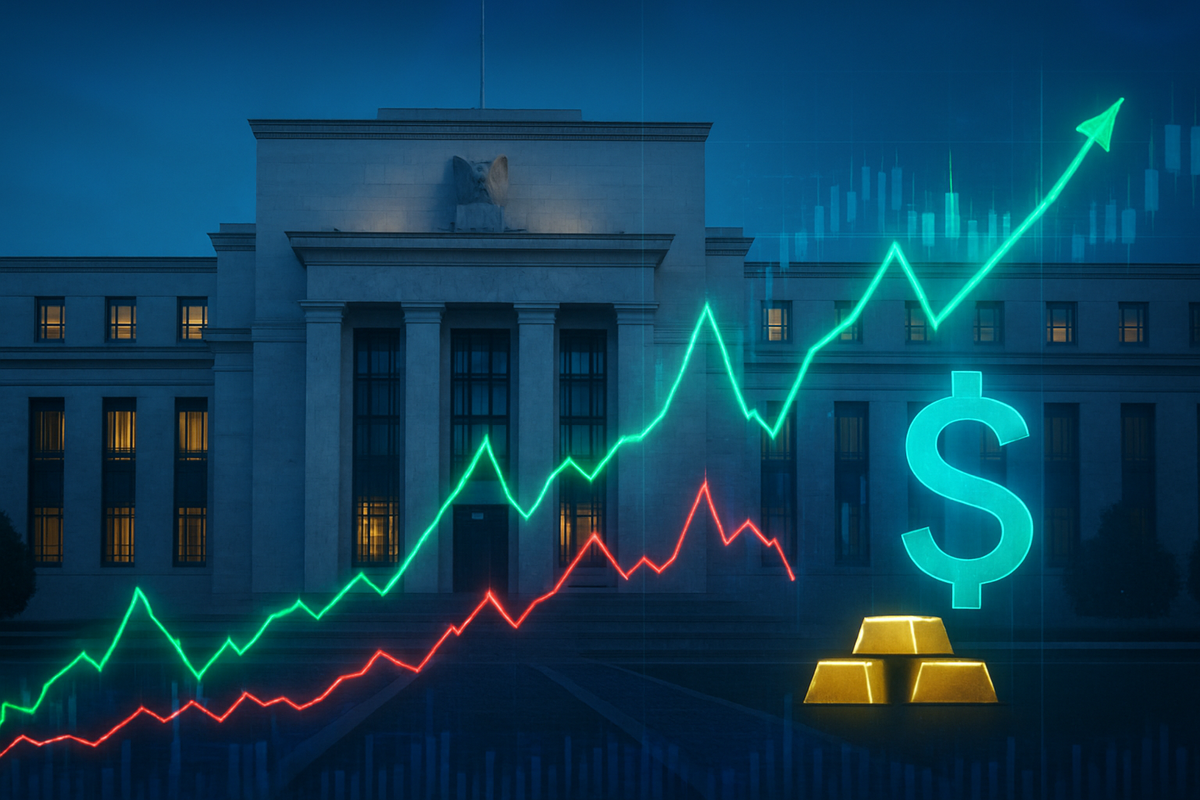
Conversely, the "sell the news" reaction hit the commodities sector particularly hard. Gold prices, which have enjoyed a historic run, plummeted nearly 5% following the announcement, with the SPDR Gold Shares (NYSE: GLD) seeing heavy volume. Silver followed suit, with the iShares Silver Trust (NYSE: SLV) tumbling over 10%. Investors appear to be betting that a Warsh-led Fed will be more aggressive in shrinking the central bank's balance sheet, which would strengthen the U.S. Dollar (DXY) and reduce the appeal of non-yielding assets like precious metals. Meanwhile, the broader market indices, including the SPDR S&P 500 ETF Trust (NYSEARCA: SPY) and the Invesco QQQ Trust (NASDAQ: QQQ), saw initial declines of 0.5% to 1.0% as traders repriced the risk of a more volatile transition period.
A Wider Significance: The "Regime Change" at the Fed
Beyond the daily price action, the nomination of Kevin Warsh signifies a broader ideological shift in American macroeconomics. Warsh has been vocal about his desire for a "regime change" at the Fed, criticizing the institution for becoming too reactive and overly reliant on "data-dependent" models that he believes lag behind real-world market signals. His appointment suggests a move toward a more rules-based monetary policy, which could involve more predictable, yet perhaps more frequent, adjustments to the federal funds rate.
This event also highlights the evolving relationship between the executive branch and the central bank. While critics express concerns about the erosion of Fed independence—given Warsh's alignment with Trump on rate cuts—proponents argue that a Warsh-led Fed will be more attuned to the fiscal goals of the administration, particularly in supporting a "high-growth" agenda. This mirrors historical precedents where incoming administrations sought to install leaders who shared their economic philosophies, though the modern transparency of the Fed makes such transitions far more impactful on global liquidity.
The Road Ahead: Confirmation and Policy Implementation
The next major hurdle for Kevin Warsh is the Senate confirmation process. Despite the Republican majority, the path may not be entirely smooth. Some lawmakers, including Senator Thom Tillis, have raised questions regarding the intersection of Fed policy and ongoing Department of Justice probes into the central bank's operational transparency. In the short term, markets will be hypersensitive to Warsh’s confirmation hearings, searching for clues on how quickly he might move to reduce the Fed’s $7 trillion balance sheet.
In the longer term, the financial world will be watching to see if Warsh can balance his "hawkish" roots with the political pressure to maintain low interest rates. A strategic pivot toward "quantitative tightening" paired with "targeted rate cuts" is a scenario many analysts are now modeling. If Warsh successfully navigates this needle-threading exercise, he could oversee a period of sustained economic expansion; if he moves too fast on balance sheet reduction, he risks a liquidity crunch that could rattle credit markets.
Final Assessment for Investors
The nomination of Kevin Warsh represents a pivot point for the U.S. economy as it enters the mid-2020s. The key takeaways for investors are clear: the era of "Powell-style" gradualism is likely coming to an end, replaced by a more assertive, market-oriented approach. The initial volatility in equities and the sharp correction in commodities suggest that the transition will be anything but quiet.
As we move forward into 2026, investors should keep a close eye on the 10-year Treasury yield and the performance of the U.S. Dollar. The "Warsh Fed" is expected to prioritize a leaner balance sheet and a more dynamic interest rate environment. While this may create headwinds for defensive assets like gold, it could provide a tailwind for the financial sector and companies sensitive to a "reflation" trade. The coming months of confirmation hearings will be the ultimate litmus test for whether Warsh can maintain the delicate balance between Fed independence and the President’s economic vision.
This content is intended for informational purposes only and is not financial advice.