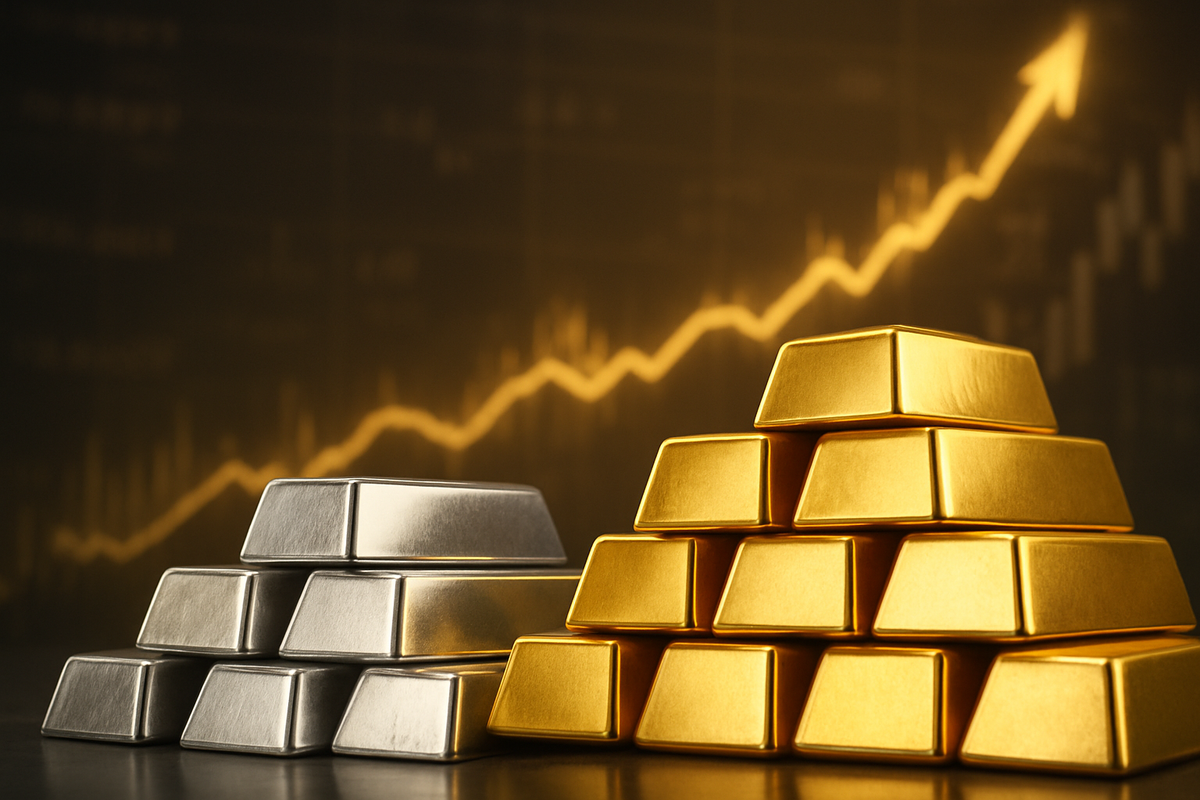
On December 5, 2025, the Indian commodity market witnessed a historic moment as silver prices on the Multi Commodity Exchange (MCX) soared past an unprecedented Rs 1.85 lakh per kilogram, establishing a new all-time high. This monumental surge was mirrored by gold, which also achieved a significant milestone, breaching the Rs 1.28 lakh per 10 grams mark, reaching as high as Rs 1,30,766 for February 2026 delivery just days prior. These record-breaking movements are a testament to a powerful confluence of global and domestic factors, reshaping the landscape for precious metal investors and signaling a new era of valuation for these traditional safe-haven assets.
The immediate implications of this rally are profound, signaling robust gains for existing investors in precious metals, while simultaneously prompting caution for new market entrants. The event underscores the reinforced role of gold and silver as critical hedges against economic uncertainties, inflation, and currency depreciation, particularly for Indian investors. As markets digest these new price levels, attention turns to the sustainability of this rally and the strategic adjustments required from various stakeholders in the financial ecosystem.
Historic Peaks: A Detailed Look at the Precious Metals Rally
The surge in both silver and gold on the Multi Commodity Exchange (MCX) on December 5, 2025, marks a pivotal moment in the Indian financial markets. Silver, often referred to as "poor man's gold," demonstrated extraordinary momentum, breaching the Rs 1.85 lakh per kilogram threshold for the first time. This achievement was not sudden but the culmination of a robust rally, with MCX silver futures for March 2026 expiry surging to a lifetime high of ₹1,78,649 per kg on December 1, and subsequently hitting ₹1,84,727 per kg by December 4, before officially crossing the ₹1.85 lakh mark on December 5. The December 5, 2025, futures contract for silver had a last traded price of Rs 1,78,598, reflecting intense trading activity.
Gold's ascent was equally significant, with the yellow metal pushing beyond Rs 1.28 lakh per 10 grams. While December gold contracts on MCX had already touched ₹128,395.00 per 10 grams as early as October 16, 2025, the recent rally saw the February 2026 delivery contract reach an impressive Rs 1,30,766 per 10 grams on December 3. On December 5, 2025, the price of 24K gold stood at ₹130,460 per 10 grams, with MCX gold February contracts trading up 0.25% at ₹1,30,407 per 10 grams. The GoldM December 5, 2025, futures contract recorded a high of Rs 1,28,450, confirming the strong upward trend.
Several key drivers have fueled this unprecedented rally. A primary catalyst is the widespread anticipation of imminent interest rate cuts by the US Federal Reserve, which tends to weaken the US dollar and make non-yielding assets like gold and silver more attractive. This effect is compounded by a broadly weakening US dollar index, which has seen a year-to-date decline of 6.69% in 2025. Domestically, the Indian Rupee's unprecedented depreciation, crossing the 90-mark against the US dollar, has significantly amplified local precious metal prices, given India's reliance on imports. Furthermore, the Reserve Bank of India's (RBI) Monetary Policy Committee (MPC) decision on December 5, 2025, to cut the repo rate by 25 basis points to 5.25%, provided an additional boost to gold prices.
Beyond monetary policy and currency fluctuations, robust industrial demand has played a crucial role, especially for silver. Sectors such as solar panels, semiconductors, 5G devices, and electric vehicle batteries are experiencing explosive growth, leading to a physical supply deficit for silver. Geopolitical tensions and global economic uncertainties continue to bolster the safe-haven appeal of both metals, driving increased investment. Key stakeholders, including a broad spectrum of investors, market analysts from firms like Reliance Securities, Mehta Equities, and Motilal Oswal Financial Services Ltd. (NSE: MOTILALOFS), and central banks like the US Federal Reserve and the Reserve Bank of India, have been actively involved in shaping and reacting to these market dynamics. The Multi Commodity Exchange (MCX: MCX) itself serves as the central platform reflecting these immediate market reactions and trading volumes. Initial market reactions on December 5, 2025, were predominantly bullish, though some profit-booking was observed, indicating a cautious but strong sentiment towards precious metals.
Company Impact: Winners and Losers in the Precious Metals Boom
The unprecedented surge in gold and silver prices creates a distinct landscape of winners and losers across various sectors, particularly within the Indian market. Companies directly involved in the precious metals value chain stand to benefit significantly, while others might face increased operational costs or shifting consumer preferences.
Jewelry retailers and manufacturers, such as Titan Company Limited (NSE: TITAN) (owner of Tanishq) and PC Jeweller Ltd (NSE: PCJEWELLER), will experience a mixed impact. While higher gold and silver prices might deter some discretionary purchases, particularly among price-sensitive consumers, the increased valuation of their existing inventory could lead to higher revenue realization. Companies with strong brand loyalty and a focus on design and craftsmanship might be better positioned to pass on increased costs to consumers. However, those relying on volume sales might see a dip in demand. The rising prices also mean higher working capital requirements for these companies to maintain inventory levels, potentially impacting their liquidity and profitability if not managed efficiently.
On the winning side are financial institutions and investment platforms that facilitate trading in precious metals or offer gold-backed financial products. Companies like Muthoot Finance Ltd. (NSE: MUTHOOTFIN) and Manappuram Finance Ltd. (NSE: MANAPPURAM), major gold loan providers, could see an increase in the value of their collateral, strengthening their asset base. However, the high prices could also lead to higher loan-to-value ratios if not carefully managed. Asset management companies offering Gold ETFs and Silver ETFs, such as those managed by ICICI Prudential Asset Management Company (NSE: ICICIPRULI) or HDFC Asset Management Company Ltd. (NSE: HDFCAMC), are likely to witness increased inflows as investors flock to these instruments to capitalize on the rally or hedge against inflation. Brokerage firms like Zerodha and Angel One (NSE: ANGELONE), which provide platforms for commodity trading on MCX, will also benefit from increased trading volumes and transaction fees.
Conversely, industries heavily reliant on silver as an industrial raw material might face rising input costs. Manufacturers of solar panels, electronics, and electric vehicle components, which utilize silver for its conductivity, will see their production costs increase. While many of these companies operate on long-term contracts, a sustained rally could squeeze their profit margins if they cannot effectively pass on these costs to end-consumers. For instance, companies in the renewable energy sector, despite government incentives, might find their project costs escalating. Furthermore, the broader inflationary pressure driven by rising commodity prices could impact consumer spending power, indirectly affecting a wide range of consumer discretionary companies. The overall sentiment towards safe-haven assets also suggests a potential shift away from riskier equity investments, which could marginally impact growth-oriented companies across various sectors.
Wider Significance: A New Era for Precious Metals in the Global Economy
The historic surge of silver and gold on MCX extends far beyond mere price adjustments; it signifies a deeper recalibration of economic forces and investor sentiment in the global financial landscape. This event fits squarely into broader industry trends characterized by increasing economic uncertainty, persistent inflationary pressures, and a global pivot towards de-dollarization and alternative safe-haven assets. The rally underscores a growing lack of confidence in traditional fiat currencies and conventional investment avenues, compelling investors to seek tangible stores of value.
The ripple effects of this precious metals surge are likely to be felt across various sectors and geographies. Competitors in the investment space, such as real estate and traditional bond markets, may find themselves less attractive as precious metals offer superior returns and inflation hedging capabilities. Partners in the supply chain, from mining companies to refiners and distributors, will experience heightened activity and potentially increased profitability, although they must also manage the volatility inherent in commodity markets. Globally, this trend could encourage other central banks to further diversify their reserves away from the US dollar, potentially accelerating the shift towards a more multi-polar global financial system.
Regulatory and policy implications are also significant. Governments and central banks, including the Reserve Bank of India, will closely monitor these price movements for their impact on inflation, currency stability, and overall economic health. There might be discussions around potential interventions to stabilize prices or to manage the flow of precious metals, especially given India's large import bill for gold and silver. Policies related to commodity market regulation, taxation on precious metals, and measures to curb speculative trading could come under review to ensure market stability and protect consumer interests.
Historically, such sharp rallies in precious metals often coincide with periods of economic distress or significant geopolitical shifts. Comparisons can be drawn to the gold rallies during the 1970s oil crises, the early 2000s dot-com bubble burst, and the 2008 global financial crisis. The current environment, marked by lingering effects of the pandemic, ongoing conflicts, and a highly anticipated shift in global monetary policy, presents a unique confluence of factors driving this rally. Unlike previous cycles, the industrial demand for silver, particularly from green technologies, adds a new dimension, suggesting a more structural underpinning to its price strength beyond just safe-haven appeal. This blend of traditional safe-haven demand with robust industrial consumption paints a picture of sustained significance for both gold and silver in the evolving global economy.
What Comes Next: Navigating the Future of Precious Metals
Looking ahead, the trajectory of gold and silver prices will be shaped by a complex interplay of monetary policy, geopolitical developments, and industrial demand. In the short term, the market anticipates continued volatility, particularly as investors digest economic data from the US and await further clarity on the US Federal Reserve's interest rate decisions. While some analysts suggest a "sell-on-rise" strategy for gold in the very short term due to technical indicators, the overall sentiment remains cautiously bullish. Profit-booking opportunities may arise, leading to minor corrections, but these could also be seen as entry points for new investors adopting a staggered investment approach.
In the long term, the outlook for both precious metals remains overwhelmingly positive. Analysts project silver prices to potentially test levels of $65-$67 per ounce in the first half of 2026, driven by persistent supply shortages and burgeoning industrial demand from sectors like solar energy and electric vehicles. Global banks also anticipate gold to climb further, potentially surpassing the Rs 1.28 lakh per 10 grams mark in India by 2026, propelled by sustained central bank purchases and its enduring safe-haven appeal. This suggests that the current record-breaking levels might not be the ceiling but rather a significant milestone in a longer upward trend.
Potential strategic pivots or adaptations will be crucial for various market participants. For investors, diversifying portfolios to include a strategic allocation to precious metals, especially silver, could prove beneficial. Jewelers and manufacturers might need to innovate their product offerings, focusing on lighter designs or alternative materials to manage higher input costs, while simultaneously leveraging the perceived value of gold and silver to attract affluent buyers. Mining companies might accelerate exploration and production efforts, albeit with significant lead times, to capitalize on elevated prices.
Market opportunities could emerge in the form of new financial products tied to precious metals, such as specialized ETFs or digital gold platforms, catering to a broader range of investors. Challenges include managing price volatility, ensuring adequate physical supply, and navigating potential regulatory changes. Potential scenarios range from a continued steady ascent, fueled by sustained demand and a weakening dollar, to more dramatic spikes if global economic or geopolitical instability intensifies. A less likely but possible scenario involves a sharp correction if global central banks adopt a more hawkish stance than anticipated, or if a significant new supply source emerges for silver, though the latter seems improbable given current market dynamics.
Wrap-up: A Golden and Silvery Horizon
The recent record-breaking surge of silver past Rs 1.85 lakh per kg and gold beyond Rs 1.28 lakh per 10 grams on MCX signifies a landmark event in the Indian financial markets, with profound implications for investors, industries, and the broader economy. The key takeaways from this rally are clear: precious metals have firmly re-established their role as critical safe-haven assets amidst global uncertainties, inflationary pressures, and a depreciating Indian Rupee. Silver, in particular, has emerged as a standout performer, driven by both investment demand and robust industrial consumption from burgeoning green technologies, indicating a structural shift in its market dynamics.
Moving forward, the market is poised for continued interest and potential growth in the precious metals sector. While short-term volatility and profit-booking corrections are to be expected, the underlying drivers for a sustained long-term bullish trend remain strong. The anticipation of US Federal Reserve rate cuts, ongoing geopolitical tensions, and persistent physical supply deficits, especially for silver, are likely to provide continued support for prices. The gold/silver ratio has also seen a significant adjustment, with silver outperforming gold, suggesting a potential rebalancing of investor preference towards the white metal.
The lasting impact of this event will likely be a reinforced investor confidence in precious metals as a hedge against economic instability and currency depreciation. It highlights the importance of a diversified investment portfolio, where gold and silver can play a crucial role in preserving wealth. Investors should meticulously watch for further announcements from central banks regarding monetary policy, particularly the US Federal Reserve's actions, and monitor global economic indicators for signs of inflation or recession. Additionally, tracking industrial demand trends for silver, especially from the renewable energy and electronics sectors, will be key to understanding its future trajectory. The coming months promise to be dynamic for the precious metals market, offering both opportunities and challenges that will require careful navigation.
This content is intended for informational purposes only and is not financial advice