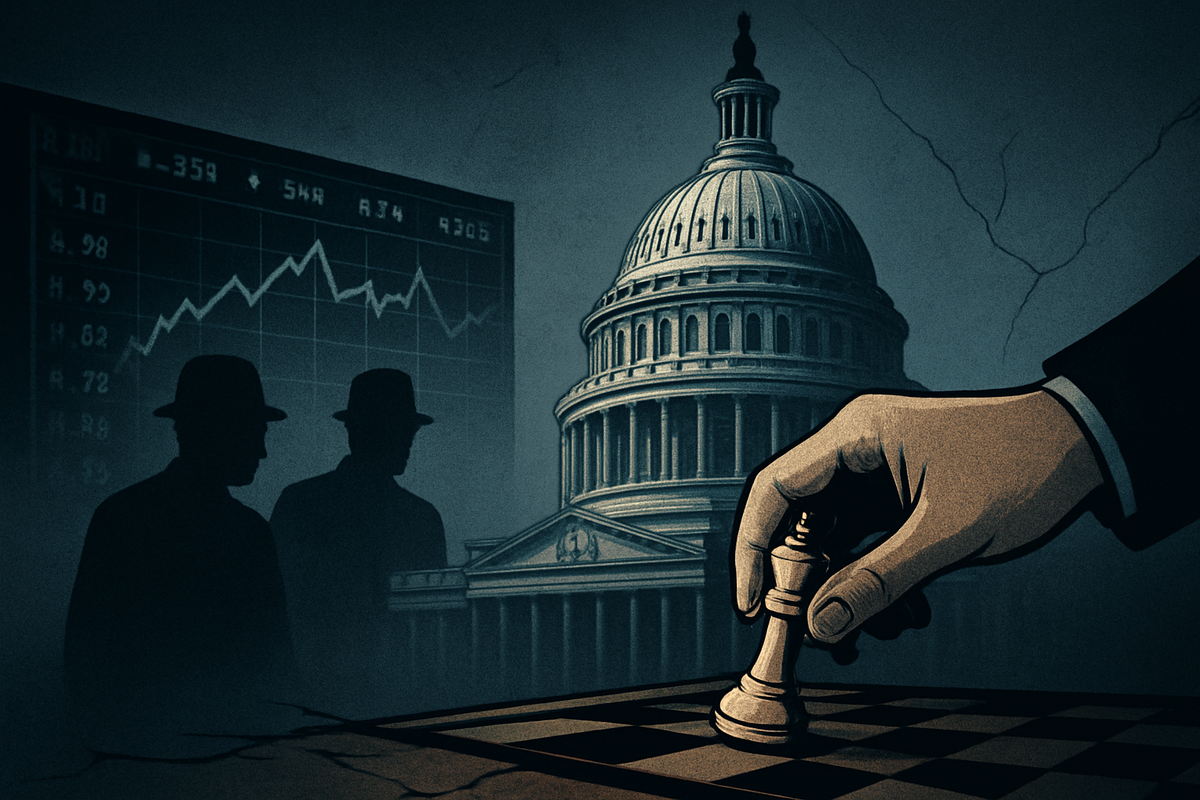
Washington D.C. – December 4, 2025 – A persistent and increasingly vocal debate continues to plague the halls of Congress, centering on allegations that elected officials are leveraging their unique legislative insights for personal financial gain in the stock market. Reports and investigations consistently highlight a concerning trend: members of Congress, and often their immediate families, appear to outperform the broader market, fueling public suspicion of insider trading and eroding trust in the integrity of government and financial markets alike.
This ongoing controversy, intensified by recent studies and specific examples of opportune trades, has spurred renewed bipartisan efforts to enact stricter regulations, potentially culminating in outright bans on stock trading by lawmakers. The perceived ethical breach not only undermines public confidence but also raises fundamental questions about fairness in the market and whether legislative priorities are truly aligned with the public interest or influenced by personal portfolios.
A Pattern of Suspicious Gains and Legislative Influence
The allegations of Congressional stock market outperformance are not new, but recent analyses have brought the issue into sharper focus. A 2024 report indicated that a significant number of trading members of Congress outperformed the S&P 500, with some more than doubling the market's returns. Further investigations, such as a New York Times study between 2019 and 2021, identified thousands of trades that presented potential conflicts of interest, often aligning with lawmakers' committee assignments. A 2025 Harvard study also highlighted over 2,000 trades by more than 50 members involving companies affected by administration tariffs.
The timeline of these allegations features several high-profile instances:
- The 2020 COVID-19 Pandemic Scandal: Weeks before the full economic impact of the COVID-19 pandemic became public, several senators faced scrutiny for significant stock sales after receiving confidential briefings. Among them, former Senator Richard Burr (R-NC) allegedly sold between $628,000 and $1.72 million in stock. Similar sales were reported by former Senator Kelly Loeffler (R-GA), Senator Jim Inhofe (R-OK), and Senator Dianne Feinstein (D-CA), with Senator Feinstein notably selling shares in Allogene Therapeutics (NASDAQ: ALLO) valued between $1.5 million and $6 million. Former Senator David Perdue (R-GA) also made numerous transactions, including purchasing approximately $185,000 in DuPont (NYSE: DD) shares, a personal protective equipment company, around the time of Senate briefings. While Department of Justice probes were initiated, no charges were ultimately brought against these individuals.
- Ongoing Scrutiny of Rep. Nancy Pelosi (D-CA): The investment portfolio of her husband has been a recurring subject of media attention, with reports in 2024 and 2025 highlighting substantial gains. A notable instance involved the sale of at least $500,000 in Visa (NYSE: V) stock months before the Justice Department announced an antitrust investigation into the firm.
- Recent Allegations (2023-2024): Rep. Marjorie Taylor Greene (R-GA) notably purchased technology stocks shortly before a presidential announcement pausing tariffs, and Senator Tommy Tuberville (R-AL) sold Apple (NASDAQ: AAPL) stock prior to a tariff announcement that caused share prices to fall. Additionally, an August 2024 report identified at least eight members of Congress, including Rep. Casten, Rep. Landsman, and Sen. Whitehouse, for potentially violating the STOCK Act by failing to disclose trades in a timely manner.
Public reaction to these events has been overwhelmingly negative, contributing to a significant erosion of trust in government institutions. Polling consistently shows bipartisan support for a ban on congressional stock trading, reflecting a widespread belief that lawmakers prioritize personal enrichment over public service. This sentiment is so strong that some investors even follow congressional trades, with exchange-traded funds (ETFs) like NANC (tracking Democratic congressional trades) and KRUZ (tracking Republican congressional trades) emerging, which have reportedly outperformed the S&P 500.
Market Implications: Fair Play Under Threat
The capital gains problem among Congressional leaders poses significant, albeit often indirect, implications for public companies and the broader market. While direct "winners" from legislative influence are often the politicians themselves, the integrity of the market suffers, creating an uneven playing field.
The primary concern is the potential for conflicts of interest. When legislators hold stock in companies or sectors they regulate, there's an inherent risk that their policy decisions could be swayed by personal financial incentives rather than the public good. This can lead to market distortions, where certain companies might indirectly benefit from favorable legislation, contracts, or regulatory environments influenced by a lawmaker's holdings. Conversely, companies that are not politically connected, or those whose interests conflict with a legislator's portfolio, could find themselves at a disadvantage.
Furthermore, the perception of insider trading undermines investor confidence. If average investors believe that a select few have access to privileged information and can profit from it, it eradicates faith in the fairness and transparency of the market. This can deter participation from retail investors and foster a sense of distrust that can have long-term consequences for market liquidity and stability. Companies implicated, even tangentially, in such scandals face significant reputational risk, which can impact their stock performance, consumer perception, and ability to attract investment. For example, Visa (NYSE: V) faced increased scrutiny when a major stock sale by a congressional spouse preceded an antitrust investigation. The existence of "congressional trading" ETFs like NANC and KRUZ, while demonstrating a market attempt to capitalize on this phenomenon, simultaneously highlights the pervasive belief in an unfair advantage, turning a serious ethical issue into a speculative investment strategy.
A Wider Lens: Ethics, Policy, and Historical Echoes
The ongoing debate over congressional stock trading is not an isolated incident but rather a critical juncture in broader trends concerning financial ethics, government transparency, and public accountability. It highlights a growing demand for stricter ethical standards for public servants, mirroring increased scrutiny across various sectors of the financial industry. The ripple effects extend beyond direct market impact, potentially undermining public trust in legislative outcomes and even the rule of law itself, as studies suggest declining trust in Congress can lead to reduced compliance with laws.
The existing regulatory framework, primarily the Stop Trading on Congressional Knowledge (STOCK) Act of 2012, has proven largely insufficient. While the STOCK Act explicitly affirmed that insider trading laws apply to Congress and mandated public disclosure of trades, its enforcement has been weak. Critics point to a lack of prosecutions, minimal penalties for late disclosures, and loopholes that allow lawmakers to own stocks in industries they oversee. This has led to a paradoxical outcome where transparency, instead of building trust, has often reinforced public perception of corruption.
In response to the STOCK Act's shortcomings and persistent public outcry, a wave of new, more stringent legislative proposals has emerged in 2025. The Restore Trust in Congress Act, introduced in September 2025, aims for a comprehensive ban on stock ownership and trading by members of Congress, their spouses, and dependent children, with strong enforcement provisions. Similarly, the Halting Ownership and Non-Ethical Stock Transactions (HONEST) Act, which advanced in the Senate in July 2025, proposes an immediate ban on stock purchases and requires divestment for certain officials. These bills, along with the Bipartisan Ban on Congressional Stock Ownership Act of 2023 (H.R.1679), signal a significant policy shift from mere disclosure to outright prohibition, reflecting a growing bipartisan consensus on the need for reform. House Minority Leader Hakeem Jeffries' public endorsement of a stock trading ban in April 2025 further underscores this momentum.
Historically, the issue of public officials using their positions for financial gain is deeply rooted in American politics. From the 1789 Revolutionary War Bonds Scandal, where lawmakers profited from foreknowledge of bond stabilization, to the 1870s railroad stock options offered to influence legislation, and more recent events like Rep. Spencer Bachus's opportune market bets in 2008 after private briefings, the pattern of alleged self-enrichment persists. These historical precedents underscore the enduring challenge of balancing personal financial freedom with the ethical demands of public service.
What Comes Next: A Crossroads for Congressional Ethics
The coming months and years will be crucial in determining the future of stock trading by Congressional leaders. The legislative momentum behind new, stricter bans suggests that the current state of affairs is increasingly untenable.
In the short-term, we can expect continued public pressure and vigorous debate surrounding the proposed bills, particularly the Restore Trust in Congress Act and the HONEST Act. The strong bipartisan support for these measures indicates a significant chance of passage, potentially transforming the landscape of financial ethics in Washington. Lawmakers who currently trade stocks may begin to explore options like blind trusts or proactive divestment in anticipation of new rules. For investors, the continued performance of "congressional trading" ETFs might remain a curious watchpoint, though their long-term viability would be threatened by a comprehensive ban.
In the long-term, if a comprehensive ban on individual stock ownership and trading is enacted, it could usher in an era of significantly increased public trust in Congress and the financial markets. This would remove a persistent source of ethical controversy and align the financial interests of lawmakers more closely with the public they serve. The market could benefit from a perceived increase in fairness and a reduction in politically motivated distortions. However, implementing and enforcing such a ban will present its own challenges, requiring clear guidelines and robust oversight mechanisms to prevent circumvention.
Potential strategic pivots for lawmakers could include shifting investments into diversified mutual funds, ETFs, or government bonds, which are typically exempt from proposed bans. Market opportunities might emerge for financial advisors specializing in blind trusts or compliant investment strategies for public officials. Conversely, challenges could arise from the divestment process itself, particularly for those with substantial and complex portfolios. The most optimistic scenario envisions a Congress where financial decisions are made solely based on public interest, free from the shadow of personal stock gains, thereby strengthening democratic institutions and market integrity.
A Call for Accountability and Trust
The capital gains problem among Congressional leaders represents a critical juncture for American democracy and its financial markets. The persistent allegations of outperformance, fueled by legislative influence, have undeniably eroded public trust and raised serious questions about the fairness of both political and economic systems.
The ineffectiveness of the existing STOCK Act has paved the way for a strong bipartisan push towards more stringent regulations, with several bills currently in play that propose outright bans on stock trading by lawmakers and their families. This legislative momentum, coupled with overwhelming public demand for reform, signals a potential paradigm shift in congressional ethics.
Moving forward, investors and the public alike should closely monitor the progress of these proposed bills. The passage and robust enforcement of a comprehensive stock trading ban would be a significant step towards restoring faith in government and ensuring a more equitable financial landscape. The ultimate significance of this moment lies in the enduring struggle to balance personal financial freedoms with the ethical obligations of public service, with the outcome determining whether the public's trust in its elected officials and the markets can truly be rebuilt.
This content is intended for informational purposes only and is not financial advice