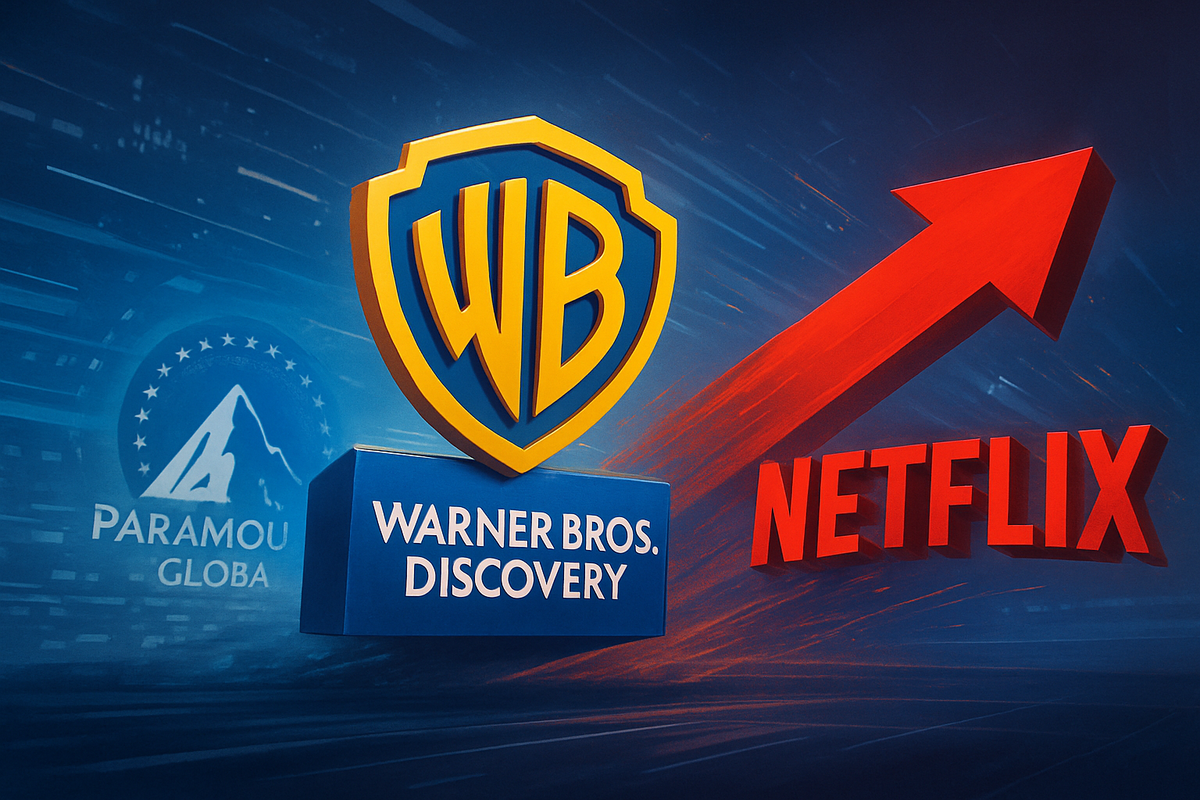
Warner Bros. Discovery (NASDAQ: WBD) has been at the epicenter of a dramatic bidding war throughout December 2025, sending ripples across the media and entertainment industry. What began as a strategic review of the company's assets culminated in a high-stakes standoff between streaming giant Netflix (NASDAQ: NFLX) and a hostile takeover bid from Paramount Skydance. The outcome, with WBD's board firmly rejecting Paramount's overtures in favor of the Netflix deal, signals a pivotal moment for the future of content creation and distribution.
This intense market activity has seen WBD's stock experience considerable volatility, yet an overall upward trend, reflecting the premium placed on its valuable content library and studios. The saga underscores the relentless pursuit of scale and intellectual property in a rapidly evolving media landscape, forcing companies to make strategic choices that will define their trajectories for years to come.
A December Defined by Bids and Rejections
The drama surrounding Warner Bros. Discovery intensified in early December 2025, following a strategic review initiated by the company in late October to explore alternatives to its previously announced company split. This review quickly transformed into a full-blown acquisition battle for its prized assets.
On December 5, 2025, Warner Bros. Discovery (NASDAQ: WBD) announced a definitive agreement for Netflix (NASDAQ: NFLX) to acquire its "Warner Bros." segment, encompassing its illustrious film and television studios, along with its streaming services HBO Max and HBO. This cash and stock transaction was valued at $82.7 billion (with an equity value of $72 billion), translating to $27.75 per WBD share. The deal was structured with a contingency: the prior separation of WBD's Global Networks division, "Discovery Global," which is slated to be spun off as a new publicly-traded company in Q3 2026. The market reacted positively to this announcement, with WBD's stock gaining 6.28% on the day.
However, the calm was short-lived. Just three days later, on December 8, 2025, Paramount Skydance launched an unsolicited, all-cash hostile takeover bid for the entirety of Warner Bros. Discovery. This aggressive offer valued WBD at a higher $108.4 billion, or $30 per share, with Paramount aiming to take its case directly to WBD shareholders. Initial market reactions to Paramount's bid saw WBD shares drop by 3.4% as investors weighed the competing proposals.
The climax of this December drama arrived on December 17, 2025, when Warner Bros. Discovery's Board of Directors unanimously rejected Paramount Skydance's hostile bid. The board emphatically reiterated its support for the Netflix combination, deeming it the "superior" offer. Their rejection cited several critical concerns, including inadequate value, significant risks, and costs imposed on WBD shareholders. The board also raised questions about Paramount Skydance's financing, accusing them of misleading shareholders about a "full backstop" from the Ellison family for its $40.65 billion equity commitment, stating no such commitment existed. Furthermore, WBD highlighted that Paramount's offer failed to account for a potential $2.8 billion termination fee WBD would owe Netflix if their deal was abandoned. Adding to Paramount's woes, Affinity Partners, a key backer of their bid, withdrew its support, further weakening the hostile takeover's financial foundation. Netflix, predictably, welcomed WBD's board recommendation, reinforcing its belief in the superiority of their merger agreement.
Potential Winners and Losers in the Media Arena
The intense bidding war for Warner Bros. Discovery (NASDAQ: WBD) has clear implications for the key players involved, shaping their strategic directions and market positions. With the WBD board's rejection of Paramount Skydance's offer, the path forward largely favors Netflix (NASDAQ: NFLX) and a restructured Warner Bros. Discovery.
Netflix (NASDAQ: NFLX) stands to be a significant winner. By acquiring the "Warner Bros." segment, which includes the iconic film and television studios, HBO Max, and HBO, Netflix will dramatically expand its content library, bolster its production capabilities, and gain access to a treasure trove of intellectual property. This acquisition would solidify Netflix's position as the undisputed global leader in streaming, providing a competitive edge against rivals and potentially accelerating its subscriber growth and profitability. The deal, valued at $82.7 billion, represents a strategic coup that could redefine the streaming landscape for the next decade.
Warner Bros. Discovery (NASDAQ: WBD), post-Netflix deal, will effectively split into two entities. The "Warner Bros." segment will integrate into Netflix, while the "Discovery Global" division, comprising its global linear networks, will be spun off as a new publicly-traded company in Q3 2026. For shareholders, the Netflix deal offers a clear valuation of $27.75 per WBD share for the acquired portion, providing a defined return. The remaining "Discovery Global" entity will need to forge its own path, focusing on its core linear television assets. While this path may present challenges in a cord-cutting environment, it also allows for a more focused strategy and potentially greater agility without the complexities of the studio and streaming businesses.
Conversely, Paramount Global (NASDAQ: PARA) and its partner Skydance appear to be the primary losers in this scenario. Their aggressive, all-cash hostile bid for the entirety of WBD, valued at $108.4 billion, was not only rejected but also publicly scrutinized for its financing and perceived inadequacy. The failure to acquire WBD leaves Paramount in a challenging position, still grappling with its own scale issues in a consolidating industry. The public rejection and the questions raised about their financial backing could damage their reputation and make future large-scale M&A attempts more difficult. Without WBD's assets, Paramount will need to re-evaluate its growth strategy and find alternative ways to compete against the now even larger Netflix.
The broader media landscape also sees shifts. Smaller content producers and distributors might face increased pressure as the industry consolidates around a few dominant players. However, specialized content creators or niche platforms could also find new opportunities to partner with or be acquired by these larger entities seeking to diversify their offerings.
Broader Industry Implications and Future Trends
The Warner Bros. Discovery (NASDAQ: WBD) acquisition saga is more than just a corporate transaction; it's a significant indicator of broader industry trends and the relentless pursuit of scale in the media and entertainment sector. The proposed acquisition of WBD's "Warner Bros." segment by Netflix (NASDAQ: NFLX) underscores the continued consolidation in streaming and content creation, signaling a future where a few dominant players control vast libraries of intellectual property and distribution channels.
This event fits squarely into the trend of "streaming wars" evolving into "content wars," where owning exclusive, high-quality content is paramount. Netflix's move to acquire a legacy studio with a rich history like Warner Bros. demonstrates a shift from pure organic growth to strategic acquisitions to maintain market leadership and subscriber engagement. It suggests that even the largest streaming services recognize the diminishing returns of licensing content and the imperative of direct ownership. This could trigger a new wave of M&A activity, as other major studios and tech giants look to fortify their own content arsenals against a newly empowered Netflix. Competitors like Disney (NYSE: DIS), Comcast (NASDAQ: CMCSA) with Peacock, and Amazon (NASDAQ: AMZN) with Prime Video will undoubtedly feel the ripple effects, potentially prompting them to double down on their own content investments or seek similar transformative acquisitions.
Regulatory bodies will also be closely watching such large-scale mergers. While the WBD board stated their analysis found "no material regulatory difference" between the Netflix offer and Paramount's bid, the sheer size of the combined Netflix-Warner Bros. entity could invite increased scrutiny regarding market dominance, antitrust concerns, and potential impacts on consumer choice and competition. Policy implications might include stricter guidelines for future media mergers or increased oversight on content pricing and distribution. Historically, major media consolidations, such as the Time Warner-AOL merger or the Disney-Fox acquisition, have faced extensive regulatory reviews, setting precedents for the challenges Netflix and WBD may encounter.
The rejection of Paramount Skydance's hostile bid also highlights the importance of financial stability and a clear strategic vision in M&A. WBD's board's concerns about Paramount's "inadequate value," "shaky financing," and high leverage ratio serve as a cautionary tale for future unsolicited bids in the industry. It emphasizes that while scale is desired, financial prudence and a well-articulated integration plan are equally crucial for securing board and shareholder approval. This could lead to a more cautious approach from potential acquirers, favoring friendly mergers with clear financial benefits and fewer risks.
What Comes Next: Navigating a Transformed Landscape
With Warner Bros. Discovery's (NASDAQ: WBD) board firmly endorsing the Netflix (NASDAQ: NFLX) acquisition of its "Warner Bros." segment, the media landscape is poised for significant shifts. The immediate future will focus on the regulatory approval process for the Netflix-Warner Bros. deal. Given the scale of the acquisition, this process could be lengthy and involve thorough antitrust reviews, potentially extending into late 2026. Both companies will need to work closely with regulators to address any concerns regarding market concentration and competition.
In the short term, WBD's stock performance will likely remain sensitive to news regarding the deal's progress, regulatory hurdles, and the eventual spin-off of "Discovery Global." Investors will closely monitor any further attempts by Paramount Skydance or other parties to disrupt the Netflix agreement, though the board's decisive rejection makes such a move less likely but not impossible. The "Discovery Global" spin-off in Q3 2026 will create a new publicly traded entity, and its initial market reception and strategic direction will be a key area of focus for investors interested in linear television and global factual entertainment.
Long-term possibilities for Netflix include an accelerated global subscriber growth, enhanced content differentiation, and potentially increased pricing power due to its expanded content library. The integration of Warner Bros.' creative talent and production infrastructure will be crucial. Netflix will need to strategically manage the transition of HBO Max and HBO content and subscribers, ensuring a smooth migration and maintaining the brand equity of these premium offerings. This could involve strategic pivots in content commissioning, global rollout plans, and even a re-evaluation of its existing content strategy to leverage the newly acquired IP.
For the spun-off "Discovery Global," strategic adaptations will be paramount. Operating as a standalone entity focused on global linear networks, it will need to innovate within the traditional television space, explore new distribution models, and potentially divest non-core assets to remain competitive. Market opportunities might emerge in niche content areas or through partnerships that leverage its global reach. However, challenges will include navigating the ongoing decline of linear TV viewership and competing for advertising dollars in an increasingly digital world.
Potential scenarios and outcomes include a successful integration leading to a stronger, more dominant Netflix, or regulatory challenges forcing concessions. Another scenario could see "Discovery Global" struggling to find its footing as an independent company, or conversely, thriving by focusing on its core strengths. Investors should watch for updates on regulatory approvals, the performance of Netflix's newly integrated content, and the strategic direction and financial health of the independent "Discovery Global" entity.
A New Chapter for Media: Key Takeaways and Future Watchpoints
The December 2025 bidding war for Warner Bros. Discovery (NASDAQ: WBD) marks a significant inflection point in the media and entertainment industry, underscoring the relentless drive for scale, content ownership, and streaming dominance. The unanimous rejection of Paramount Skydance's hostile bid in favor of Netflix's (NASDAQ: NFLX) acquisition of the "Warner Bros." segment is the pivotal takeaway, signaling a clear strategic direction for WBD and a powerful consolidation move by Netflix.
Moving forward, the market will assess the implications of a super-sized Netflix, which will now wield an even more formidable content library and production capabilities. This merger is poised to reshape the competitive landscape, potentially intensifying pressure on other major studios and streaming services to either acquire or merge to remain competitive. The strategic decision by WBD to separate its "Discovery Global" linear networks business further highlights the ongoing divergence between traditional media and the burgeoning streaming economy.
The lasting impact of this event will be seen in how Netflix leverages its newly acquired intellectual property, how it integrates the creative powerhouses of Warner Bros. and HBO, and how effectively it translates this expanded scale into sustained subscriber growth and profitability. For the independent "Discovery Global," its ability to thrive in a mature linear television market will be a crucial test, demanding innovative strategies to retain audiences and attract advertisers.
Investors should closely watch several key areas in the coming months. Firstly, monitor the progress and outcome of regulatory approvals for the Netflix-Warner Bros. deal, as any significant hurdles or required divestitures could alter the financial and strategic benefits. Secondly, pay attention to Netflix's integration strategy and its financial performance post-acquisition, particularly regarding subscriber numbers, content spending, and profitability. Thirdly, track the spin-off of "Discovery Global" in Q3 2026 and its subsequent market performance, strategic announcements, and financial results. Finally, observe how competitors react to this major consolidation, as their strategic responses could trigger further M&A activity or shifts in content investment across the industry.
This content is intended for informational purposes only and is not financial advice