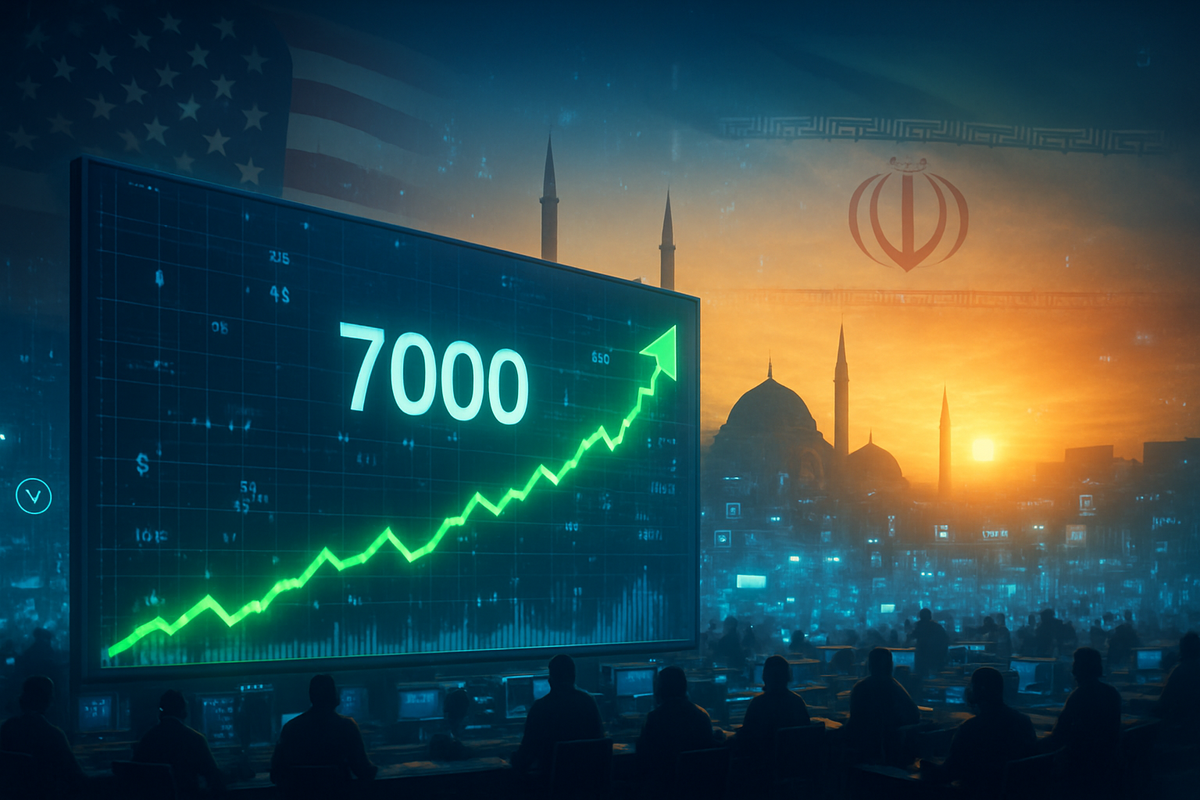
ISLAMABAD/WASHINGTON — On April 15, 2026, global financial markets achieved a historic milestone as the S&P 500 closed above the 7,000-point mark for the first time, effectively erasing all losses sustained during the 40-day conflict known as Operation Epic Fury. The surge comes as diplomatic optimism reaches a fever pitch following reports from the Islamabad peace negotiations, where U.S. and Iranian officials are reportedly nearing a framework for long-term de-escalation.
The market’s remarkable recovery was galvanized by comments from President Donald Trump, who told reporters early Wednesday that the conflict is "very close to over." Trump noted that Iran’s military capacity has been significantly diminished, signaling that the administration is ready to pivot from kinetic operations to a "comprehensive regional security architecture." While a final deal remains unsigned, the prospect of a diplomatic resolution has unleashed a "peace dividend" across equity markets, particularly within the technology and financial sectors.
The Path to Peace: From Operation Epic Fury to Islamabad
The conflict began on February 28, 2026, with a series of coordinated U.S. and Israeli airstrikes targeting Iranian nuclear facilities and high-ranking government officials. The operation, which led to the death of Supreme Leader Ali Khamenei, triggered a sharp 10% correction in the S&P 500 throughout March. Iran’s retaliation—a "managed transit" blockade of the Strait of Hormuz—sent Brent crude oil prices soaring to $120 per barrel, fueling global inflation fears and driving the CBOE Volatility Index (VIX) to its highest levels in years.
However, the tide began to turn in early April when Pakistan emerged as a central mediator, hosting high-level delegations at the Serena Hotel in Islamabad. Led by Vice President JD Vance and Iranian Parliamentary Speaker Mohammad Bagher Ghalibaf, the talks survived a rocky first round on April 11-12. Despite disputes over a 20-year nuclear moratorium, a fragile two-week ceasefire was established. President Trump’s recent assertions that a second round of talks is imminent have solidified investor confidence that the worst of the energy supply disruptions is over.
Market Winners and Losers in the Wake of De-escalation
The rapid "V-shaped" recovery of the markets has created distinct categories of winners and losers. Technology giants have led the charge back to record highs, with Nvidia (NASDAQ: NVDA) serving as the primary engine of the S&P’s 7,000-point breakthrough. Similarly, Palantir Technologies (NYSE: PLTR) saw a significant boost as its logistics and battlefield management software became integral to the U.S. military’s rapid response and subsequent stabilization efforts in the Middle East.
On the other hand, the defense sector, which initially surged during the conflict's opening weeks, has begun to see some profit-taking as the "war premium" fades. Lockheed Martin (NYSE: LMT) and RTX Corporation (NYSE: RTX) remain up significantly for the year due to emergency procurement contracts for Tomahawk and Patriot missiles, but their upward momentum has slowed in favor of growth-oriented tech. Conversely, the transportation and logistics sectors, including United Airlines (NASDAQ: UAL) and FedEx (NYSE: FDX), have seen a massive relief rally as oil prices stabilized in the mid-$90s, alleviating the crushing pressure of high fuel costs that had decimated their margins in March.
Geopolitical Shifts and Historical Precedents
The Islamabad negotiations represent a significant shift in the global diplomatic landscape. By utilizing Pakistan as a neutral ground, the U.S. has navigated around traditional European mediation, which had largely failed during the previous decade. This move echoes the historic 1972 opening to China, where a regional intermediary was used to break a long-standing deadlock. Analysts suggest that if successful, these talks could fundamentally reorder Middle Eastern power dynamics, potentially leading to a normalized trade flow that bypasses the volatility of the Strait of Hormuz.
The broader market impact of this event fits into a historical pattern where major geopolitical shocks—such as the 1991 Gulf War or the 2003 invasion of Iraq—initially trigger deep sell-offs followed by aggressive "relief rallies" once the duration and outcome of the conflict become predictable. The current situation is unique, however, due to the sheer speed of the Iranian leadership's collapse and the rapid transition to diplomacy, which has allowed the S&P 500 to hit a major psychological milestone (7,000) much faster than most analysts had predicted at the start of the year.
The Road Ahead: April 21st and Beyond
The short-term focus for investors remains firmly fixed on the April 21 deadline, when the current ceasefire is set to expire. A "strategic pivot" is expected from the White House, moving from a naval blockade to a system of "monitored maritime corridors." If the second round of Islamabad talks produces a signed memorandum of understanding, market analysts at Goldman Sachs (NYSE: GS) and JPMorgan Chase & Co. (NYSE: JPM) suggest the S&P 500 could sustain its 7,000 level and potentially climb further toward 7,200 by early summer.
However, challenges remain. Any breakdown in communication or a "rogue" retaliation by Iranian proxy groups could reignite volatility. Investors should also watch for a potential "sell-the-news" event once a deal is officially signed, as the market may have already priced in the best-case scenario. For the long term, the primary opportunity lies in the reconstruction of regional infrastructure and the potential reopening of Iranian energy markets under a new, supervised regime, which would provide a long-term bearish catalyst for oil prices and a bullish one for global consumer spending.
Summary and Investor Outlook
The spring of 2026 will likely be remembered as one of the most volatile yet rewarding periods in recent market history. The move from the brink of a systemic energy crisis on February 28 to a record-breaking market high on April 15 underscores the resilience of the U.S. economy and the high stakes of modern diplomacy. Key takeaways for investors include the importance of maintaining exposure to "crisis-critical" tech and the value of looking past headline-driven volatility toward underlying diplomatic trends.
As we move forward, the "Islamabad Accord"—should it come to fruition—will be the defining catalyst for the second half of 2026. While the S&P 500 at 7,000 feels like a peak to some, it may actually be the baseline for a new era of relative stability in the Middle East. Investors should keep a close eye on energy prices and diplomatic dispatches from Pakistan over the next seven days, as they will dictate the market's trajectory for the remainder of the quarter.
This content is intended for informational purposes only and is not financial advice.