The global cocoa market, which only a year ago was reeling from record-high prices and severe shortages, has taken a dramatic and painful turn. On March 1, 2026, the Ivorian government, acting through the Conseil du Café-Cacao (CCC), implemented a staggering 57.1% reduction in the farmgate price for the mid-crop season. Effective immediately, the price paid to farmers dropped from the main-crop high of CFA 2,800 per kilogram to just CFA 1,200. This drastic move comes as the world's largest producer faces a mounting surplus of unsold beans, with reports from the interior of the country suggesting that over 200,000 tons of cocoa are currently at risk of rotting in village warehouses and port facilities.
The price cut is a desperate attempt by the Ivorian authorities to realign with a global market that has cooled significantly after the "chocolate hyperinflation" of 2024 and 2025. By bringing the mid-crop season forward by a month, the government hoped to stimulate exports and clear the massive backlog of inventory that traders had refused to buy at the previous, government-mandated premium. However, the immediate fallout has been a wave of farmer strikes and a profound shock to the global supply chain, as the industry transitions from a period of scarcity to an unexpected and poorly managed glut.
A Perfect Storm of Bumper Crops and Faltering Demand
The seeds of this crisis were sown during the 2025 main-crop harvest, which saw exceptionally favorable weather across West Africa. Frequent rains and mild temperatures led to a bumper crop that far exceeded initial estimates. However, the CCC had set the farmgate price at a record CFA 2,800 (approximately $4,190 per tonne) in October 2025, betting that global prices would remain elevated. Instead, high retail prices finally triggered a "breaking point" for consumers in Europe and North America. As chocolate manufacturers hiked prices to cover their 2024 costs, demand plummeted, leaving the Ivorian government holding the bag for a harvest that the world was no longer willing to buy at premium rates.
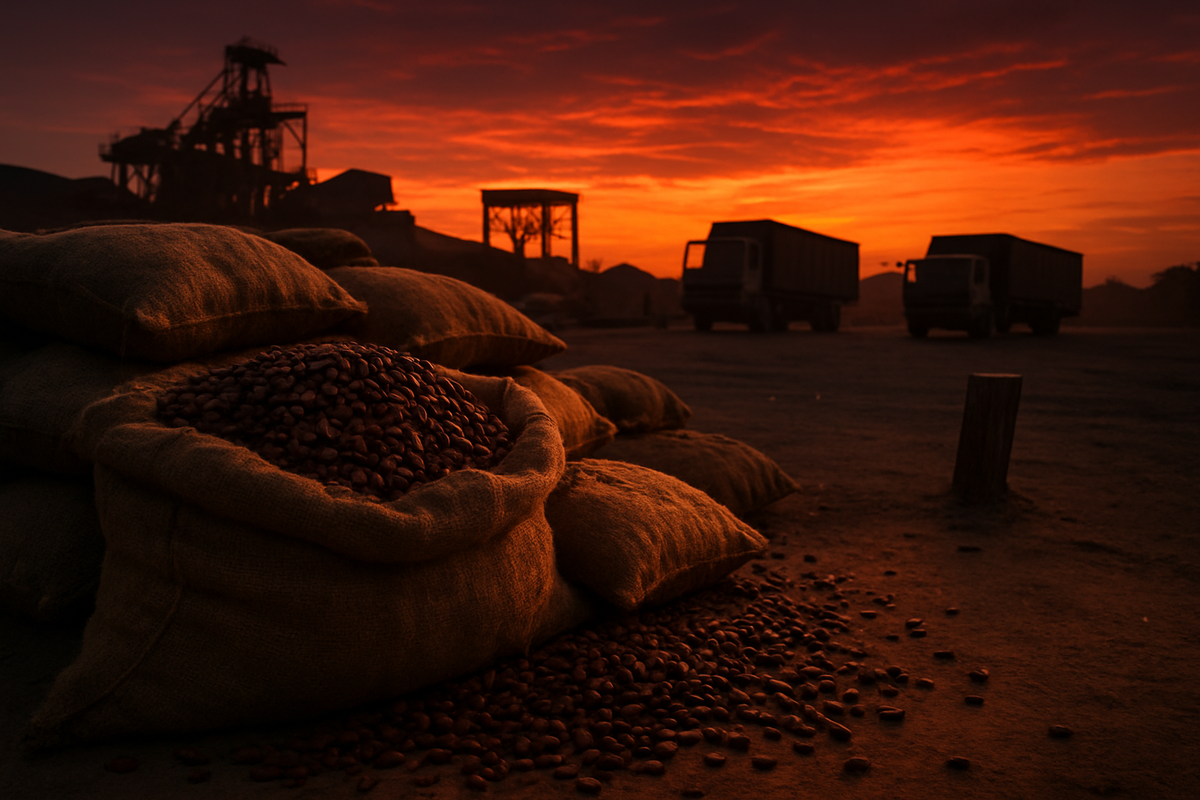
By February 2026, the disconnect between domestic fixed prices and the falling international market reached a crisis point. Ivorian cocoa was priced nearly 75% higher than the prevailing world market rates, leading to a complete standstill in purchasing. In cocoa-growing hubs like San Pedro and Duekoue, the physical manifestations of this policy failure became impossible to ignore. Farmers reported thousands of bags of beans accumulating in mud-walled warehouses, where tropical humidity began to set in, causing the crop to mold and rot. The farmer union, SYNAPCI, led by vocal advocates for the rural poor, launched a series of strikes in late January, demanding the resignation of CCC leadership and emergency subsidies that never arrived.
Corporate Whiplash: Winners and Losers in the Value Chain
The sudden price collapse has created a "corporate whiplash" effect for the world’s largest chocolate makers. Mondelez International (NASDAQ: MDLZ), the maker of Cadbury and Oreo, warned investors of a potential $500 million hit to its first-quarter earnings for 2026. The loss stems largely from inventory revaluations; the company is currently sitting on expensive stockpiles purchased during the 2025 peak, while the market value of those assets is now cratering. To mitigate the damage, Mondelez has accelerated a strategy of "product re-engineering," launching more "filled" bars that utilize higher proportions of caramel, nuts, and nougat to reduce the net cocoa content per unit.
For The Hershey Company (NYSE: HSY), the situation has been even more dire. The company recently reported a 60% decline in annual earnings as it struggled to pass on legacy cocoa costs to consumers who have increasingly pivoted to cheaper, non-chocolate snacks. Hershey is currently undergoing a massive strategic pivot, aggressively marketing its "salty snacks" and gummy portfolios to decouple its bottom line from the volatile cocoa bean. Meanwhile, Barry Callebaut (SIX: BARN), the world’s largest industrial chocolate producer, reported a 22% decline in sales volumes in its cocoa division. The firm has responded by fast-tracking its "cocoa-free" chocolate alternatives, using fermented cereals and sunflower seeds, anticipating that the extreme volatility of the last two years has permanently damaged the traditional cocoa trade.
Analyzing the Structural Shift and Market Significance
The March 2026 price slash marks a pivotal moment in the history of the "Living Income Differential" (LID) and the state-controlled pricing models used by Ivory Coast and Ghana. For years, these nations argued that fixed, higher prices were necessary to protect farmers from market volatility. However, this event demonstrates the inherent risk of such systems: when the state sets prices too high during a period of falling demand, it creates an artificial surplus that the market cannot absorb. The "demand destruction" observed in early 2026, where European grindings fell by 10%, serves as a stark warning that chocolate is a price-sensitive luxury, not a necessity.
Furthermore, this event fits into a broader trend of agricultural instability driven by climate volatility. The record highs of 2024 were caused by El Niño-related droughts, while the 2026 glut was caused by an unexpectedly perfect growing season. This "feast or famine" cycle is becoming the new normal for West African commodities. The ripple effects are already being felt by competitors in South America, particularly in Ecuador and Brazil, where farmers had ramped up production to capitalize on high prices, only to find themselves entering a market that is now oversupplied and under-demanded.
The Road Ahead: Strategic Pivots and Long-Term Outlook
In the short term, the market must digest the 200,000-ton surplus currently sitting in West Africa. While the lower prices should eventually stimulate demand, the "rotting cocoa" reports suggest that a significant portion of the current crop may be downgraded to sub-industrial grade, potentially tightening the supply of high-quality beans later in the year. Investors should expect continued volatility as the market searches for a new price floor. The Ivorian government is expected to face intense political pressure to reform the CCC, with potential moves toward a more flexible, market-linked pricing system to avoid future inventory traps.
Long-term, the industry is likely to see a permanent shift in product composition. The 2024-2026 "cocoa roller coaster" has incentivized major brands to permanently reduce their reliance on the bean. We are seeing the rise of "chocolate-flavored" products rather than "chocolate" products, a trend that could lead to a structural decline in global cocoa demand. For the farmers in the Ivory Coast, the danger is that the 57% price cut will lead to widespread farm abandonment, setting the stage for the next supply crunch in 2028 or 2029 as trees are left untended and vulnerable to disease.
Wrap-Up: What Investors Should Watch
The events of March 1, 2026, represent one of the most significant price corrections in the history of soft commodities. The primary takeaway for the market is that the era of "scarcity pricing" has ended, replaced by a painful realization that global demand has its limits. The immediate focus for investors should be on the upcoming quarterly reports from the major grinders and manufacturers, with a specific eye on "inventory write-downs" and "volume growth" metrics.
Moving forward, watch the "cocoa grinding" data from the European Cocoa Association and the National Confectioners Association. If these numbers do not show a significant rebound by the summer of 2026 despite the lower prices, it will indicate that the demand destruction of the previous two years has become structural. The lasting impact of this crisis will likely be a more cautious, diversified approach by chocolate giants, and a potential overhaul of how West African nations manage their most vital export.
This content is intended for informational purposes only and is not financial advice.