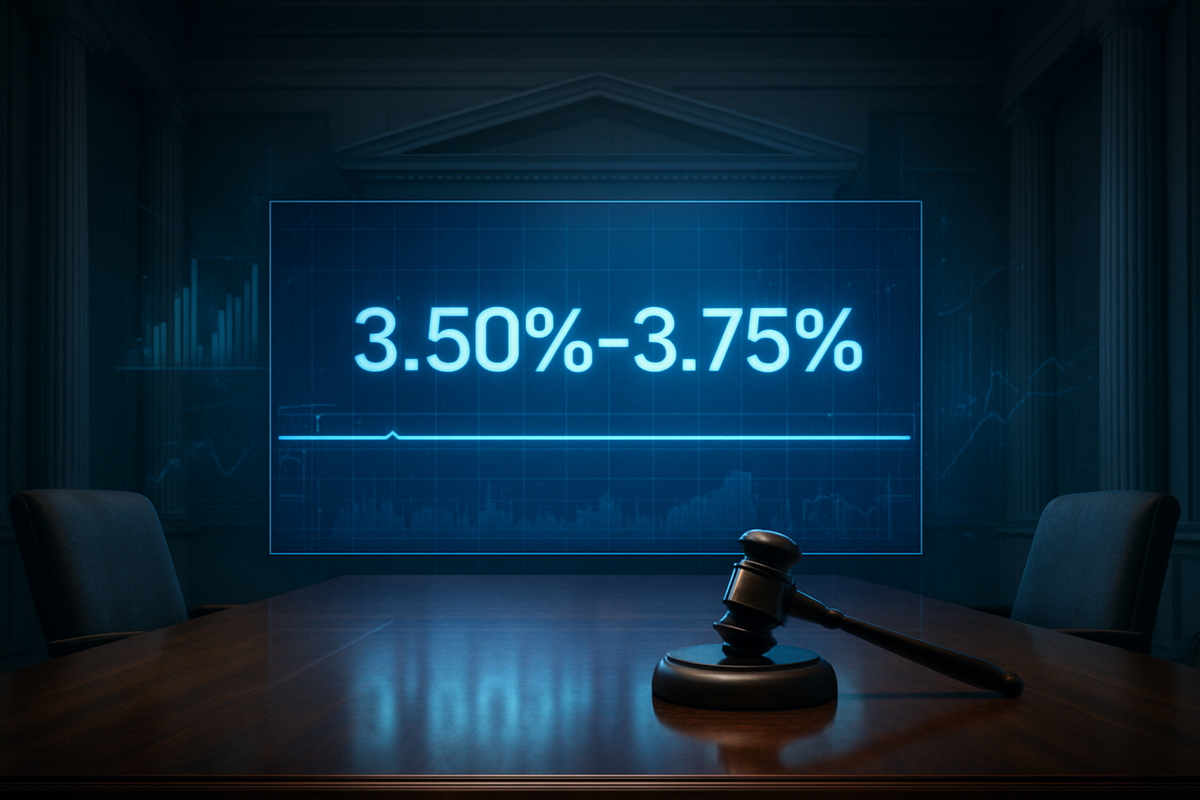
The Federal Reserve concluded its first policy meeting of the year on January 28, 2026, electing to maintain the federal funds rate at its current target range of 3.50% to 3.75%. This decision marks a "strategic pause" in the central bank's easing cycle, following three consecutive rate reductions in late 2025. While the move was widely anticipated by Wall Street, the focus of investors shifted rapidly to the Fed's updated outlook, which now forecasts two additional interest rate cuts later this year, likely beginning in the summer months as the central bank attempts to navigate a landscape of "sticky" inflation and a cooling labor market.
The immediate implications of this pause are a stabilization of the bond market and a renewed focus on corporate earnings rather than macro-economic shifts. By signaling that further relief is on the horizon but not yet immediate, Fed Chair Jerome Powell and his colleagues have effectively established a temporary plateau, forcing markets to digest the significant easing that occurred at the end of 2025. This "wait-and-see" approach reflects the Fed’s commitment to its 2% inflation target, even as political pressure and economic data present a complex path forward for the remainder of 2026.
A Contentious Hold: Inside the January FOMC Meeting
The Federal Open Market Committee (FOMC) meeting was characterized by a rare lack of unanimity, signaling deepening divisions within the central bank. While the majority voted to hold rates steady, two notable dissenters—Stephen Miran and Christopher Waller—voted for an immediate 25-basis-point cut. Their dissent was rooted in concerns over a "sluggish" hiring environment, despite a December jobs report that showed a headline gain of 584,000 positions. The majority, led by Chair Powell, argued that with inflation currently hovering at 2.7% and consumer spending remaining resilient, a pause was necessary to ensure that previous cuts do not reignite price pressures.
The timeline leading up to this January 30, 2026, report has been a volatile one. In the final quarter of 2025, the Fed moved aggressively to lower rates from their restrictive peaks, providing a tailwind for equities. However, entering the new year, "sticky" inflation components—particularly in housing and services—have proven difficult to dislodge. During his press conference, Powell emphasized that the U.S. economy remains on a "firm footing" and that the Fed would maintain its independence, a pointed remark given the public calls from the Trump administration for more aggressive easing and the ongoing leadership transition as Powell’s term as Chair is set to expire in May 2026.
Market reaction to the announcement was relatively muted, as the decision had been largely priced in by major institutions. The 10-year Treasury yield stabilized around 4.25%, which analysts suggest has created a valuation floor for riskier assets. However, the forecast for two additional cuts later in the year has provided a "dovish tilt" to the otherwise cautious message, keeping the door open for a more accommodative stance if the unemployment rate, currently at 4.4%, begins to climb more sharply in the spring.
Corporate Impact: Tech Triumphs as Banks Face Margin Pressure
The decision to hold rates steady while signaling future cuts has created a bifurcated environment for public companies. Growth-oriented technology firms have emerged as early winners. Apple Inc. (NASDAQ: AAPL) saw its shares rise over 2% following the meeting, bolstered by a blowout fiscal first-quarter revenue of $143.76 billion. The stabilization of yields has allowed high-valuation tech stocks to maintain their premiums, with NVIDIA Corporation (NASDAQ: NVDA) also seeing renewed interest as investors pivot back to the "organic execution" of AI-driven growth stories rather than obsessing over daily interest rate fluctuations.
In contrast, the banking sector is navigating a more challenging landscape. JPMorgan Chase & Co. (NYSE: JPM) reported a slight post-meeting bounce to trade up 1.8%, but the stock has struggled year-to-date. While higher rates for a longer period generally support net interest income, the Fed’s signaled "regime of easing" later this year threatens to compress margins. Bank of America Corporation (NYSE: BAC) and other major lenders are also contending with a "hiring recession" and heightened regulatory scrutiny, making the Fed’s pause a double-edged sword: it preserves current lending margins but delays the economic stimulus that typically drives loan demand.
The real estate and utility sectors have also seen notable shifts. NextEra Energy, Inc. (NYSE: NEE) has benefited as a "growth beneficiary" of the AI data center boom, with its dividend yield becoming more attractive as the Fed nears the end of its tightening concerns. Meanwhile, industrial real estate giant Prologis, Inc. (NYSE: PLD) has seen its valuation neutralized. While the pause prevents borrowing costs from dropping immediately, the promise of two cuts later this year offers a glimmer of hope for a sector that has been hampered by a high "cost of carry" for new developments and acquisitions.
The Significance of the "Strategic Pause"
The January 2026 meeting is a pivotal moment in the Fed’s broader strategy, representing a shift from active intervention to what analysts are calling "regime discovery." This event fits into a global trend where central banks are attempting to "soft-land" their economies without causing a recession or allowing inflation to spiral. The decision to hold rates despite political pressure underscores the Fed’s commitment to its mandate, echoing historical precedents like the 1995 mid-cycle adjustment where the Fed paused to evaluate data before making its next move.
This "strategic pause" also has significant ripple effects for global partners. As the U.S. holds rates steady, other central banks may be forced to delay their own easing cycles to prevent currency devaluation against a strong dollar. Domestically, the policy implications are tied closely to the 2026 fiscal outlook. With potential new tariffs and fiscal stimulus on the horizon, the Fed is wary of cutting too early and fueling a second wave of inflation. The tension between the executive branch’s demands for lower rates and the Fed’s data-dependent approach remains a primary source of market uncertainty.
Furthermore, the "low-fire/low-hire" dynamic in the labor market suggests that while mass layoffs are not occurring, the era of easy job switching and rapid wage growth has ended. The Fed’s focus on the 2.7% inflation rate over the 4.4% unemployment rate indicates a prioritization of price stability that could have lasting impacts on consumer confidence. If the Fed successfully navigates this plateau, it could set the stage for a period of sustained, moderate growth; if it waits too long to deliver the promised cuts, it risks a more pronounced economic downturn.
Looking Ahead: The Path to Summer Easing
In the short term, markets will likely remain in a state of "data dependency," where every CPI print and jobs report takes on outsized importance. The Fed has effectively locked itself into a schedule where the next major move is unlikely to occur until the June meeting. Strategic pivots will be required for companies that rely on cheap credit; the era of "free money" is definitively over, and corporate survival will depend on balance sheet health and cash flow generation rather than financial engineering.
Two primary scenarios emerge for the remainder of 2026. In a "Goldilocks" scenario, inflation continues its slow descent toward 2%, allowing the Fed to execute its two planned cuts in the summer and fall, thereby supporting a robust recovery in housing and small business lending. Conversely, if inflation remains stuck above 2.5%, the Fed may be forced to scrap its forecast for two cuts, leading to a "higher-for-longer" environment that could strain the banking sector and trigger a more significant correction in equity valuations.
Investors should also brace for a period of leadership transition. With Chair Powell’s term ending in May, the appointment of a successor will be a major market-moving event. Any candidate perceived as less independent or more "hawkish" could disrupt the current stability the Fed has fought to maintain. The "strategic pause" of January may be remembered as the final act of the Powell era, a careful attempt to balance the scales before handing over the reins of the world's most influential financial institution.
Conclusion: A Delicate Balancing Act
The Federal Reserve’s January 2026 meeting has provided a clear roadmap for the year: a period of stability followed by gradual easing. By holding rates at 3.50% to 3.75% and forecasting two cuts later in the year, the FOMC has signaled that it believes the worst of the inflationary era is behind us, but the job is not yet finished. The key takeaways for investors are clear: the central bank is prioritizing a sustainable path to 2% inflation over immediate economic stimulus, and internal divisions are growing as the economic data becomes increasingly mixed.
Moving forward, the market will likely reward companies with strong organic growth and "moats" that protect them from lingering high interest costs. UnitedHealth Group Incorporated (NYSE: UNH) and Marriott International, Inc. (NASDAQ: MAR) are examples of defensive and consumer-resilient stocks that may continue to outperform in this environment. As we look toward the spring, the labor market will be the primary indicator to watch. Any signs of a sudden spike in unemployment could force the Fed to accelerate its cutting timeline, while persistent inflation would do the opposite.
Ultimately, the significance of this meeting lies in its restraint. In an environment of political noise and economic transition, the Federal Reserve has chosen a path of caution. For the public and for investors, the coming months will be a test of patience, as the market waits to see if the Fed’s "strategic pause" is the final bridge to a more stable and prosperous economic regime.
This content is intended for informational purposes only and is not financial advice.