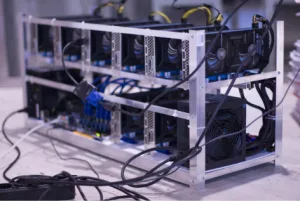
Mining Bitcoin is necessary to sustain the network because it was designed to facilitate issuing new coins and maintaining the decentralized nature of the ecosystem. However, what its creator, Satoshi Nakamoto, didn’t foresee is how this activity could become harmful for the environment as the number of miners boomed along with the demand for electricity and expensive hardware necessities,
If you are a new investor and want to learn how to buy Bitcoin, know that the resources required to mine it consist of electricity that can be anywhere from 200,000 to 300,000 kWh, according to the equipment miners use. If we put it in perspective, this amount of energy is the equivalent of powering approximately 20 houses for a year.
However, there’s the other side of the coin: Bitcoin is finite, so soon in history, we will mine the last BTC, and it will become more challenging to do so. Still, there must be more sustainable measures for mining the coin rather than relying on the same techniques, so here’s what the green future of Bitcoin mining could look like.
Bitcoin mining and artificial intelligence
As AI continues to overtake the crypto world, it is expected to improve the mining strategy. First, it could drive high-performance computing to sustain miners’ revenue, which is more difficult to manage considering the massive competition in Bitcoin mining. Nowadays, solo mining is considerably difficult as the mining activity requires a high supply of electricity and specialized ASIC (Application-Specific Integrated Circuit) technology, which is why most users join a mining pool to contribute to the activity.
Well, with the help of AI, their rewards could stabilize more, especially since they could combine AI workloads with Bitcoin mining, but this depends on how much AI will continue to drive miners’ interest. That’s why miners could expand their area of work rather than focus on only one sector.
Bitcoin mining and the halving event
The halving event happens about every four years, or at every 210,00 blocks, and has the purpose of halving the rewards miners get for their activity. The next halving is expected in 2028, when the reward will decrease from 3.125 BTC, as it is now, to 1.5625 BTC. While the halving is important for the cryptocurrency to keep its limited supply and increase in value as supply is getting scarcer, this creates more pressure on miners to boost their performance and invest more in infrastructure every four years.
The effects miners feel are immediate, because their revenue is cut down, but the production costs are higher since they need more energy or more performant hardware to generate the same results as before. So, they face the choice between unplugging their hardware and selling it or joining a mining pool to keep the activity alive, but the rewards will still be less worthwhile than before the halving.
Bitcoin mining and the effects it has on the environment
As mentioned before, no one thought Bitcoin mining could become a significant part of climate change. Its massive energy consumption demands make mining dependent on fossil fuels since most electricity is based on coal and natural gas. In return, this consumption emits toxic particles that can have a detrimental effect on people’s health, especially those living around power plants.
Another harmful side of mining comes from its cooling requirements, which are provided by specialized computer systems that need large quantities of water. Alongside using water resources, the land footprint is also significant since the infrastructure for mining is expanding. Finally, waste also comes from the specialized computers for mining, which become obsolete after being used for a long time, and they have to be replaced with more energy-intensive hardware.
The solutions that combat wasteful Bitcoin mining
While the underlying technology for mining Bitcoin cannot change from PoW (at least for the moment, since Ethereum switched from PoW to PoS), there are solutions to improve the situation and make the activity less harmful for the environment. The use of renewable energy sources is one of them and the best at the moment, because it could allow miners to sustain the same intensity of mining with the help of hydroelectric, solar, or wind power, as well as choosing dedicated green microgrids.
You can negotiate power purchase agreements with a green grid and integrate it to lower your impact, but you should also consider finding a solution for the cooling equipment, which can include off-grid mining. These are remote mining locations that can offer renewable energy like geothermal to lower the dependence on traditional cooling methods.
Can Bitcoin ever switch from PoW?
The Proof of Work consensus mechanism was the one powering up the entire cryptocurrency community, as most coins started with it. However, as the market developed, different methods of supplying users with coins and maintaining the network safe arrives, such as PoS (Proof of Stake), Proof of Authority (PoA), or Practical Byzantine Fault Tolerance (PBFT) that were faster, more efficient and environmentally safe.
However, Bitcoin kept going with the same consensus mechanism for almost two decades. Technically speaking, Bitcoin could undergo the same update that Ethereum did and switch to staking, but it is less likely to happen. Most Bitcoin users have already gotten used to the system, and they may be skeptical of losing its own essence, that of true decentralization for PoW. Moreover, this mechanism maintains a certain stability of the ecosystem by keeping a stable block time. Therefore, the most plausible change Bitcoin will adopt in the future includes a series of sustainable changes that have the possibility to make mining less of a contributor to climate change.
Conclusion
Bitcoin mining is the one activity that keeps the environment alive by helping users mine blocks and issue new coins at a steady pace. However, mining has become quite slow, and it affects the environment by consuming huge amounts of electricity, therefore relying on fossil fuels. So, change needs to happen soon, and by that we mean miners should approach sustainable alternatives for powering up mining like solar energy. Considering time is ticking until the next halving, when mining will become even more difficult, a collective effort is needed.