In overnight trading on Sunday evening and early Monday morning, the corn (ZCK26) and wheat (ZWK26) (KEK26) futures markets were posting decent gains, and so were Brent (CBK26) and West Texas Intermediate (WTI) (CLK26) crude oil futures. Then, around 7:00 a.m. Eastern, President Donald Trump posted on his social media account that the U.S. and Iran had productive talks, and the U.S. was halting its military strikes on Iran’s power grid for five days.
All hell broke loose in the marketplace, led by WTI crude oil dropping over $10.00 a barrel. The grain futures markets quickly followed suit and sold off too.
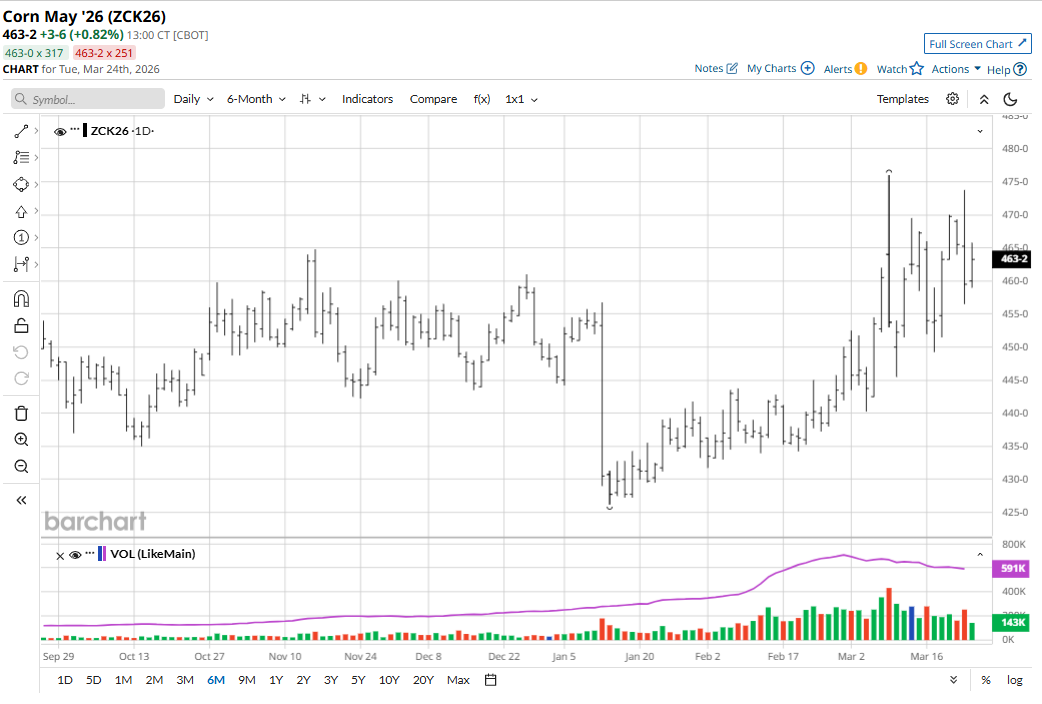
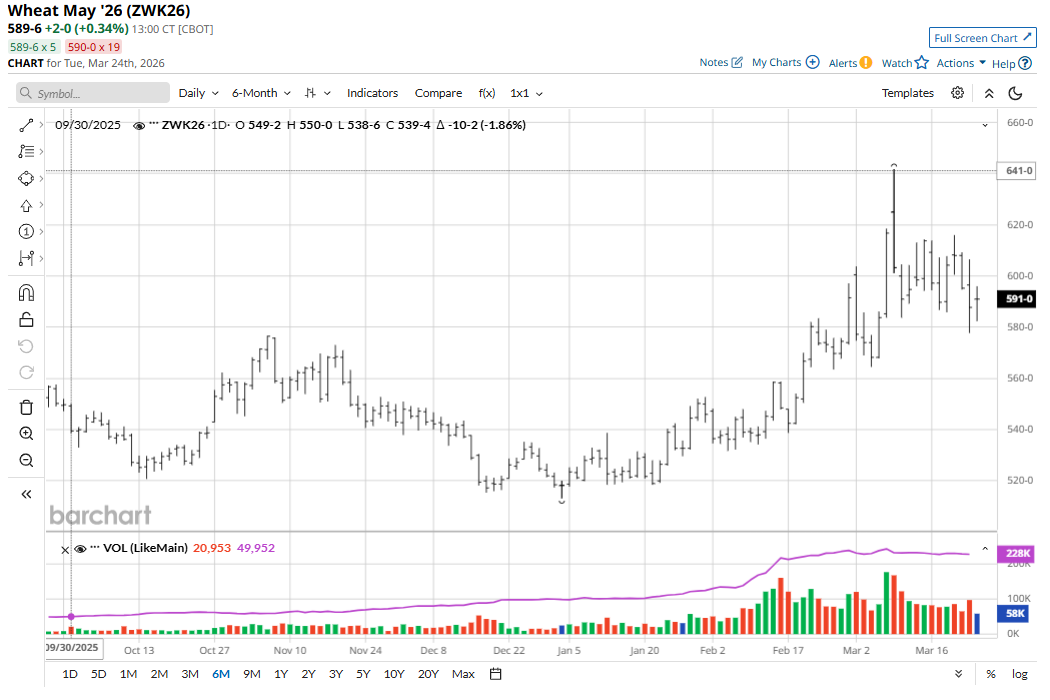
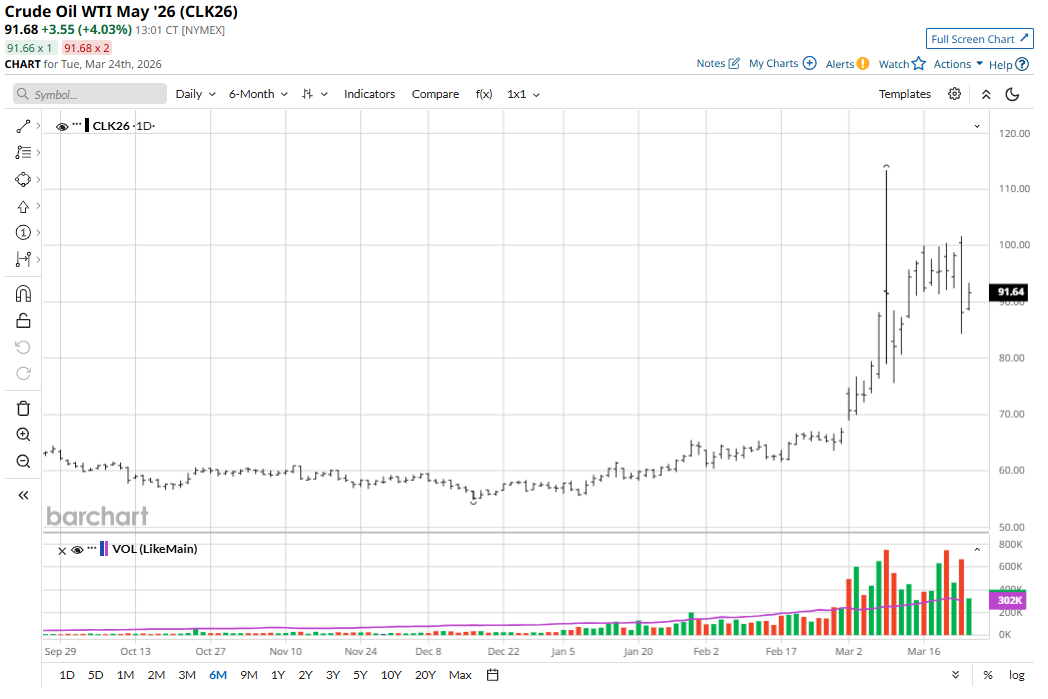
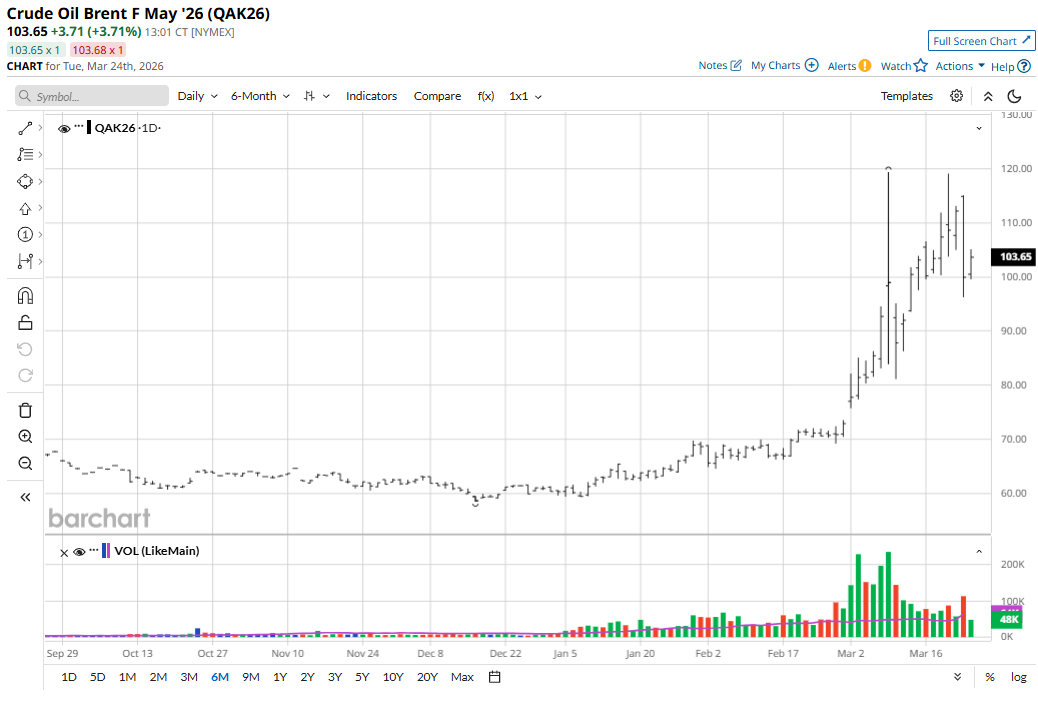
As the trading day progressed on Monday, traders and investors had time to better assess the prospects of a de-escalation in the Middle East war — and concluded they are not as great as they initially reckoned right after Trump’s social media post. Iran’s state media refuted Trump, saying there had been no negotiations with the U.S.
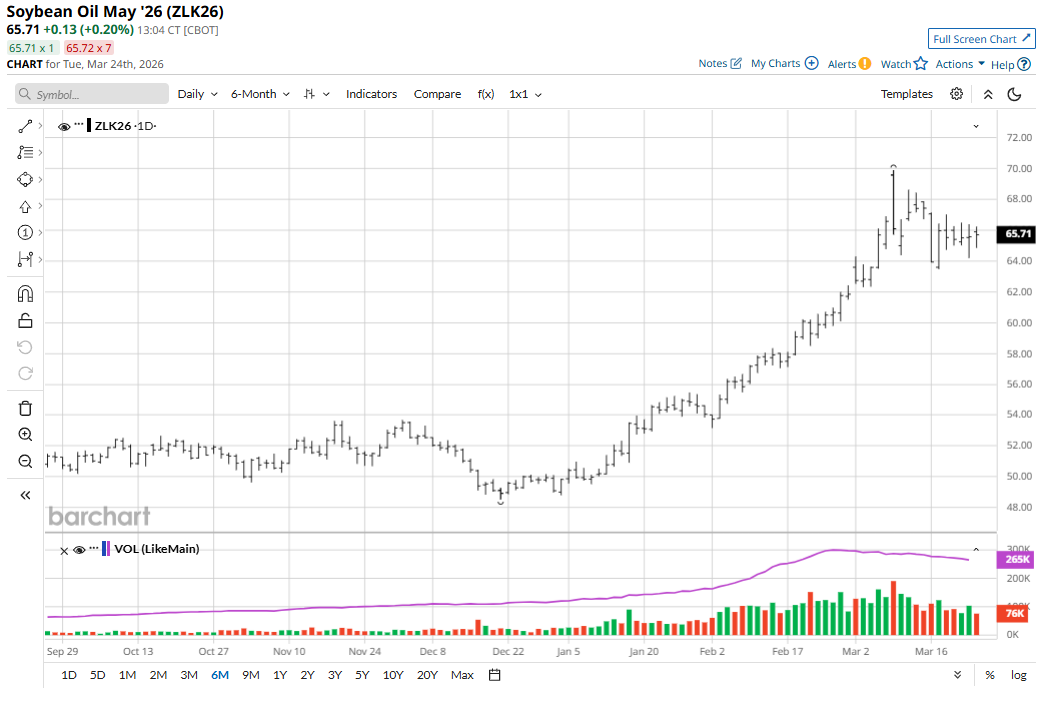
Crude oil prices then moved well off their daily lows and so did the grain markets. Importantly, what Monday’s price action in crude oil and most of the grain markets strongly suggests is that grain traders are taking their daily price cues from the daily movements in the crude oil market. Such will likely be the case for the near term.
Grain Traders Monitoring Risk Appetite in General Marketplace
The gyrations and increased daily price volatility in the key outside markets for the grains (crude oil, U.S. dollar index ($DXY), U.S. stock indexes, Treasury bond and note futures) have put grain markets bulls in a more tentative posture amid the keener risk aversion in the general marketplace.
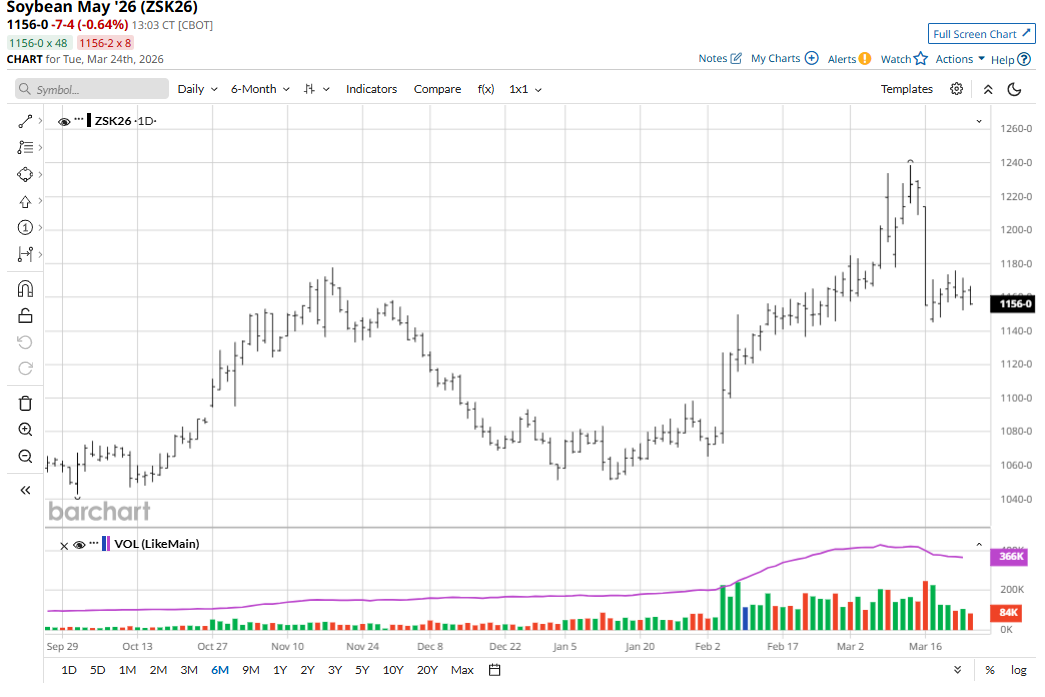
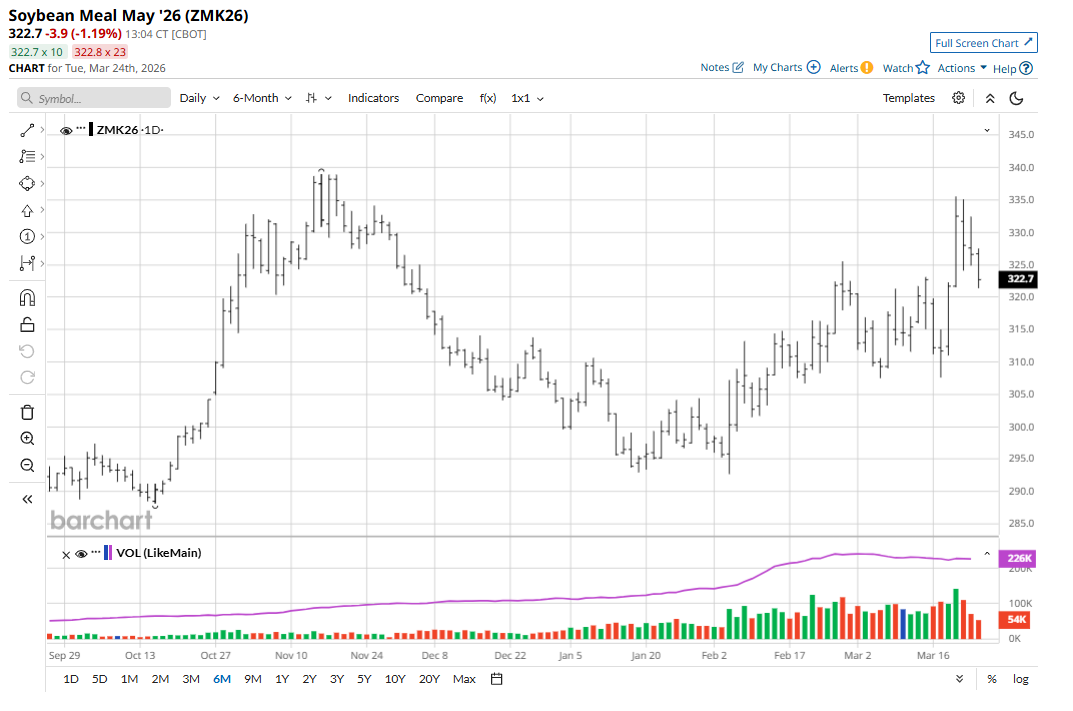
However, grain market bulls can correctly argue that the grain markets have taken what is arguably the biggest geopolitical development in decades fairly well. Corn, soybean (ZSK26), and winter wheat markets are still in price uptrends on their daily bar charts. Still, the risk aversion in the marketplace has at least partially squelched the grain market bulls and may continue to do so in the near term.
Grain Markets Also Taking a Stronger U.S. Dollar Index in Stride
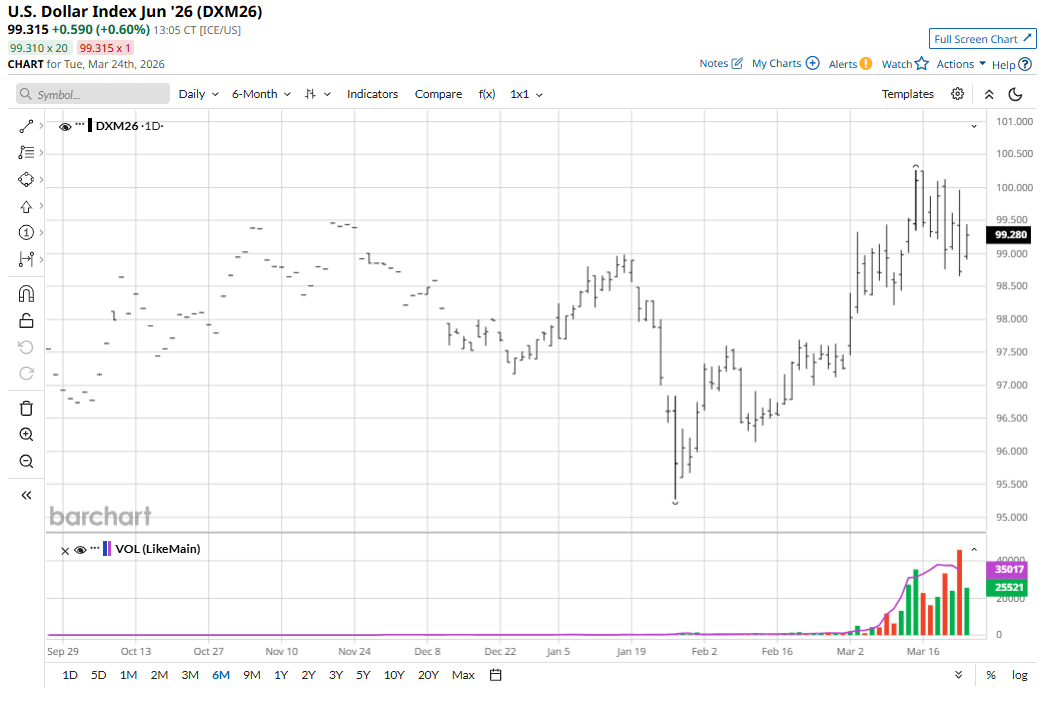
The Middle East war has pushed the U.S. dollar index ($DXY) to a 10-month high on safe-haven demand for the greenback. When times get really tough, global investors seek out the U.S. currency, which is still the world’s reserve currency.
A strong dollar is typically a bearish element for the grains. Most of the world’s grain trade is conducted in U.S. dollars. When the dollar appreciates in the foreign exchange market, that makes U.S. grain more expensive to purchase in non-U.S. currency. Yet the latest rally in the USDX has only been a minor speedbump for the grain markets.
Part of the reason the grains have not fared too badly during the Middle East war and amid a rising USDX is that global inflation worries have markedly increased since the start of the war, led by the spike in energy prices. Grains are a hard asset class. Hard assets perform better than paper assets (stocks and bonds) during periods of problematic price inflation.
Corn, Bean Traders Still Watching South American Crops
Corn and soybean traders will continue to closely monitor growing conditions for South American crops. Weather forecasters are saying Brazil weather continues to be favorable for ongoing crop development. There is some need for greater rain in southern areas of Brazil. Argentina and Brazil are forecast to get some timely rainfall this week. The bottom line is that weather in Brazil and Argentina this growing season has not yet produced any serious problems for the South American corn and soybean crops.
The March 31 USDA planting intentions report is coming into focus this week, with spiking fertilizer prices and availability bringing a new twist for potentially less U.S. corn acres planted this year. The U.S. acreage debate will continue to dominate discussion in the grain markets in the coming few weeks.
Wheat Traders Assessing Extreme Weather Swings in U.S. Plains
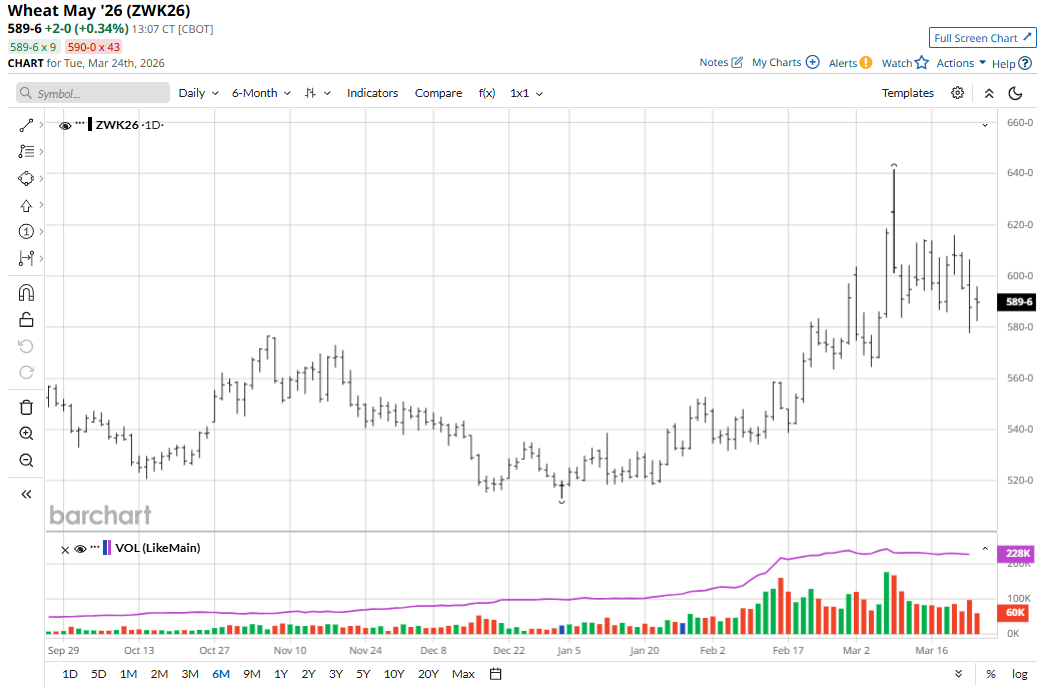
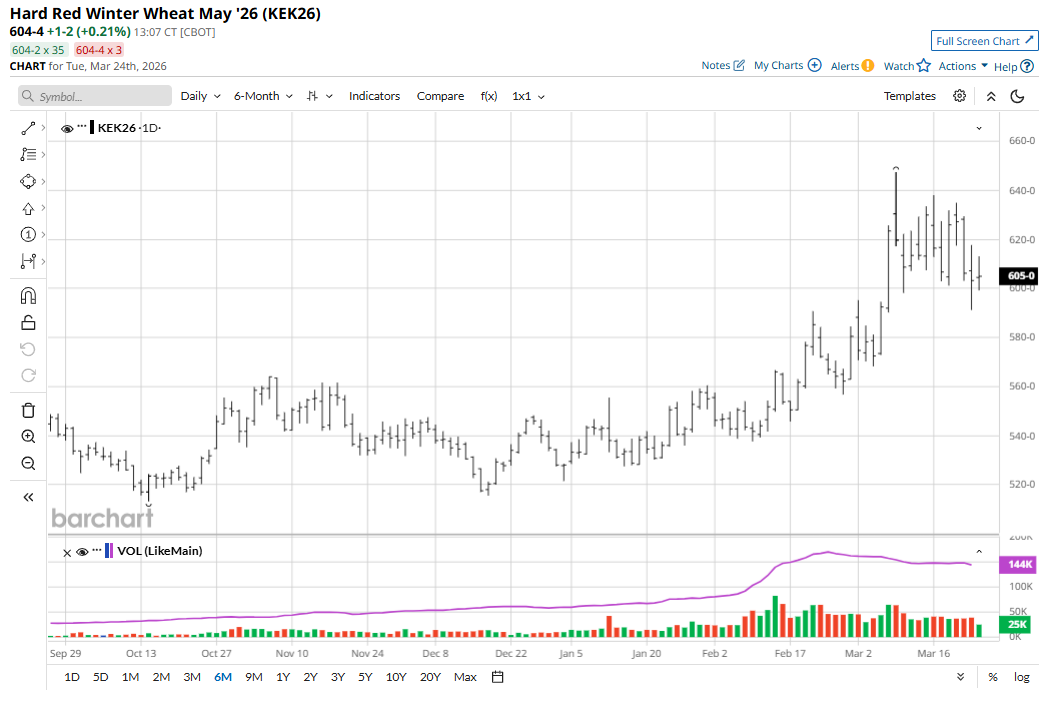
The winter wheat futures markets have seen sideways, choppy, and sometimes volatile trading action over the past two weeks. Wheat traders are trying to figure out the production implications of record-setting high temperatures and high winds in the U.S. Plains states last weekend. Have they nipped wheat-crop production potential?
Another record-setting blast of heat is expected starting Wednesday and into Friday, and then temperatures are expected to fall well below normal by late in the weekend. Topsoil moisture and subsoil moisture are very short in many winter wheat areas and the early season heat will further stress the winter wheat crop.
Tell me what you think. I enjoy hearing from my valued Barchart readers from all around the globe. Email me at jim@jimwyckoff.com.
On the date of publication, Jim Wyckoff did not have (either directly or indirectly) positions in any of the securities mentioned in this article. All information and data in this article is solely for informational purposes. For more information please view the Barchart Disclosure Policy here.
More news from Barchart