WASHINGTON, DC / ACCESS Newswire / June 5, 2026 / MMJ International Holdings, Inc. ("MMJ"), Smart Approaches to Marijuana ("SAM"), and a coalition of public health, pharmaceutical, and community organizations have formally appealed the dismissal of their lawsuit challenging the Centers for Medicare & Medicaid Services' ("CMS") controversial hemp-derived cannabinoid program.
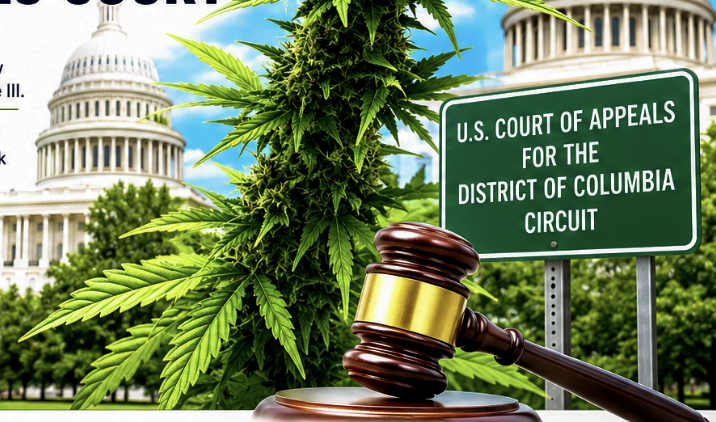
The Notice of Appeal, filed with the U.S. Court of Appeals for the District of Columbia Circuit, seeks review of a district court ruling that dismissed the case on standing grounds before addressing the legality, safety, and statutory authority of the CMS Substance Access Beneficiary Engagement Incentive ("BEI") program.
At the center of the appeal is a fundamental question:
Can a company be denied access to federal courts because it chose to follow the FDA's rigorous drug-development pathway rather than bypass it?
The Compliance Penalty
The district court concluded that MMJ lacked standing because it does not currently have a product on the Medicare market.
MMJ argues that conclusion creates a dangerous precedent by effectively punishing companies that comply with federal law.
For more than eight years, MMJ has pursued the exact pathway federal regulators require for the development of cannabinoid-based medicines:
Two active FDA Investigational New Drug (IND) applications.
Orphan Drug Designation for Huntington's disease.
A DEA-registered analytical laboratory.
Pharmaceutical-grade GMP manufacturing.
FDA-compliant chemistry, manufacturing, and controls (CMC) development.
ICH-compliant stability testing.
Millions of dollars invested in clinical and regulatory compliance.
According to MMJ, the very reason it does not yet have a commercial product on the market is because it followed the federal government's rules.
Meanwhile, CMS created a federally supported pathway that allows non-FDA-approved cannabinoid products to reach Medicare beneficiaries without undergoing the same years of clinical trials, chemistry validation, manufacturing controls, and regulatory scrutiny.
"This appeal is about much more than standing," said Duane Boise, Chief Executive Officer of MMJ International Holdings.
"We followed every federal requirement. We completed GMP manufacturing. We generated stability data. We pursued FDA authorization. We invested millions of dollars complying with the law. Yet the district court concluded that because we followed the rules and are not already selling a product, we lack standing to challenge a government program that favors products that never went through the same scrutiny. The D.C. Circuit must now decide whether compliance itself has become a legal disadvantage." stated Duane Boise MMJ International Holdings, CEO.
Not Anti-Cannabis - Pro-Science
Since the lawsuit was filed, critics have attempted to portray MMJ and its co-plaintiffs as opponents of cannabinoid medicine.
MMJ rejects that characterization outright.
Few organizations in America have invested more time, capital, and scientific effort into cannabinoid drug development than MMJ International Holdings. The company has spent nearly a decade pursuing FDA-authorized cannabinoid therapies for Huntington's disease and multiple sclerosis while building a pharmaceutical platform based on federal regulatory compliance.
"The irony is impossible to ignore," Boise said.
"Some activists and commentators have tried to label us anti-cannabis while we have spent years developing cannabinoid medicines through the FDA process. We believe in cannabinoid therapeutics. We believe in research. We believe in patient access. What we do not believe is that federal agencies should abandon the scientific standards designed to protect patients."
MMJ argues that the case has never been about opposing cannabinoid medicine. Instead, it is about preserving the integrity of the federal drug approval system and ensuring that vulnerable patient populations are protected by evidence-based standards.
Questions Left Unanswered
Because the district court dismissed the case on standing grounds, significant questions were never addressed:
Does CMS possess statutory authority to implement the BEI program?
Can Medicare beneficiaries be offered cannabinoid products that have not undergone FDA review?
Can federal agencies create parallel healthcare pathways that bypass established pharmaceutical standards?
What impact does the program have on companies pursuing FDA-approved cannabinoid medicines?
What safeguards exist to ensure patient safety when products have not undergone traditional clinical validation?
The plaintiffs argue that these questions deserve judicial review rather than procedural dismissal.
More Than a Cannabis Case
The coalition contends that this appeal is not fundamentally about cannabis policy.
It is about whether federal agencies can create a two-tiered regulatory system-one for companies that invest years and millions of dollars complying with federal drug-development requirements, and another for products that bypass those standards entirely.
The appeal asks the D.C. Circuit to determine whether federal healthcare programs may reward regulatory shortcuts while denying judicial review to companies that chose the path Congress, the FDA, and the DEA established.
The outcome could shape the future of cannabinoid medicine, Medicare policy, and administrative law for years to come.
About MMJ International Holdings
MMJ International Holdings, Inc. is a pharmaceutical company developing cannabinoid-based medicines for Huntington's disease and multiple sclerosis through the FDA's Investigational New Drug pathway. The company maintains active FDA IND programs, holds Orphan Drug Designation, operates a DEA-registered analytical laboratory, and has invested extensively in pharmaceutical-grade manufacturing, stability testing, and regulatory compliance.
CONTACT:
Madison Hisey
MHisey@mmjih.com
203-231-8583
SOURCE: MMJ International Holdings
View the original press release on ACCESS Newswire