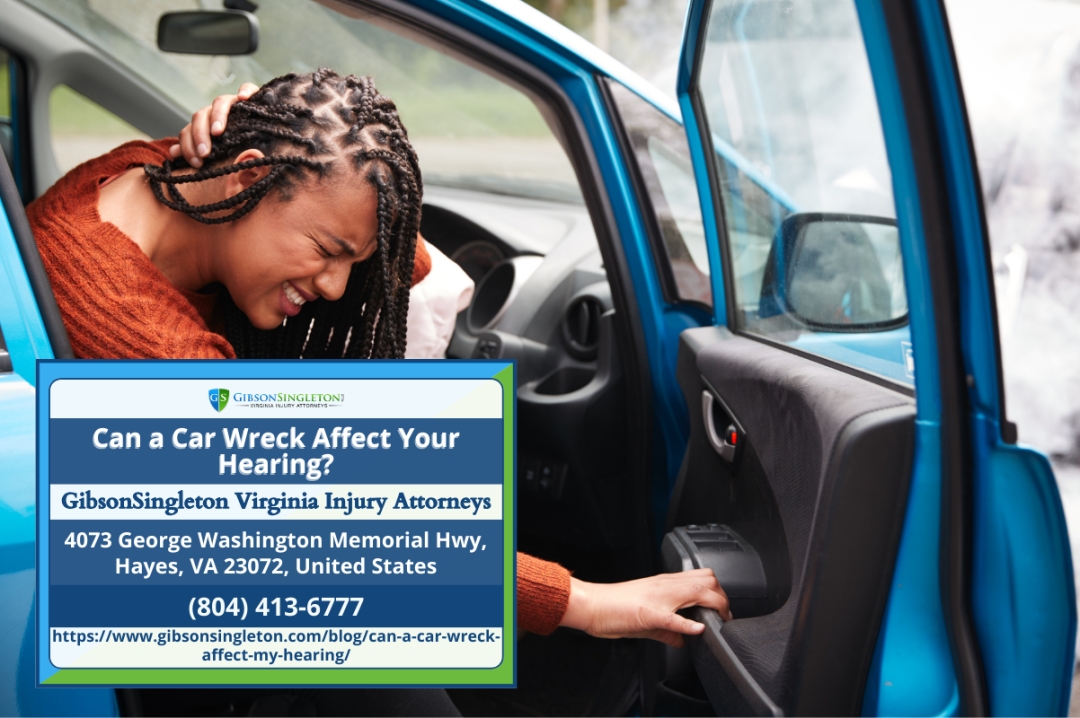
GLOUCESTER, VA - The violent forces generated in a car collision can damage the delicate structures inside the ear, leading to hearing loss, tinnitus, balance problems, and in severe cases, permanent deafness that requires lifelong medical treatment. Gloucester County car accident attorney Ken Gibson of GibsonSingleton Virginia Injury Attorneys (https://www.gibsonsingleton.com/blog/can-a-car-wreck-affect-my-hearing/) is explaining how car accidents cause hearing damage, what symptoms to watch for in the days and weeks following a crash, and what steps injury victims should take to protect both their health and their legal rights.
According to Gloucester County car accident attorney Ken Gibson, airbag deployment is one of the most common causes of hearing damage in car crashes. A front airbag can generate sound pressure levels of approximately 160 decibels, while dual airbag deployments can reach 170 decibels or higher, far exceeding the 140-decibel peak sound pressure level threshold recommended by occupational safety guidelines. This sudden explosive burst of noise can rupture the eardrum or destroy the tiny hair cells inside the cochlea that convert sound waves into electrical signals for the brain. "Many accident victims do not realize their hearing has been affected until days or weeks after the collision, especially when they are focused on more visible injuries," explains Gibson.
Gloucester County car accident attorney Ken Gibson notes that head trauma during a crash can also damage the auditory nerves or the areas of the brain responsible for processing sound. Striking the steering wheel, side window, dashboard, or headrest may cause a concussion or more severe traumatic brain injury, which can lead to tinnitus, difficulty understanding speech, and reduced hearing in one or both ears. Severe impacts can cause dislocation or fracture of the small middle ear bones, temporal bone fractures that damage inner ear structures, inner ear bleeding, and injury to the auditory nerve. In the most serious cases, a fractured temporal bone can cause profound and permanent hearing loss requiring emergency surgical intervention.
Attorney Gibson points out that whiplash, commonly caused by rear-end collisions on roads throughout the region including Route 17, has been associated with hearing changes, tinnitus, vertigo, and temporomandibular disorder. Symptoms to watch for after any crash include ringing or buzzing in the ears, muffled hearing, ear pain or pressure, a blocked or full feeling in the ear, dizziness or balance problems, and difficulty following conversations in background noise. "Because these symptoms can also signal a concussion or other head injury, seeking medical attention promptly is essential for both health and legal reasons," Gibson adds.
Whether hearing loss is permanent depends on the type and severity of the damage. Sensorineural hearing loss caused by damage to the inner ear hair cells or auditory nerve is typically irreversible, while a ruptured eardrum may heal within several weeks and conductive hearing loss from fluid buildup or minor middle ear damage may improve with surgery or medication. Treatment for permanent hearing loss may include hearing aids, cochlear implants, or surgical repair, with costs that can continue for the rest of the individual's life. Under Virginia law, accident victims may recover compensation for both past and future medical expenses related to hearing injuries.
The firm notes that proving hearing loss was caused by a car accident requires thorough medical evidence, expert testimony, and documentation of pre-accident hearing health. Audiograms taken shortly after the accident establish a baseline that can be compared to future tests. An audiologist or ear, nose, and throat specialist can provide expert testimony explaining how the specific forces of the crash caused the hearing damage. Employment records, statements from coworkers and family members, and medical history can help establish that hearing was normal before the crash, countering insurance company arguments that the damage is age-related or caused by other factors.
Virginia law allows accident victims to recover compensation for past and future medical expenses, lost wages, reduced earning capacity, and pain and suffering related to hearing loss, with a two-year statute of limitations under Virginia Code § 8.01-243(A). "Insurance companies often discount hearing loss claims because they consider hearing damage to be an invisible injury," advises Gibson. "Thorough medical documentation from the very beginning is critical to overcoming these defenses and establishing the full impact of the injury on daily life."
Virginia follows a pure contributory negligence rule, meaning any finding that the injured party was partially at fault can completely bar recovery. This makes a thorough investigation of the accident circumstances essential, including gathering police reports, witness statements, and working with accident reconstruction experts when necessary to establish that the other driver was entirely at fault.
Individuals who suspect hearing damage after a crash should take several protective steps. Seeking medical attention immediately and reporting all hearing-related symptoms to the treating physician creates a medical record linking the injury to the accident. A referral to an audiologist for a comprehensive hearing test, along with diagnostic imaging such as CT scans or MRIs to check for structural damage, provides critical evidence for a potential claim. Keeping a daily journal documenting how hearing loss affects work performance, social interactions, and emotional well-being can also support the damages portion of a case. Accident victims treated at Riverside Walter Reed Hospital in Gloucester or at hospitals throughout the Hampton Roads area should ensure their emergency room records note all hearing-related complaints.
For those who have experienced hearing changes after a car accident in Gloucester County or the Hampton Roads region, consulting with an experienced personal injury attorney may help identify the full scope of damages and protect the right to fair compensation.
About GibsonSingleton Virginia Injury Attorneys:
GibsonSingleton Virginia Injury Attorneys is a Gloucester-based personal injury law firm led by attorneys Ken Gibson and John Singleton, both former U.S. Marines. The firm represents car accident victims and other injured clients throughout Gloucester County, Gloucester Point, and the Hampton Roads region. For consultations, call (804) 413-6777.
Embeds:
Youtube Video: https://www.youtube.com/watch?v=yTIx8PtTA3g
GMB: https://www.google.com/maps?cid=16748039254555405766
Email and website
Email: michelle@gibsonsingleton.com
Website: https://www.gibsonsingleton.com/
Media Contact
Company Name: GibsonSingleton Virginia Injury Attorneys
Contact Person: Michelle Cain
Email: Send Email
Phone: (804) 413-6777
Address:4073 George Washington Memorial Hwy
City: Hayes
State: Virginia 23072
Country: United States
Website: https://www.gibsonsingleton.com/